Guseo Osige Market (구서 오시게시장)
19.1Km 2024-02-26
12 Guseo-ro, Geumjeong-gu, Busan
051-581-4830
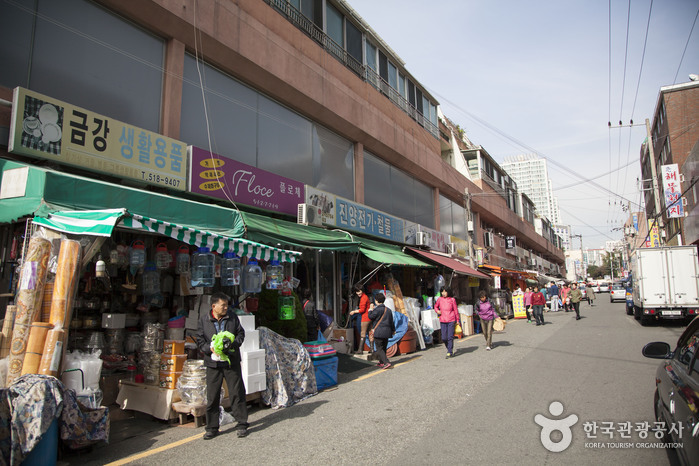
Guseo Osige Market, a traditional marketplace, is situated near Exit 1 of Guseo Station on Busan Subway Line 1. The market building allocates its first and second floors for commercial activities, while the third and higher floors are designated for residential use. It boasts a diverse array of shops, including rice cake shops, porridge shops, restaurants, places specializing in sliced raw fish, butcher shops, dried seafood shops, fruit vendors, and hanbok stores. Additionally, the market features stalls where local grannies sell their home-grown vegetables and herbs, alongside handmade offerings like bean curd and acorn jelly.
Jangyu Daecheonggyegok Valley (장유대청계곡)
19.1Km 2022-08-12
Wolsan-ro, Gimhae-si, Gyeongsangnam-do
+82-55-350-1931
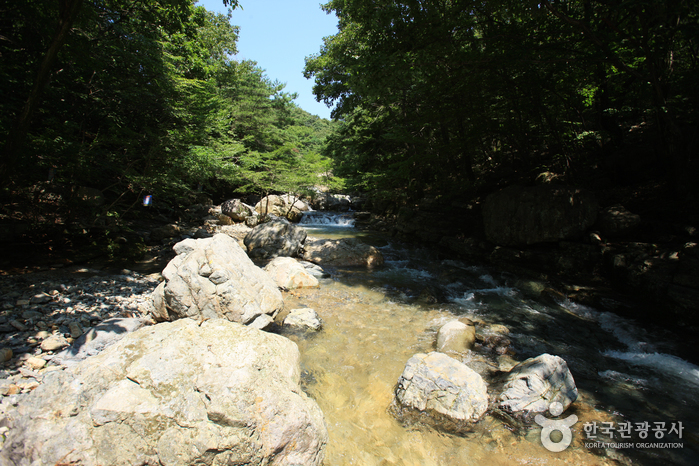
The 6-kilometer-long Jangyu Daecheonggyegok Valley is located at the foot of Bulmosan Mountain, where the water flowing into the valley divides into two principal streams. Lush trees and clean water make up the area’s beautiful natural landscape. A 30-minute hike along the valley will take hikers to Jangyuam Hermitage where they will find the stupa of Jangyuhwasang, who is said to have spread Buddhism for the first time in Korea.
Visitors flock to Jangyu Daecheonggyegok Valley not only to enjoy the scenery, but also to taste the delicious duck, chicken, and baeksuk (chicken soup with rice) dishes sold around the area. In 1984, the valley was integrated into Jangyupokpo Recreational Park where bridges were built and water supply facilities were placed at two locations. Sangjeolgyo Bridge at the entrance to the valley is 30 meters, while Bonpogyo Bridge is 4 meters. A 1,720 meter-long forest trail was also created. The rugged mountain terrain offers a challenging, yet highly interesting climb up the mountain.
![Olive Young - Haeundae Jung-dong Branch [Tax Refund Shop] (올리브영 해운대중동)](http://tong.visitkorea.or.kr/cms/resource/78/2885678_image2_1.jpg)
Olive Young - Haeundae Jung-dong Branch [Tax Refund Shop] (올리브영 해운대중동)
19.1Km 2024-04-18
505, Jwadongsunhwan-ro, Haeundae-gu, Busan
-
Haeundae Rodeo Street (해운대 로데오거리)
19.1Km 2025-03-29
473 Jwadongsunhwan-ro, Haeundae-gu, Busan
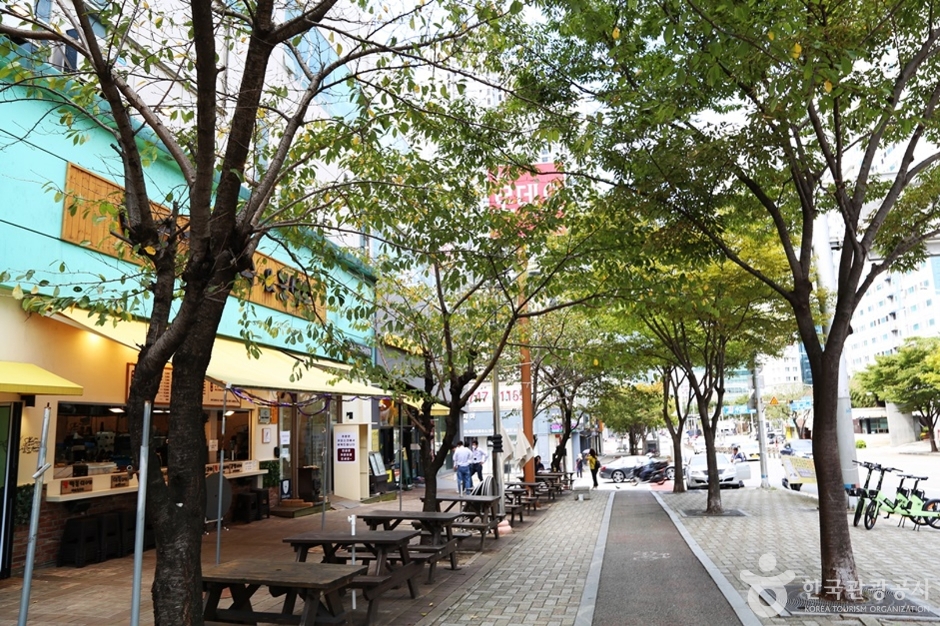
Haeundae Rodeo Street, a vibrant youth hub in Busan, features over 70 establishments including fashion stores, hair salons, skin care centers, and street food vendors. Known for its concentration of permanent discount outlets like Rodeo Outlet, it offers a wide range of fashion accessories and clothing at affordable prices. Beyond shopping, the street is conveniently located near popular sightseeing spots such as Haeundae Beach, Mipo Beach, Dalmaji Gogae, and Songjeong Beach.
![Olive Young - Gimhae Samgye Branch [Tax Refund Shop] (올리브영 김해삼계)](http://tong.visitkorea.or.kr/cms/resource/28/2885928_image2_1.jpg)
Olive Young - Gimhae Samgye Branch [Tax Refund Shop] (올리브영 김해삼계)
19.1Km 2024-04-22
47, Samgyejungang-ro, Gimhae-si, Gyeongsangnam-do
-
Haeundae Green Railway (Mipo-Songjeong) (해운대 그린레일웨이 (미포~송정 구간))
19.1Km 2024-10-10
11 Dalmaji-gil 62beon-gil, Haeundae-gu, Busan
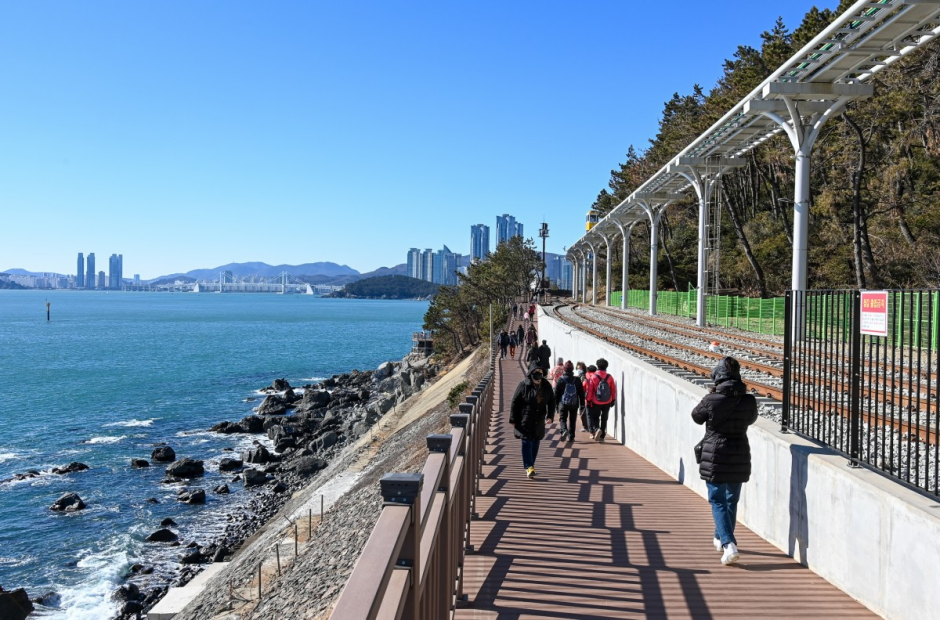
It is an urban promenade that walks along the coastline using the site of the abandoned Donghae Nambu Line. Among them, the Mipo-Songjeong section is 4.8 km-long, and you can walk in both directions along the beautiful coastal scenery. It is a nationwide photo spot and trekking place where you can see different attractions at a glance. Representative tourist attractions within the trail section include the Cheongsapo Daritdol Observatory, which opened in 2017, and the Sea Sound Gallery, which opened in January 2022. This is the section where the core facilities of the special tourist zone are concentrated. - Major tourist spots within the Green Railway section: Haeundae Beach, Mipo Port, Dalmaji Tunnel, Sea Sound Gallery, Cheongsapo (Daritdol Observatory), Gudeokpo, Songjeong Beach - Haeundae Beach Train, Sky Capsule Service Section: (Main Stations) Mipo Station, Cheongsapo Station, Songjeong Station.
![CheongKwanJang - Jung-dong Branch [Tax Refund Shop] (정관장 중동)](http://tong.visitkorea.or.kr/cms/resource/83/2885683_image2_1.jpg)
CheongKwanJang - Jung-dong Branch [Tax Refund Shop] (정관장 중동)
19.2Km 2024-04-18
506, Jwadongsunhwan-ro, Haeundae-gu, Busan
-

Halmae Bokguk (할매복국)
19.2Km 2024-12-27
1, Dalmaji-gil 62beon-gil, Haeundae-gu, Busan
+82-51-742-2789
This pufferfish specialty restaurant was established in 1986. The restaurant is renowned for its bokguk or bokjiri. Its clean broth and generous serving of pufferfish fillets enhance the flavor. The collagen jelly made from pufferfish skin is also considered a delicacy.
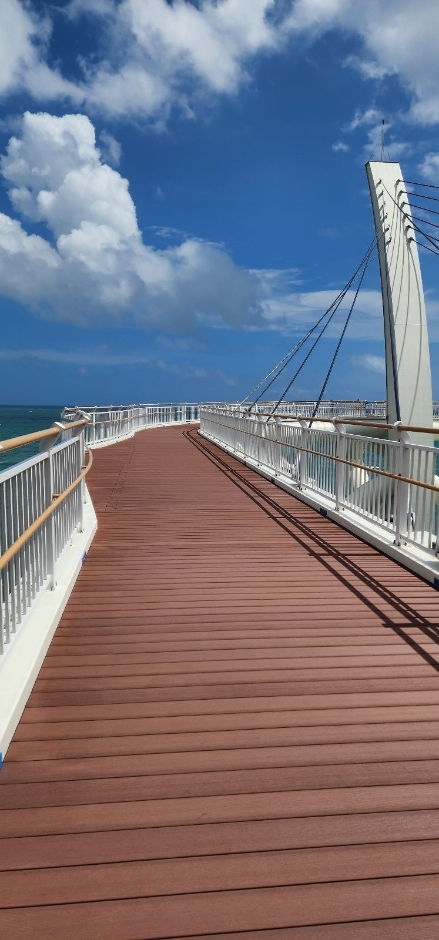
Haewol Observatory (해월전망대)
19.2Km 2025-08-06
Jung-dong, Haeundae-gu, Busan
Located in Haeundae-gu, Busan, Haewol Observatory offers stunning views of the East Sea and Haeundae Beach, especially at sunrise and sunset, attracting many visitors. Opened on July 27, 2024, the observatory stands 22 meters above sea level and extends 134 meters towards the ocean. It features a crescent-shaped tower and a circular plaza overlooking the ocean. Its proximity to Haeundae Beach makes it easily accessible.
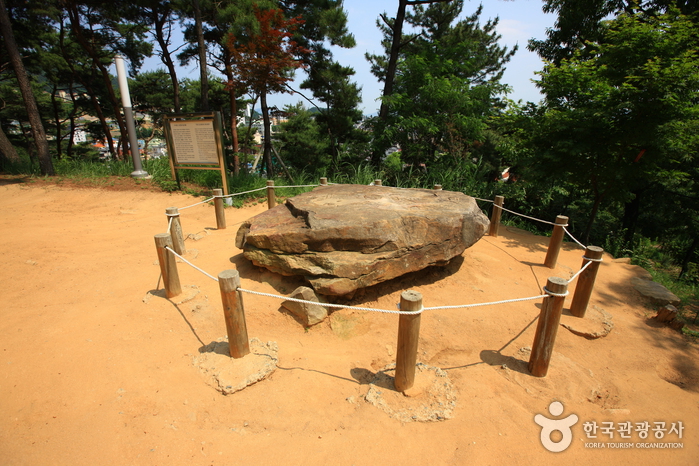
Gimhae Gujibong Peak (김해 구지봉)
19.3Km 2021-07-13
Gusan-dong, Gimhae-si, Gyeongsangnam-do
+82-055-331-0086
Gujibong Peak in Gusan-dong, Gimhae in Gyeongsangnam-do is believed to be the birthplace of King Suro, the founder of the Gaya kingdom. The peak was originally named Gusubong (“gu” meaning “turtle,” “su” meaning “head”) after its resemblance to the head of a turtle. The flat part of the peak (the turtle’s “head”) is home to the Tomb of King Suro. On the summit is a southern-style dolmen dating back to the 4th century BC that consists of 5 or 6 support stones and a large cover stone measuring 2.5m in diameter. The cover stone bears the inscription “Gujibongseok,” said to be written by Han Ho.
Gujibong Peak is considered a sacred place by the local people because, according to legend, it is the place where the creation of the Gaya Kingdom took place. During the Japanese colonial rule, the “neck” of the turtle was destroyed by the construction of a mountain road. Years later, a pedestrian road was built to rejoin the neck and restore the feng shui of the mountain.
 English
 한국어
한국어 日本語
日本語 中文(简体)
 Deutsch
 Français
 Español
 Русский


