![ABC-Mart - Busan Gwangbok Branch [Tax Refund Shop] (ABC마트 GS부산광복)](http://tong.visitkorea.or.kr/cms/resource/23/2885823_image2_1.jpg)
ABC-Mart - Busan Gwangbok Branch [Tax Refund Shop] (ABC마트 GS부산광복)
402.7M 2024-04-18
2, Gwangbokjungang-ro, Jung-gu, Busan
-
![Olive Young - Busan Nampo Branch [Tax Refund Shop] (올리브영 부산남포)](http://tong.visitkorea.or.kr/cms/resource/56/2885856_image2_1.jpg)
Olive Young - Busan Nampo Branch [Tax Refund Shop] (올리브영 부산남포)
405.2M 2024-04-17
64-1, Gwangbok-ro, Jung-gu, Busan
-
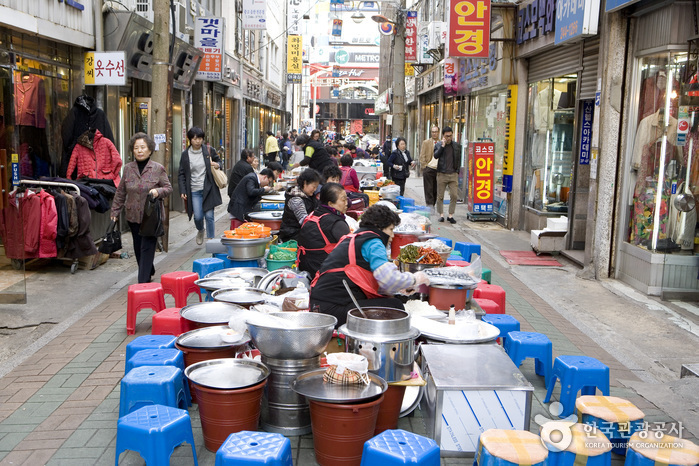
Gukje Market Food Street (국제시장 먹자골목)
407.5M 2024-03-06
36, Junggu-ro, Jung-gu, Busan
+82-51-245-7389
Gukje Market Food Street has more than 60 years of history as one of Busan's traditional markets' most famous food streets. It is known for a number of dishes, such as Chungmu gimbap served with sweet and sour squid salad, sweet-and-spicy tteokbokki, milmyeon (wheat noodles), dwaeji gukbap (pork and rice soup), sundae, patbingsu (shaved ice with red beans), and Busan’s iconic bibim dangmyeon (spicy glass noodles). These dishes are enjoyed on small stools next to the street stalls. The sight of the diners lining the stall is one of the defining views of traditional markets in Korea. Visitors can also find suitable clothing, shoes, and accessories here.
![Ziozia - Gwangbok Branch [Tax Refund Shop] (지오지아 광복)](http://tong.visitkorea.or.kr/cms/resource/57/2885857_image2_1.jpg)
Ziozia - Gwangbok Branch [Tax Refund Shop] (지오지아 광복)
415.9M 2024-04-18
66-1, Gwangbok-ro, Jung-gu, Busan
-
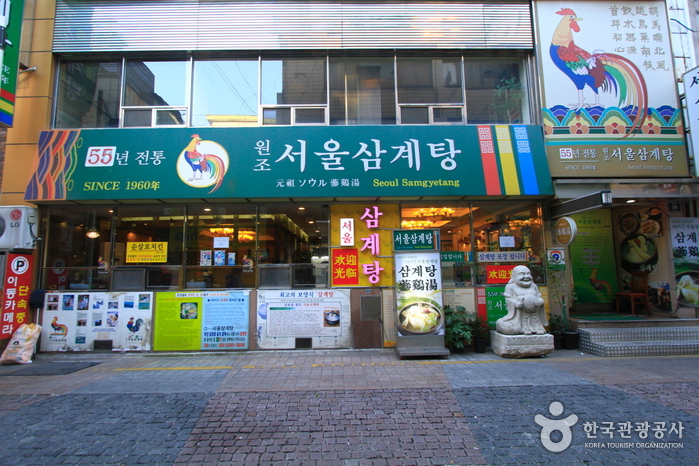
Wonjo Seoul Samgyetang (원조서울삼계탕)
441.2M 2024-03-18
36, Nampo-gil, Jung-gu, Busan
+82-51-245-3696
Wonjo Seoul Samgyetang opened in 1960 as a restaurant specializing in samgyetang (ginseng chicken soup). Samgyetang (ginseng chicken soup) is a nutritious soup popular in Korea, featuring a whole chicken boiled in a soup made with medicinal herbs like milk vetch roots and Job's tears, along with sweet rice, dried jujube, and chestnuts. Nearby tourist sites include Jagalchi Market, Gukje Market, and Yongdusan Park.
![Onitsuka Tiger - Gwangbok Branch [Tax Refund Shop] (오니츠카타이거 광복)](http://tong.visitkorea.or.kr/cms/resource/27/2885827_image2_1.jpg)
Onitsuka Tiger - Gwangbok Branch [Tax Refund Shop] (오니츠카타이거 광복)
448.4M 2024-04-18
65, Gwangbok-ro, Jung-gu, Busan
-
![New Balance - Gwangbok Branch [Tax Refund Shop] (뉴발란스 광복)](http://tong.visitkorea.or.kr/cms/resource/93/2885893_image2_1.jpg)
New Balance - Gwangbok Branch [Tax Refund Shop] (뉴발란스 광복)
452.9M 2024-04-18
72, Gwangbok-ro, Jung-gu, Busan
-

MLB - Gwangbok Branch [Tax Refund Shop] (엠엘비 광복점)
458.8M 2024-04-23
72-1, Gwangbok-ro, Jung-gu, Busan
-
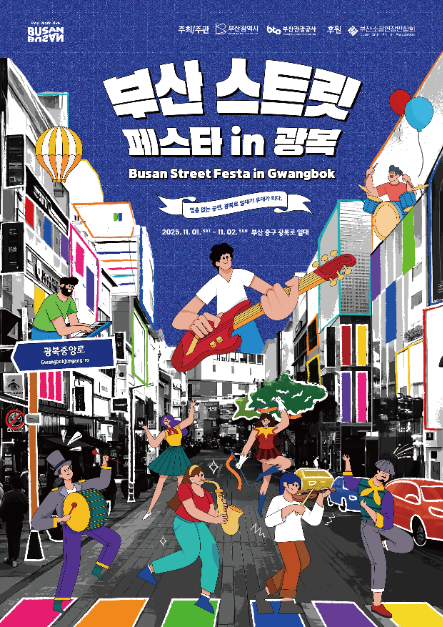
Busan Street Festa in Gwangbok (부산 스트릿 페스타 인 광복)
458.8M 2025-11-05
72-1 Gwangbok-ro, Jung-gu, Busan
+82-70-4808-2875
The Busan Street Festa in Gwangbok transforms everyday urban spaces into a festival stage through various programs such as music, dance, performance shows, local flea markets, and parades that unfold throughout the streets.
Gukje Market (국제시장)
468.6M 2025-10-23
Area of Sinchang-ro 4-ga, Jung-gu, Busan
+82-51-245-7389
The current marketplace of Gukje Market first formed after the liberation of Korea from the Japanese administration when people gathered to trade overseas products left by the Japanese and brought in by Koreans who came back from abroad. Following the Korean War, refugees who fled to Busan set up stalls in order to make a living by selling smuggled or imported products, which developed into Gukje Market (gukje meaning "international" in Korean) of today. Gukje Market is one of Korea’s largest markets and a testament to Korea's modern history. The market is divided into two wings, and first-timers to the market are advised to be careful not to get lost in the maze-like alleys and halls.
 English
 한국어
한국어 日本語
日本語 中文(简体)
 Deutsch
 Français
 Español
 Русский


