
Bunsanseong Fortress (김해 분산성)
17.6Km 2023-01-18
210-162, Gaya-ro 405beon-gil, Gimhae-si, Gyeongsangnam-do
+82-55-330-3925
Bunsanseong Fortress was constructed in the 3rd year of the reign of Goryeo's King U (1377) by Magistrate Park Wi to defend against foreign enemies, but it was destroyed during the Japanese invasion of 1592. The fortress we see today was reconstructed by Magistrate Jeong Hyeon-seok in the 8th year of the reign of Joseon's King Gojong (1871). However, it is estimated that it was first built during the days of Gaya. It is a temoe-style fortress with rocks piled up like a long band at the peak of Bunsan from which downtown Gimhae, Gimhae Plains, the Nakdonggang River and the South Sea are all in a single, panoramic view. Today, fortress walls remain stretching for some 900 meters on the slope towards the city and, inside the fortress, there are two gate sites in the south and north, an auxiliary gate on the west, a well site and several other building sites. The exact length of the remaining fortress walls is 929 meters and the average x_width is about 8 meters.
Inside the fortress lies Haeeunsa Temple, which was built to pay respects to Queen Heo of Garak who had come from the sea, according to stories. The temple also enshrines portraits of King Suro and Queen Heo that were painted during the Joseon dynasty. During the Japanese invasion of 1592, monk soldiers were stationed at this temple.
The fortress is more popularly called "Manjangdae" by Gimhae locals, and this name originated from the description, "A tall tower 10,000 (man) gil in x_height," granted by Daewongun in the Joseon dynasty for this advanced base that defeats Japanese invaders. A writing of "Manjangdae" written by Daewongun himself as well as his stamp are engraved on a rock behind a beacon that was restored in 1999.
Ahopsan Forest (아홉산숲)
17.7Km 2025-10-23
37-1 Midong-gil, Gijang-gun, Busan
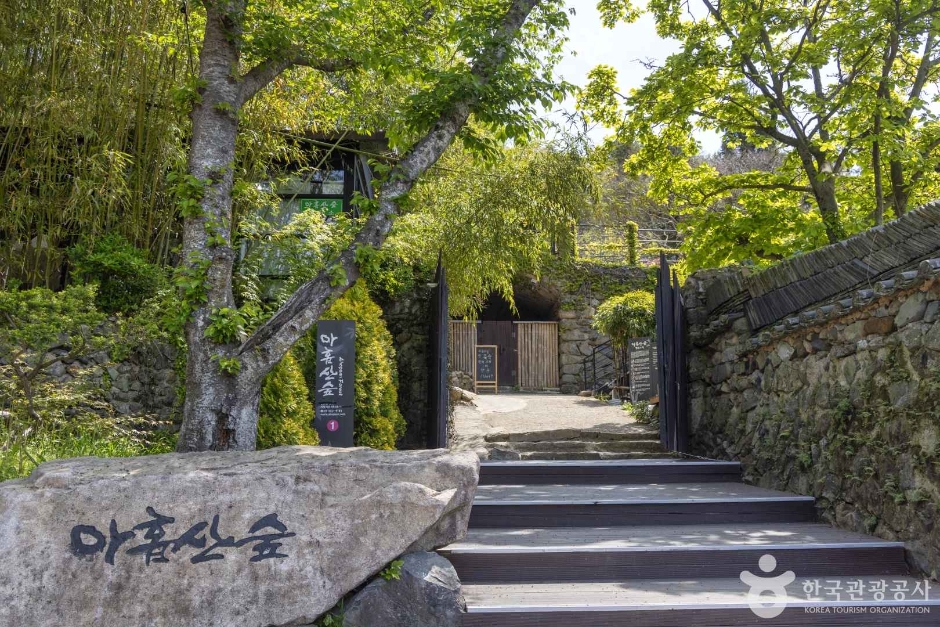
Ahopsan Forest is a forest located at the foot of Ahopsan Mountain in Cheolma-myeon, Gijang-gun, Busan. It is a place where visitors can meet the undamaged natural environment and ecology. Diverse forests ㅡsuch as bamboo forests, cypress forests, cedar trees, ginkgo trees, and natural forests, including Geumgang pine trees aged 100 to 300 years, make up Ahopsan Mountain. It is a private forest with a total area of 520,000 square meters and has been there for about 400 years. Only a limited number of people who have made a reservation in advance are allowed to enter for nature conservation. Unlike amusement parks and recreation areas, viewing is possible only within the limits that do not damage nature. However, forest experiences, activity programs for children, and forest explanation program are offered for visitors' entertainment.
Dongsang Market (동상시장)
17.7Km 2025-10-23
25 Guji-ro 180beon-gil, Gimhae-si, Gyeongsangnam-do
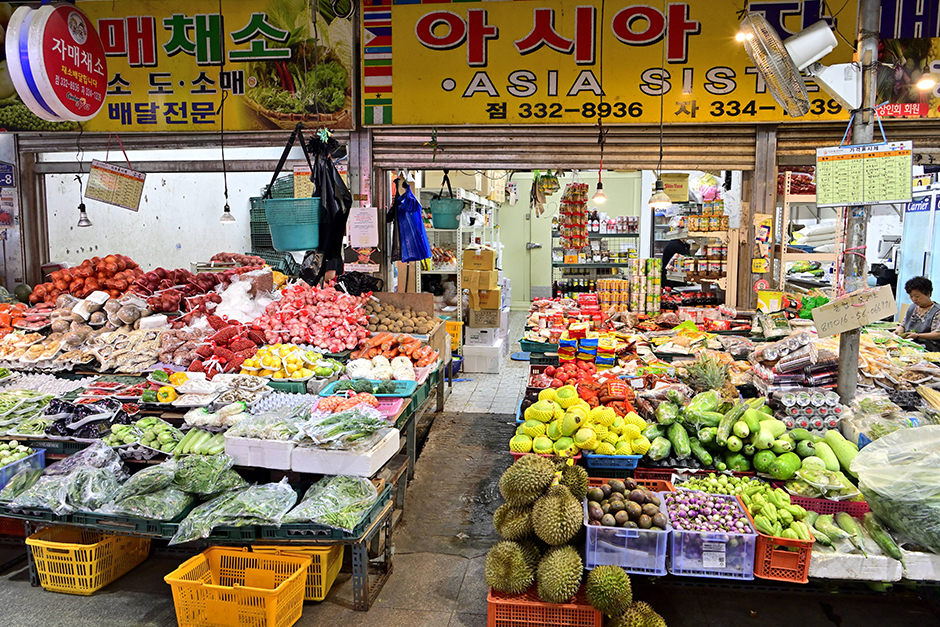
Formed in 1945, Dongsang Market is a lifestyle-centric traditional market that offers a slew of daily necessities like vegetables, fruits, rice cakes, fishery products, and side dishes, as well as a popular alley specializing in Kalguksu (noodle soup). Designated as a cultural tourism market in 2017, it has since evolved into a vibrant space where traditional Korean culture harmoniously coexists with diverse global cultures. As more foreign workers have begun frequenting the market in recent years, a number of Asian grocery stalls have opened. In particular, vegetables favored by Southeast Asian customers, ritual foods, and Kalguksu (noodle soup) have become local specialties.
Gimhae Gaya History Park (김해가야테마파크)
17.9Km 2025-10-23
161 Gaya thema-gil, Gimhae-si, Gyeongsangnam-do
+82-55-340-7900
Gimhae Gaya History Park is a resting area that provides comfortable relaxation in the daily lives of the busy people and also a cultural complex where you can experience various cultures with your family, lover and friends.
Interactive theme park combining Education + Entertainment Edutainment park where you can see, hear, touch and learn about the history of Gaya and the brilliant heritage of its people through plays, experiences and exhibits.
Blackup Coffee (블랙업커피 양산)
17.9Km 2024-03-27
11 Mulgeumyeok 1-gil, Mulgeum-eup, Yangsan-si, Gyeongsangnam-do
Blackup Coffee, a café with a stunning view of the Nakdonggang River, is known for its signature Haesuyeom coffee (sea salt coffee), a unique blend enriched with natural sea salt and homemade fresh cream. This café has risen to fame for its exceptional coffee taste, a testament to their meticulous roasting process that highlights the qualities of premium beans. Additionally, Blackup Coffee also offers classes for customers interested in learning latte art and pour-over brewing techniques.
![Gimhae Korean-style house [Korea Quality] / 김해한옥체험관 [한국관광 품질인증]](http://tong.visitkorea.or.kr/cms/resource/81/3016981_image2_1.jpg)
Gimhae Korean-style house [Korea Quality] / 김해한옥체험관 [한국관광 품질인증]
18.1Km 2023-10-25
40 , Wangneung-gil, Gimhae-si, Gyeongsangnam-do
+82-55-322-4735~6
The Hanok Experience Center in Gimhae, Gyeongsangnam-do, offers guests a taste of old-time hanok life. Rooms are furnished with traditional items, while the spacious wooden floor can be used as a meeting room. Rooms in the sarangchae are on the small side but have an upper floor with scenic views. The room in the annexe building has a traditional sleeping mat surrounded by a large folding screen, and feels like a scene from a historical drama. Each room has a modern bathroom, There is a traditional experience program, and information services in English and Japanese.
Tomb of King Suro (수로왕릉)
18.1Km 2024-01-23
26 Garak-ro 93beon-gil, Gimhae-si, Gyeongsangnam-do
+82-55-332-1094
King Suro founded the Garak Kingdom in AD 42 and married Heo Hwang-ok, a princess from the Indian country of Ayuta, in AD 48. He was the founder of the Gimhae Kim family. Heo Yeop, a Yeongnam governor, gave the tomb its current look in the 13th year of the reign of King Seonjo (1580). The tomb compound includes various buildings, including the Sungseonjeon (where the ancestral tablets of King Suro and his queen are kept), Anhyanggak, Jeonsacheong, and Jegigo, as well as stone structures, such as a sindobi (tombstone) and gongjeokbi (monument established to pay homage the deceased). The tombstone in front of the royal tomb was built in the 25th year of the reign of King Injo (1647) of the Joseon dynasty. The name Sungseonjeon was bestowed on the tomb by King Gojong in the 21st year of his reign (1884).
Sureungwon Garden (수릉원)
18.2Km 2024-01-23
35 Bunseong-ro 261beon-gil, Gimhae-si, Gyeongsangnam-do
Sureungwon Garden is a place themed around the meeting between King Suro, the founder of Gaya, and Queen Heo, who was the princess of Ayuta Kingdom, known as India. The name Sureungwon Garden also contains the meaning of an elegant forest where King Suro and Queen Heo walked together. An ecological park measuring 39,600 m2 has been created along a low ridge that connects the Tomb of King Suro, an important cultural heritage of the Gaya period; the Ancient Tombs in Daeseong-dong, the tombs of the Gaya kings; and the Bonghwang-dong Historic Site. It was created by representing the maritime kingdom of Gaya, imagining a pond of the garden where King Suro and Queen Heo used to walk, and planting prickly waterlilies and yellow floating hearts that are believed to have inhabited wetlands in the Gaya period. Trails along the cozy forest and pond make it easy to look around comfortably.
Gimhae Astronomical Observatory (김해천문대)
18.2Km 2022-12-29
254, Gaya thema-gil, Gimhae-si, Gyeongsangnam-do
+82-55-337-3785
Gimhae Astronomical Observatory opened on February 1, 2002 as part of the Millennium Commemorative Project that started in December 1998. It was built to satisfy the general public’s curiosity about the universe and celestial bodies, inspire young people, and give everyone a unique, memorable experience. The observatory is shaped like an egg, in memory of the legend of King Kim Suro, the founder of the Garak Kingdom, according to which the king was born from an egg.
It is said that the queen of King Suro, Heo Hwang-ok, was a princess from the Indian country of Ayuta. Since sophisticated navigation equipment had yet to be invented, it can be assumed that she found her way to the Garak Kingdom by following the stars. It is also said that a prince of the Garak Kingdom built an observatory on the highest point of a mud fortress in Jinrye in order to make astronomical observations. The place is still referred to as Bibidan, which means a place to watch the stars.
These historical facts indicate the stars were very important to the Gaya, an ancient kingdom established mainly in the Gimhae area. The peak of Bunseongsan Mountain, where the observatory is located, offers sweeping views of the entire area of Gimhae. The night sky of Gimhae offers a breathtaking sight.
![Muji - Shinsegae Gimhae Branch [Tax Refund Shop] (MUJI 신세계김해)](http://tong.visitkorea.or.kr/cms/resource/30/2885930_image2_1.jpg)
Muji - Shinsegae Gimhae Branch [Tax Refund Shop] (MUJI 신세계김해)
18.2Km 2024-04-17
1F, 2232, Gimhae-daero, Gimhae-si, Gyeongsangnam-do
-
 English
 한국어
한국어 日本語
日本語 中文(简体)
 Deutsch
 Français
 Español
 Русский


