![Olive Young - Busan Yongho Branch [Tax Refund Shop] (올리브영 부산용호)](http://tong.visitkorea.or.kr/cms/resource/56/2885756_image2_1.jpg)
Olive Young - Busan Yongho Branch [Tax Refund Shop] (올리브영 부산용호)
5.3Km 2024-04-18
139, Dongmyeong-ro, Nam-gu, Busan
-

UN Sculpture Park (UN조각공원)
5.6Km 2023-04-04
Daeyeong-dong, Nam-gu, Busan
+82-51-607-4541
UN Sculpture Park is located next to the UN Memorial Cemetery where the souls of UN soldiers who served in the Korean War rest in peace. The sculpture park exhibits 34 pieces of artworks created and donated by sculptors from 21 nations who provided support in the Korean War. These sculptures were created as a part of UN Memorial Park International Sculpture Symposium (September 15-30, 2000) that commemorated the 50th anniversary of the outbreak of the Korean War in honor of those who fought in the war. The UN Sculpture Park had its opening ceremony on October 24, 2001.
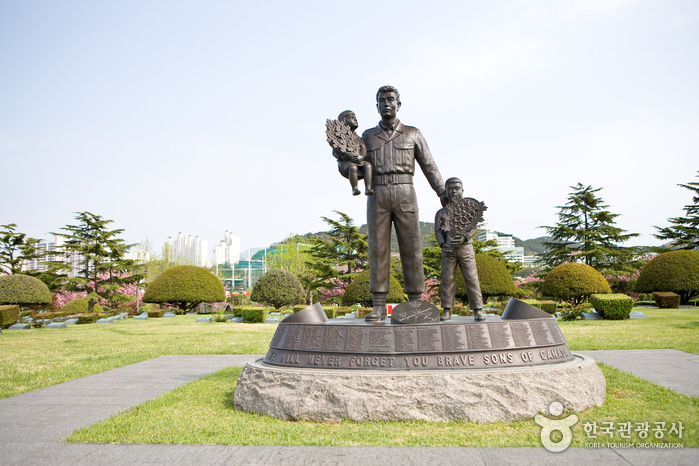
UN Memorial Cemetery (재한유엔기념공원 (UN기념공원))
5.7Km 2024-03-06
93 UN pyeonghwa-ro, Nam-gu, Busan
+82-51-625-0625
UN Memorial Cemetery in Korea stands as the sole UN cemetery globally, established by the UN Command in 1951 to inter fallen soldiers from the Korean War. Initially accommodating around 11,000 individuals, it later saw the repatriation of many, with 2,300 remains laid to rest. Soldiers from 11 nations, including the United States and the United Kingdom, find their final resting place here. The site features Memorial Service Hall, Memorabilia Hall, Wall of Remembrance, UN Forces Monument, and Unknown Soldier's Pathway.
Peace Park (평화공원)
5.7Km 2021-09-17
10, Sinseon-ro 447beon-gil, Nam-gu, Busan
+82-51-607-4541
Peace Park is the representative citizen's rest area in Busan, filled with over 30,000 camellia and pine trees. A fountain in the middle of the park provides a fun water playground for children, and a popular date spot with beautiful lights at night.
![Olive Young - Busan Daeyeon Station Branch [Tax Refund Shop] (올리브영 부산대연역)](http://tong.visitkorea.or.kr/cms/resource/40/2885740_image2_1.jpg)
Olive Young - Busan Daeyeon Station Branch [Tax Refund Shop] (올리브영 부산대연역)
5.7Km 2024-04-18
225-1, Suyeong-ro, Nam-gu, Busan
-
Busan Museum (부산박물관)
5.8Km 2023-01-09
63, UN pyeonghwa-ro, Nam-gu, Busan
+82-51-610-7118
Busan Museum was founded on July 11, 1978 to collect, preserve, display, and research the cultural hertiage of Busan. The museum houses 45,000 artifacts, displaying just 1,300 through regular exhibition rooms. The museum underwent a remodeling project in 2002 along with the opening of Exhibition Hall 2 to expand to ten permanent exhibition rooms, as well as a planned exhibition space, heritage research room, experience hall, lecture hall, and more. The museum aims to provide more extensive research into uncovering historical artifacts, and provide educational programs to visitors.
Hwangnyeongsan Mountain ()
6.0Km 2024-10-25
391-39 Hwangnyeongsan-ro, Nam-gu, Busan
+82-70-7543-5249
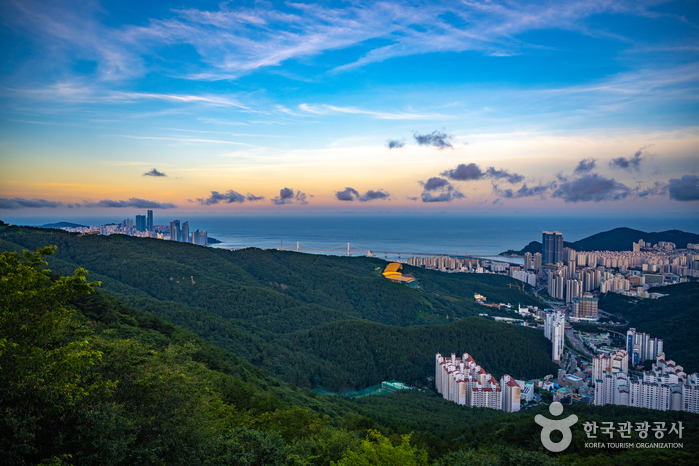
Hwangnyeongsan Mountain offers a lush green forest easily accessible from downtown Busan. The mountain is popular for hiking, as well as taking in the nightscape. The mountain stretches across Busanjin-gu, Nam-gu, and Suyeong-gu districts, and with an altitude of 427 meters, it is the second tallest mountain in the Geumnyeon Mountain Range. Despite this distinction, the summit can be reached after a two to three-hour hike. At the foot of the mountain, one can find a citizen's recreation area and a youth training center. Choosing which mountain trail to take depends on the transportation options available.
Hwangnyeongsan Observatory (황련산 전망대)
6.0Km 2024-10-29
391-39 Hwangnyeongsan-ro, Nam-gu, Busan
Hwangnyeongsan Mountain, where the observatory is located, is in the center of Busan as it spans across four districts (Busanjin-gu, Yeonje-gu, Suyeong-gu, and Nam-gu) and is a popular driving course in spring when the cherry blossoms bloom along the road. The Hwangneyongsan Observatory also makes it a perfect place for a night tour. A city that lies below the mountains looks even more beautiful with the cozy lights that illuminate the observatory and the sparkling radio tower.
Busan Cultural Center (부산문화회관)
6.0Km 2021-08-06
1, UN pyeonghwa-ro 76beon-gil, Nam-gu, Busan
+82-51-607-6000
Busan Cultural Center began construction in October 1983 and finished constructing three halls in 1993. In April 2010, the cultural center underwent renovations and reopend in October. The architecture format used traditional Korean houses with a large, medium, and small halls. Large gates and walls were removed to allow easy access. The roof used concrete slabs to recreate traditional patterns and the exterior walls are made of granite stone.
Hyewonjeongsa Temple (혜원정사)
6.0Km 2024-02-22
47 Gobun-ro 68beon-gil, Yeonje-gu, Busan
The "jeongsa" of Hyewonjeongsa Temple refers to a temple, meaning a place where practitioners dwell and dedicate themselves to spiritual cultivation. It houses various halls such as Daeungbojeon, Manbuljeon, Samseonggak, Bell Pavilion, Yosachae, and Statue of Avalokitesvara Bodhisattva. There is a hiking trail leading to the summit of Myobongsan Mountain, from where one can enjoy a panoramic view of Busan city.
 English
 한국어
한국어 日本語
日本語 中文(简体)
 Deutsch
 Français
 Español
 Русский


