![Daiso - Busan Nampo Branch [Tax Refund Shop] (다이소 부산남포)](http://tong.visitkorea.or.kr/cms/resource/66/2885866_image2_1.jpg)
Daiso - Busan Nampo Branch [Tax Refund Shop] (다이소 부산남포)
12.6Km 2024-04-23
2F, 10, Docheong-ro, Yeongtong-gu, Suwon-si, Gyeonggi-do
-

Gukje Market (국제시장)
12.6Km 2025-10-23
Area of Sinchang-ro 4-ga, Jung-gu, Busan
+82-51-245-7389
The current marketplace of Gukje Market first formed after the liberation of Korea from the Japanese administration when people gathered to trade overseas products left by the Japanese and brought in by Koreans who came back from abroad. Following the Korean War, refugees who fled to Busan set up stalls in order to make a living by selling smuggled or imported products, which developed into Gukje Market (gukje meaning "international" in Korean) of today. Gukje Market is one of Korea’s largest markets and a testament to Korea's modern history. The market is divided into two wings, and first-timers to the market are advised to be careful not to get lost in the maze-like alleys and halls.
Nampo Samgyetang (남포삼계탕)
12.6Km 2024-03-15
16-1, Nampo-gil, Jung-gu, Busan
+82-51-245-5075
Nampo Samgyetang serves samgyetang (ginseng chicken soup), a popular pick-me-up food in Korea. The restaurant's history goes back to 1962, so it has developed a loyal following. The samgyetang (ginseng chicken soup) served in the restaurant features Korean chicken boiled down with vegetables and medicinal herbs, resulting in a nutritious bowl of soup. Other menu items include jeonbok samgyetang (abalone and ginseng chicken soup) and dak jeongi gui (roasted chicken).
Samsong Chobap (삼송초밥)
12.6Km 2025-01-23
13 Gwangbok-ro 55beon-gil, Jung-gu, Busan
This is a Japanese restaurant that began in the early 1960s in Nampo-dong. While it is well-known for its Japanese-style gimbap called “gimchobap,” regular patrons consistently order its pufferfish dishes. The bokjiri (malgeuntang) is noted for its rich flavor, achieved by combining seasonal vegetables and pufferfish. The boksashimi (sliced raw pufferfish) menu offers a variety of options, including outer skin, inner skin, and shabu-shabu.
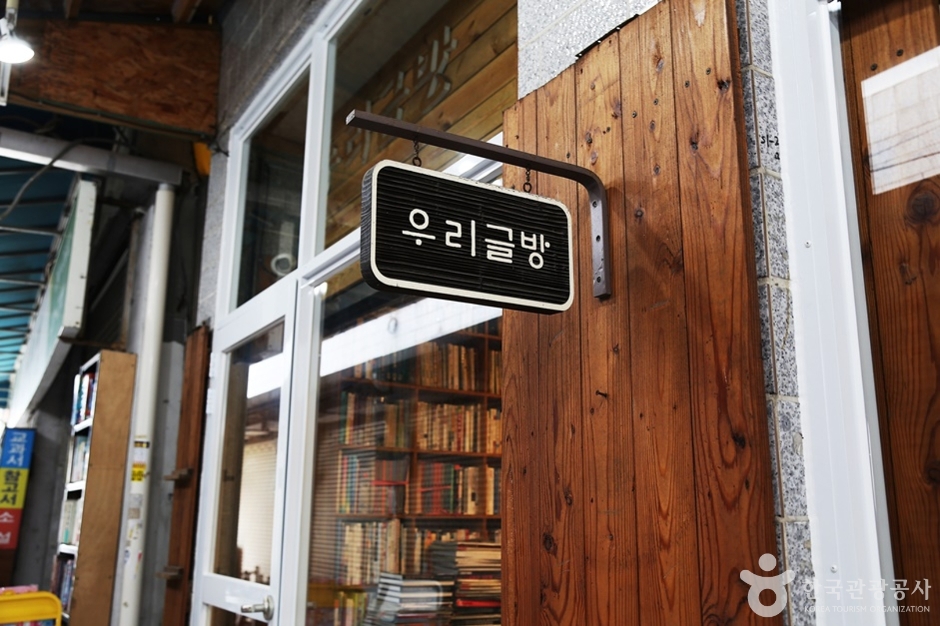
Urigeulbang (우리글방)
12.6Km 2024-02-13
63 Daecheong-ro, Jung-gu, Busan
Urigeulbang, a venerable bookstore located in the renowned Bosu-dong Book Street in Busan, is celebrated for its trade in used books. This bookstore doubles as a book café, allowing visitors the unique experience of reading from its extensive collection while enjoying a cup of coffee or other beverages, without the obligation to purchase a book. The owner, an enthusiastic collector of used books, has amassed a vast array of old and rare editions, making it a treasure trove for bibliophiles. Adjacent to Urigeulbang is the Bosu-dong Book Street Cultural Center, where visitors have the opportunity to delve into the rich history of this unique bookstore alley.
Dolsotbapjip (돌솥밥집)
12.6Km 2024-03-15
7-1, Gwangbok-ro 37beon-gil, Jung-gu, Busan
+82-51-246-3888
Dolsotbapjip is a restaurant near Gukje Market that serves bibimbap. It has served a consistently good bowl of bibimbap to its loyal customers over its long history, and people have to wait in line to eat the restaurant’s bibimbap. Dolsotbapjip has only two menus: sundubu jjigae dolsot bibimbap (soft bean curd jjigae and hot stone pot bibimbap) and doenjang jjigae dolsot bibimbap (soybean paste jjigae and hot stone pot bibimbap). Both feature dolsotbap (hot stone pot rice) and namul (salad) to make the bibimbap, served alongside jjigae.
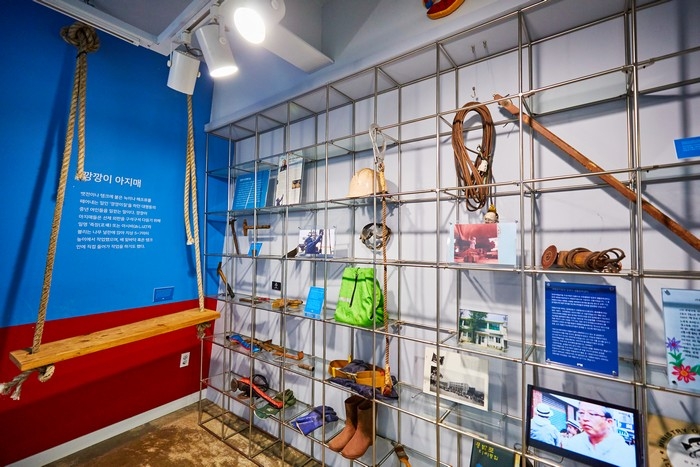
KANGKANGEE Arts Village (깡깡이 예술마을)
12.6Km 2025-10-24
36 Daepyeongbuk-ro, Yeongdo-gu, Busan
0507-1307-3339
In the late 19th century, Korea's first modern shipyard was established, and there are still more than a dozen repair shipyards and about 200 industrial companies in the area. It is said that the name of the village was born from the sound of a hammer hitting the surface of a rusty boat. In "My Name," it appeared as Inchang-si, the main stage of gangsters, and the unique atmosphere harmonized well with the content, adding to the dramatic fun. There are also many cute cafes to explore, and it is fun to experience a tour program that runs three times a day on weekends.
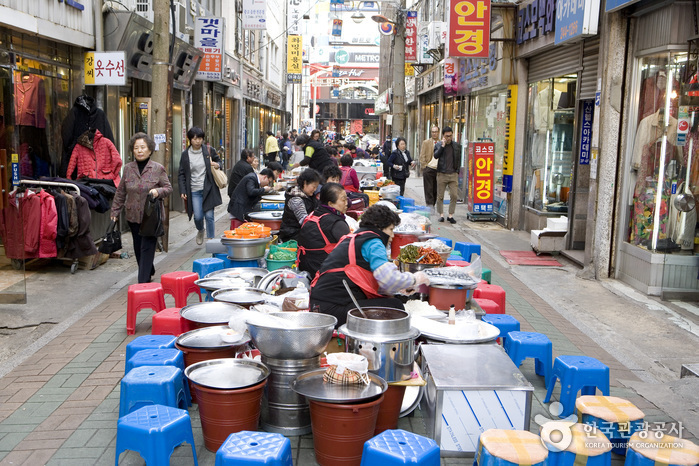
Gukje Market Food Street (국제시장 먹자골목)
12.6Km 2024-03-06
36, Junggu-ro, Jung-gu, Busan
+82-51-245-7389
Gukje Market Food Street has more than 60 years of history as one of Busan's traditional markets' most famous food streets. It is known for a number of dishes, such as Chungmu gimbap served with sweet and sour squid salad, sweet-and-spicy tteokbokki, milmyeon (wheat noodles), dwaeji gukbap (pork and rice soup), sundae, patbingsu (shaved ice with red beans), and Busan’s iconic bibim dangmyeon (spicy glass noodles). These dishes are enjoyed on small stools next to the street stalls. The sight of the diners lining the stall is one of the defining views of traditional markets in Korea. Visitors can also find suitable clothing, shoes, and accessories here.
![Lloyd - Gwangbok Branch [Tax Refund Shop] (로이드 광복)](http://tong.visitkorea.or.kr/cms/resource/64/2885864_image2_1.jpg)
Lloyd - Gwangbok Branch [Tax Refund Shop] (로이드 광복)
12.6Km 2024-04-18
40, Gwangbok-ro, Jung-gu, Busan
-
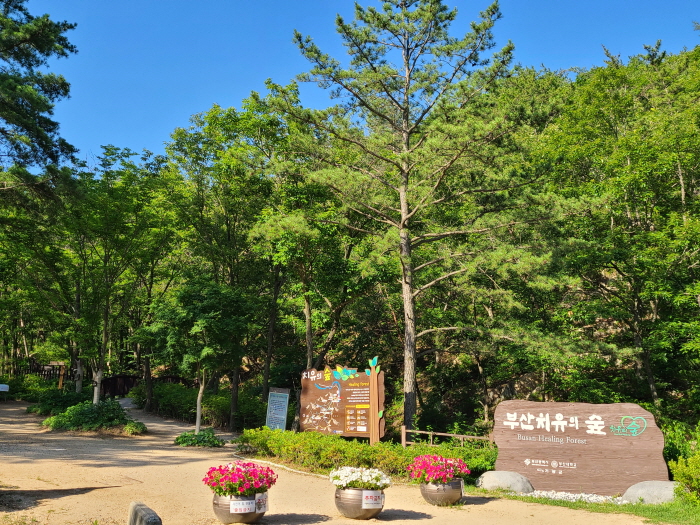
Busan Healing Forest (부산 치유의 숲)
12.6Km 2024-01-05
101 Cheolmacheon-ro, Gijang-gun, Busan
Busan Healing Forest is the first “healing forest” to be founded in the Gyeongsang-do region. This place is where visitors can reflect on emotions and relax through various wellness programs surrounded by nature and healing energy. Busan Healing Forest is 153ha in size, and it takes about 40 minutes to walk around the central trail starting from the visitor center at the entrance. Programs tailored to various audiences are operated in multiple places found along the central trail: the Forest Library, Mind Sharing Site, Forest Healing Yard, Forest Meditation Site, Pine Wind Bathing Site, and Prenatal Education Forest.
 English
 한국어
한국어 日本語
日本語 中文(简体)
 Deutsch
 Français
 Español
 Русский


