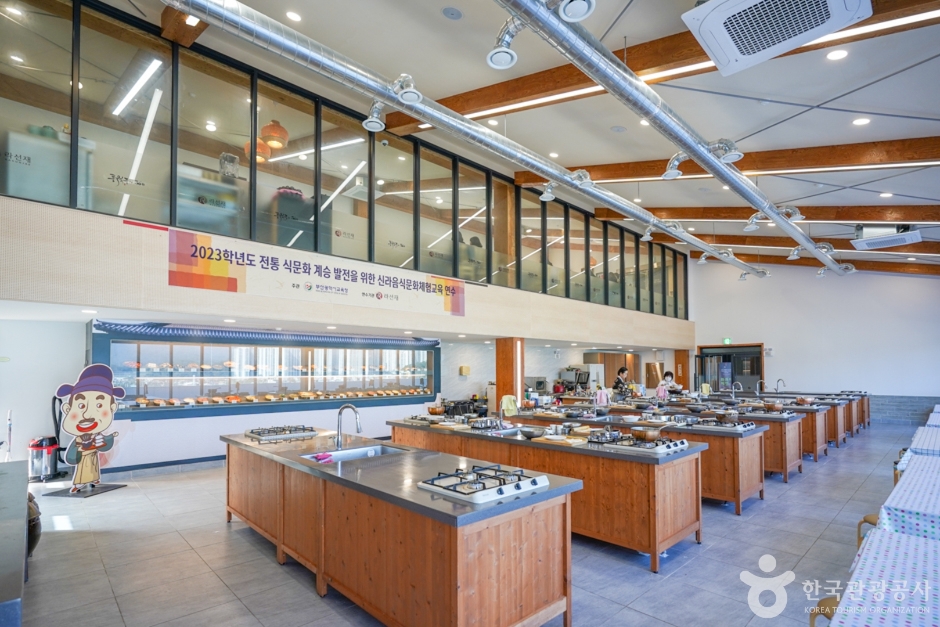
Rasunjae (라선재)
10.9Km 2025-11-17
443-51 Yongdam-ro, Hyeongok-myeon, Gyeongju-si, Gyeongsangbuk-do
Founded by the 1st traditional Silla cuisine master Cha Eun-jeong alongside 2nd master chef Kim Jeong-Hoon, Rasunjae restaurant is a unique venue dedicated to recreating the cuisine served in the royal courts of the Silla Kingdom. Its main menu consists of "Poongwalju 50," themed on Silla period food and Hwarang (young male warriors during the Silla period); and "Silla Twelve Kings Experience," a historical dining experience. Rasunjae also has a well-established reputation as a culinary institution that excels in preserving the taste and cooking styles of the past, and offers a K-Food cooking class for foreigners.

Tohamsan National Recreational Forest (토함산자연휴양림)
11.6Km 2021-04-08
1208-45, Bulguk-ro, Gyeongju-si, Gyeongsangbuk-do
+82-54-750-8700
Tohamsan National Recreational Forest, located in Gyeongju, is in close vicinity of major attractions such as Bulguksa Temple and Seokguram Grotto. Visitors can enjoy the culture as well as relaxing in a peaceful nature.
![Moda Outlet - GyeongjuPohang Branch [Tax Refund Shop] (모다아울렛 경주포항점)](http://tong.visitkorea.or.kr/cms/resource/37/2883737_image2_1.jpg)
Moda Outlet - GyeongjuPohang Branch [Tax Refund Shop] (모다아울렛 경주포항점)
13.3Km 2025-10-27
4930, Saneop-ro, Cheonbuk-myeon, Gyeongju-si, Gyeongsangbuk-do
-

Hwarang Hill (화랑의언덕)
14.3Km 2025-10-28
601 Suui-gil, Sannae-myeon, Gyeongju-si, Gyeongsangbuk-do
◎ Travel information to meet Hallyu’s charm - "The Good Bad Mother"
A meadow where Kang-ho and neighborhood children often played, Hwarang Hill is touted as a prime spot for one of the best snapshots of lifetime on social media. Walk up to the cliff-end rock known as Meditation Rock, you'll see a quaint village and rice paddies stretching out below. The hilltop boasts expansive lawns and a tranquil reservoir, perfect for a peaceful landscape view. While walking and picnicking are allowed, camping and car camping are not.
Seated Rock-carved Buddha at Golgulam Temple (경주 골굴암 마애여래좌상)
14.6Km 2022-12-28
101-5, Girim-ro, Gyeongju-si, Gyeongsangbuk-do
+82-54-744-1689
The Seated Rock-carved Buddha at Golgulam Temple consists of a Maebul (a Buddha carved in a cliff) at the very top of 12 Buddha images carved in natural rock caves located in a steep cliff of Girimsa Valley. A painting of the caving titled "Golgulseokgul" by Gyeomjae Jeongseon, a famous painter of the era, revealed that there was once a wooden room located in front of the Maebul, but today only a hint of the room remains on the rock. The head of the Buddha (Yukgye) is perched solid and high on the body with a clear profile of the face – sharp eyes, small lips and a long and narrow nose. In contrast to the three-dimensional face, the body is broader and flatter. The neck and upper chest sections have eroded over time. The folds in the clothing are nearly parallel, and the arm area has a v-pattern wrinkle, giving it a more realistic and three-dimensional quality. Around the head of the Buddha is a lotus-shaped halo, while the body is surrounded by a rhythmic flame-like halo. The Maebul is believed to have been created during the late Unified Silla Kingdom, as it shows similar craftsmanship to Seated Stone Vairocana Buddha (National Treasure), which was created in the year 876 and is located in Chukseosa Temple.
Gyeongju Golgulsa Temple (골굴사(경주))
14.9Km 2025-05-21
101-5 Girim-ro, Munmudaewang-myeon, Gyeongju-si, Gyeongsangbuk-do
Golgulsa Temple is a temple located within the Hamwolsan Mountain, situated between Gyeongju City and the East Sea. With a history of over 1,500 years, it houses many Buddha statues preserved within its twelve grottoes. Maintaining the tradition of Korean Buddhism's practice of Seonmudo, visitors can witness Seonmudo performances. Additionally, there are templestay programs available, offering opportunities to experience Korean temple culture.
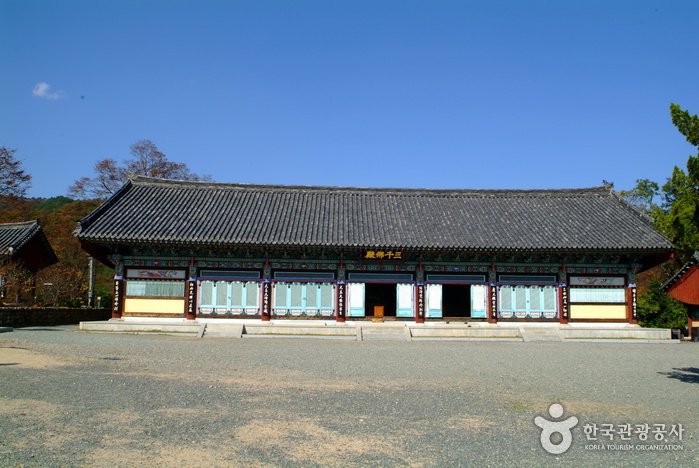
Girimsa Temple (기림사)
15.0Km 2022-12-29
437-17, Girim-ro, Gyeongju-si, Gyeongsangbuk-do
+82-54-744-2292
Girimsa Temple is located in Hamwolsan Mountain in Yangbuk-myeon, Gyeongju. The temple was built in the Silla Era and, with 16 buildings, is the second largest temple after Bulguksa.
Legend has it that the temple was originally built by the Venerable Gwang-yu, a sage from India, in the early part of the Silla Kingdom. The temple was reportedly called Imjeongsa at first, but was later changed to Girimsa after undergoing expansive renovations by Monk Wonhyo. It is still unclear exactly what year the temple was built in.
Girimsa is divided into two main areas. The first is the area around Daejeokgwangjeon Hall where the statue of Birojanabul is enshrined. The second is the area around the majestic 500-year-old bo tree (a kind of large fig tree) that is home to a wooden pagoda, the Seongbo Museum, Samsingak, Mangbujeon, and Gwaneumjeon halls. Daejeokgwangjeon Hall was first built during Queen Seondeok's reign, and was rebuilt six times since its original construction. Its simple but majestic architecture is characterized by baeheullim (aka, entasis columns) and a Dapoyangsik (Dapo-style) single-tiered gabled roof.
Girimsa is famous for Ojongsu, water that is said to have five different tastes. It consists of gamrosu, which is best for making tea; hwajeongsu, which supposedly gives comfort to the drinker; janggunsu, which makes the body stronger; myeongansu, which gives clear vision; and otaksu, which is said to sparkle so brightly that it attracts all the birds of the air. During Japanese colonial rule, the source of janggunsu, literally meaning ‘water of a general,’ was reportedly blocked off by Japanese soldiers, who were afraid the water would give the Korean people the strength to overthrow them. Except for janggunsu, water still continues to flow from each source.
On the way to Girimsa temple is Golgulsa Temple, well known for its 12 grottos. Golgulsa was originally a hermitage of Girimsa. After becoming an independent institution, it became the center of Seonmudo practice in Korea. The temple aims to promote the art of seonmudo on a national and international level.
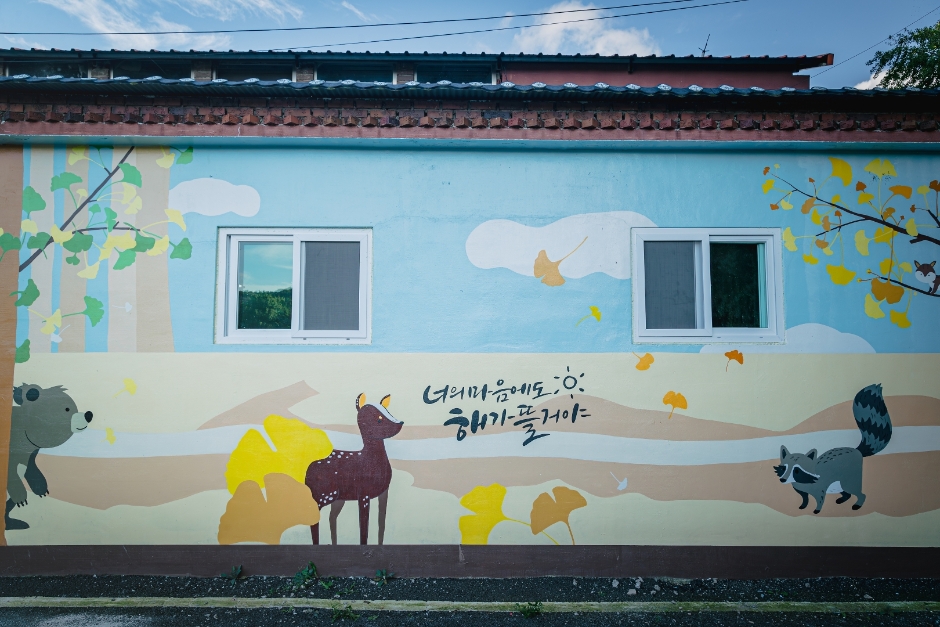
Dori Village Ginkgo Tree Forest (도리마을은행나무숲)
19.1Km 2025-10-28
35-102 Do-ri, Seo-myeon, Gyeongju-si, Gyeongsangbuk-do
A thick forest formed by densely planted ginkgo trees. In the fall, the golden ginkgo leaves color the forest. Noted as a wedding photo shoot hotspot, it's where Kang-ho found the twins' bouncy ball. As you wander through the village, read the beautiful phrases written on the walls, and capture a perfect shot amidst the ginkgo forest.
 English
 한국어
한국어 日本語
日本語 中文(简体)
 Deutsch
 Français
 Español
 Русский


