
Gunsan Mallaengyi Village (군산 말랭이마을)
2026-03-11
Sinheung-dong, Gunsan-si, Jeonbuk-do
Sinheung-dong began to form as a residential area when Japanese people started building houses in the area around the 1930s and 1940s. During the Korean War, refugees settled in areas such as Haemang-dong and Sinheung-dong, leading to the establishment of the village. At that time, houses were built closely together on wooden planks on top of rocks, and as time passed, the neighborhood became filled with thatched roofs. It was named Mallaengyi Village, derived from the Jeolla dialect meaning "the hillside." Currently, the area is experiencing urban decline due to population outflow, but in 2014, as part of a project to promote representative tourist attractions in Jeonbuk-do, nine artist residences and eight exhibition halls were established, creating a village where over 50 households and seven teams of artists live together harmoniously. Visitors can find murals, photo zones, sound spaces, and other notable attractions throughout the village. A walk up to Wolmyeongsan Mountain offers panoramic views of where the Geumgang River meets the West Sea. The viewpoint is also well known for its beautiful sunsets and nighttime scenery.

Former Main Building of the Gunsan Customs (옛 군산세관)
2026-03-11
244-7 Haemang-ro, Gunsan-si, Jeonbuk-do
The Former Main Building of the Gunsan Customs was completed before the start of Japanese colonial rule in 1908, making it a modern government building established by Korea. The customs office was responsible for inspecting and taxing goods entering and leaving Gunsan Port. As the port later became a key route for the export of rice and other resources during the colonial period, the site bears witness to that history of exploitation. Designed by an unnamed German architect, the European-style building was constructed with bricks imported from Belgium. It features ornamental roof tiles, three pointed towers, a brick exterior, and a wooden interior. Its architectural style is similar to that of Seoul Station and the Bank of Korea headquarters. Planned in 1906 and completed on June 20, 1908, it served as the main building of Gunsan Customs office for 85 years until 1993, when a new building was constructed after the adjacent watchtower was demolished. Today, it operates as the Honam Customs Museum, showcasing materials related to customs history, including notable records, film appearances, former customs directors, and the 100-year history of Gunsan Customs.
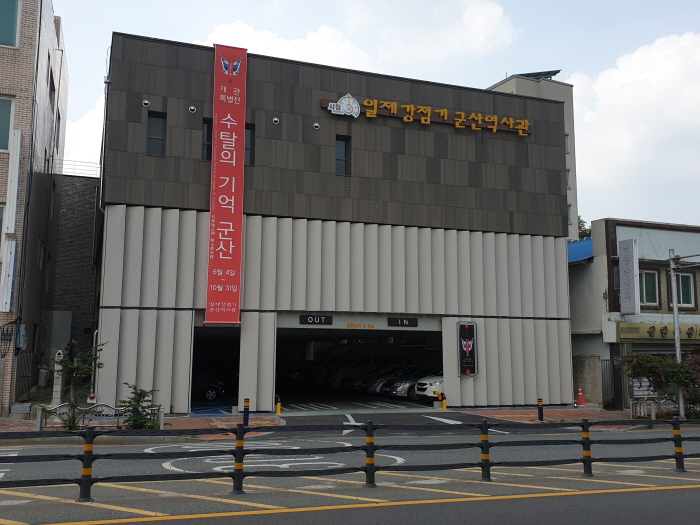
History Center of Colonial Period of Japan in Gunsan (일제강점기 군산역사관)
2026-03-12
21 Dongguksa-gil, Gunsan-si, Jeonbuk-do
The History Center of the Japanese Colonial Period in Gunsan is dedicated to human rights, peace, and reconciliation. It serves as a place of remembrance, reflecting on the exploitation experienced under Japanese imperial rule in order to help shape a better future. The museum emphasizes interaction among people, artifacts, and historical spaces, as well as active engagement with visitors. Through materials and records spanning from the opening of Gunsan Port to liberation, it seeks to foster dialogue and understanding. By remembering the suffering caused by forced exploitation and working toward healing, the museum aims to transform this painful history into enduring values of human rights and peace through ongoing research, exhibitions, and education.
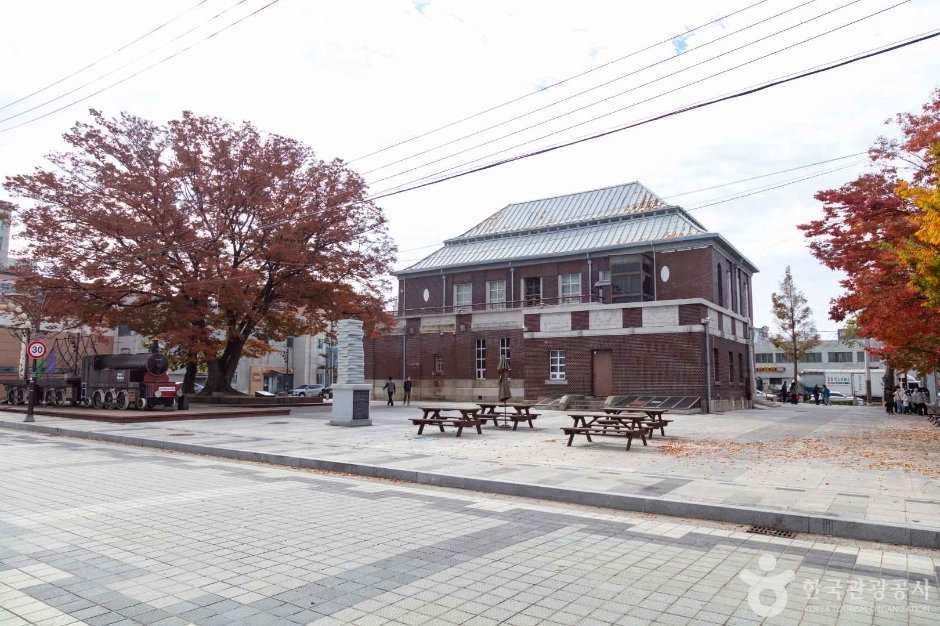
Gunsan Modern Architecture Exhibition Hall (근대건축관 (구)조선은행군산지점)
2026-03-12
214 Haemang-ro, Gunsan-si, Jeonbuk-do
Built in 1923, this red-brick building was originally the Joseon Bank Gunsan Branch, a major financial institution operated by the Japanese colonial government. Though two stories in structure, it rises to the height of four stories and features a grand, steeply pitched roof. The front entrance projects outward with five flat arches, flanked by semi-circular arches on either side. As a symbolic landmark of Gunsan’s modern history, it appears in the novel "Tangnyu" ("Murky Waters") by Chae Man-sik, set in colonial-era Gunsan. Today, the building operates as a modern architecture museum, exhibiting works related to Gunsan’s modern architectural heritage along with currency and historical artifacts from the Japanese colonial period.

Gyeongam-dong Railroad Village (경암동 철길마을)
2026-03-12
14 Gyeongchon 4-gil, Gunsan-si, Jeonbuk-do
Gyeongam-dong Railway Village is a retro-themed attraction built around a 2.5-kilometer railway in Gyeongam-dong, Gunsan, originally constructed in 1944 during the Japanese occupation to transport paper materials. A residential area gradually formed along the tracks and was fully developed by the 1970s. Although trains no longer run, the railway has been preserved as a cultural tourism site. Today, the village recreates the atmosphere of the 1970s and 1980s. Old houses and shops line the tracks, and vendors sell nostalgic Korean snacks such as dalgona candy. Visitors can also rent vintage-style school uniforms for photos, making it a popular destination for those seeking a retro Korean experience.

Bongmyeongsan Suspension Bridge (봉명산 출렁다리)
2026-02-13
27 Oncheongangbyeon 1-gil, Mungyeong-eup, Mungyeong-si, Gyeongsangbuk-do
Bongmyeongsan Suspension Bridge, completed in December 2023, stretches across the slopes of Bongmyeongsan Mountain at 690 meters above sea level. It’s about a 400-meter, 15-minute walk from the trailhead to the bridge. At 1.5 meters wide and 160 meters long, it offers sweeping views of Mungyeong-eup surrounded by mountains. The bridge sways with every step, and the sensation is even sharper when the wind blows. The variety show "2 Days & 1 Night" once filmed a game mission here where the cast ate tteokguk (rice cake soup). It takes a few hundred steps to get to the suspension bridge, so it's advised to wear comfortable shoes. There’s a pavilion along the way where visitors can take a break.
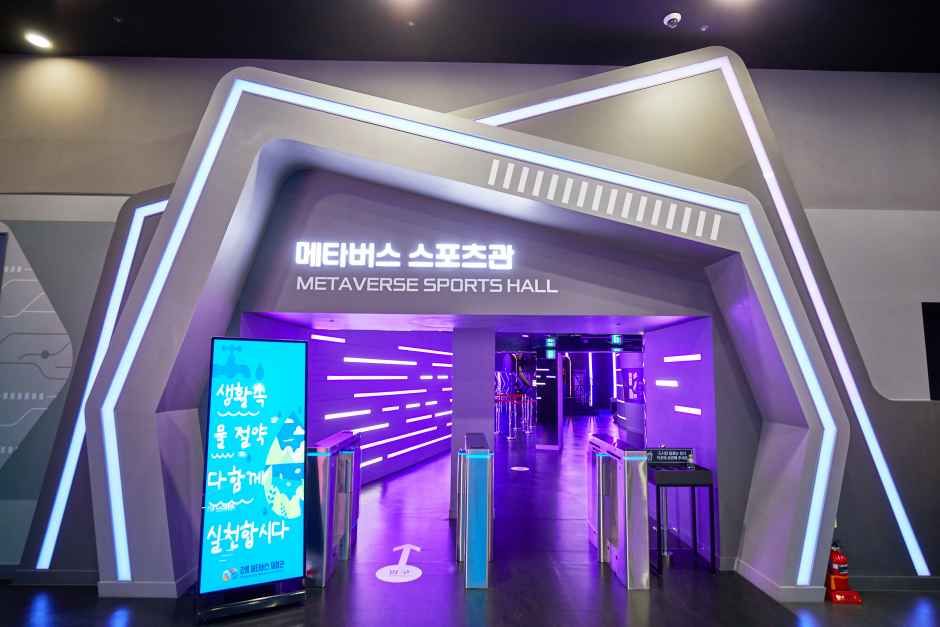
Gangneung Metaverse Experience Center (강릉메타버스체험관)
2026-02-11
131 Nanseolheon-ro, Gangneung-si, Gangwon-do
Right next to Gyeongpoho Lake, the Gangneung Metaverse Experience Center lets visitors explore the city’s history and culture through virtual reality. Spread across three floors, it features interactive exhibits and VR/AR programs that mix tradition with modern technology—fun for families with kids. It’s also a great way to start or end the Gangneung trip as it gives an overview of the city's landmarks.
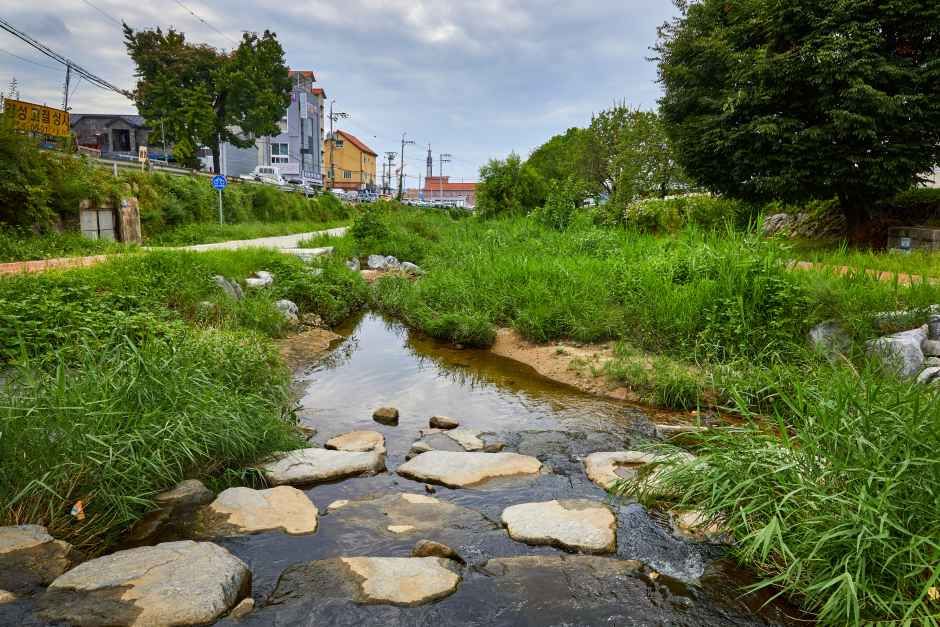
Yullyangcheon Stream (율량천)
2026-02-13
Areas spanning Naedeok-dong, Cheongwon-gu, Cheongju-si, Chungcheongbuk-do
Yullyangcheon Stream runs through the heart of Cheongju and is a favorite spot for locals. With walking trails and bike paths along the water, it’s perfect for a leisurely outing. In the drama "Miss Night and Day (2024)," it appears as the place Lim Sun (played by Lee Jung-eun) goes when she feels lost.
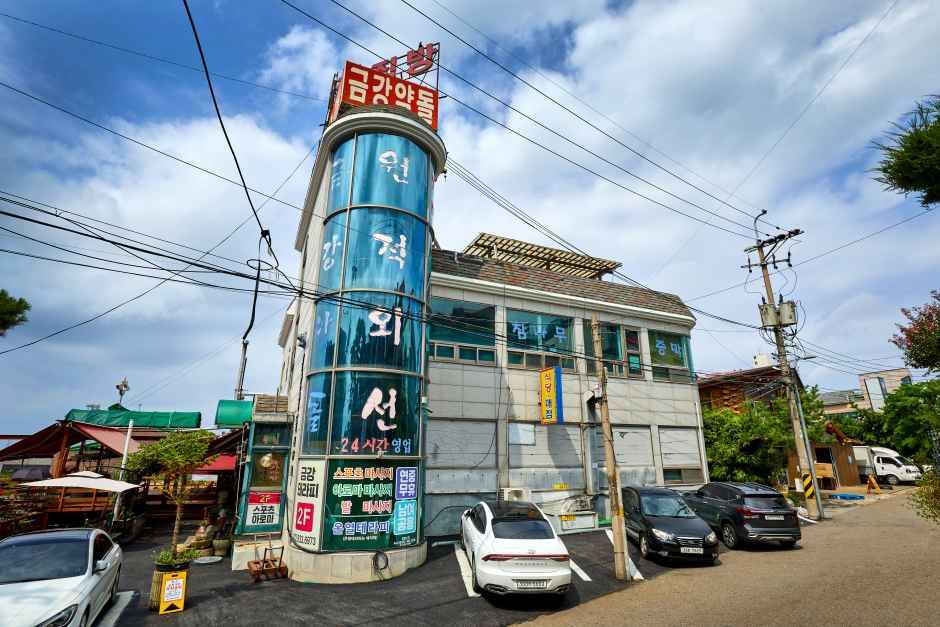
Geumgang Yakdol (금강약돌)
2026-02-13
13 Neungheodae-ro 165beon-gil, Yeonsu-gu, Incheon
Geumgang Yakdol is a jjimjilbang uses a rare mineral called "geumgang yakdol," believed to emit far-infrared rays and negative ions that promote health and recovery. It has a salt room and a hot steam chamber, the latter heated with real charcoal for an authentic experience. The location was also featured in "The Atypical Family (2024)" as the place where Do Da-hae and her accomplices plot to steal the Bok family’s fortune.

Gunsan Modern Art Museum (군산근대미술관)
2026-02-20
230 Haemang-ro, Gunsan-si, Jeonbuk-do
The building of Gunsan Modern Art Museum was originally founded in 1907 during the Japanese colonial period as the 18th Bank of Japan's Gunsan branch. Located in Jangmi-dong near the inner harbor, it primarily provided trade-related loans. During the colonial period, the bank financed the purchase of Korean land and profited from exporting rice to Japan. The building was sold to the Joseon Industrial Bank in 1936 and transferred in 1938 to the Joseon Rice Warehouse Co., Ltd. (later Korea Express). It consists of a wooden main office and brick vault annexes connected at the rear. After liberation, it operated as a Korea Express branch. Designated a registered cultural heritage site in 2008, it was renovated as the Gunsan Modern Art Museum. The main building presents exhibitions on colonial exploitation and the site’s history and restoration, while the former vault displays the original safe and a recreated prison cell of Ahn Jung-geun.
 English
 한국어
한국어 日本語
日本語 中文(简体)
 Deutsch
 Français
 Español
 Русский


