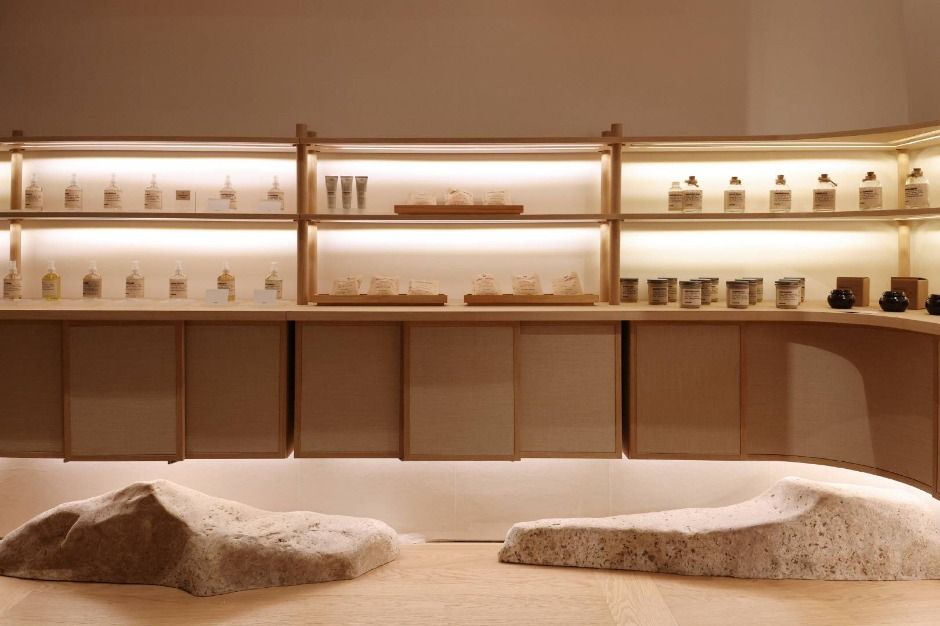
GRANDHAND. Gahoe (그랑핸드 가회점)
7.4Km 2025-12-04
61 Bukchon-ro 11-gil, Jongno-gu, Seoul
Launched in 2014 at a small hanok in Bukchon Hanok Village, this Korean perfume brand now has nine stores around Seoul. With no advertisements or online sales, GRANDHAND has preserved its roots for years. GRANDHAND. Gahoe located amidst the beautiful surroundings of Bukchon Hanok Village and various art museums has customers of all ages and nationalities.
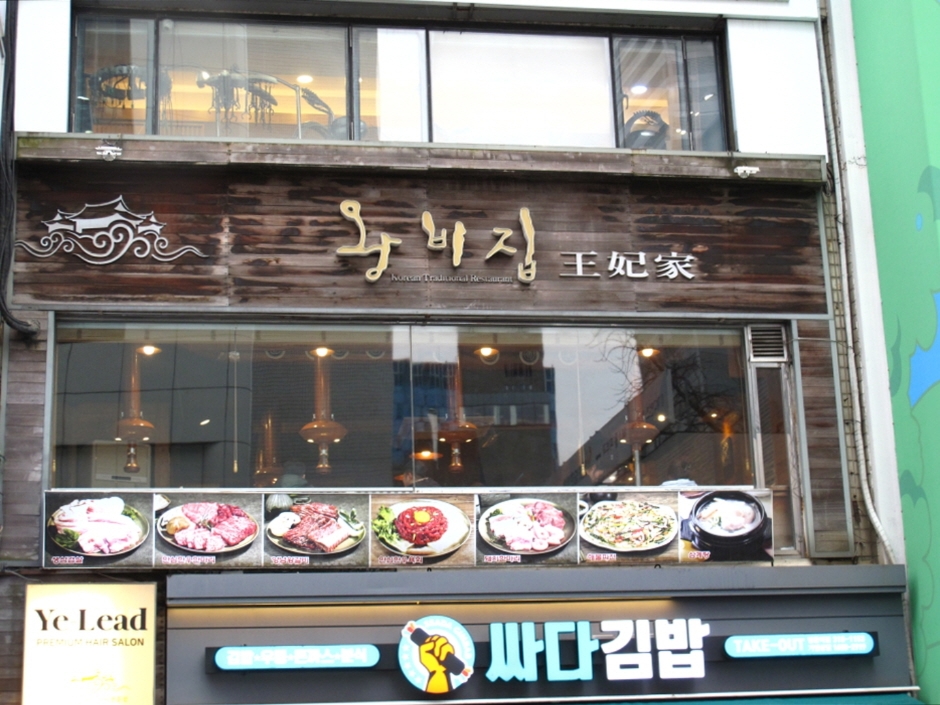
Wangbijip (왕비집)
7.4Km 2024-03-11
26, Myeongdong 8ga-gil, Jung-gu, Seoul
+82-2-3789-1945
Wangbijip is a restaurant where all the meat is grilled by the staff. They focus on meats such as hanu galbisal (grilled boneless korean galbi) and sweet grilled marinated galbi. Popular lunch specialties include sogalbi jeongsik (grilled galbi set menu), bori gulbi jeongsik (barley-aged dried yellow croaker set menu), and dwaeji galbi jeongsik (grilled pork galbi set menu). The set menucomes with soybean paste jjigae and janchi guksu (banquet noodles) for a small serving. The lightly flavored janchi guksu is the best combination with the marinated galbi, giving it a light aftertaste.
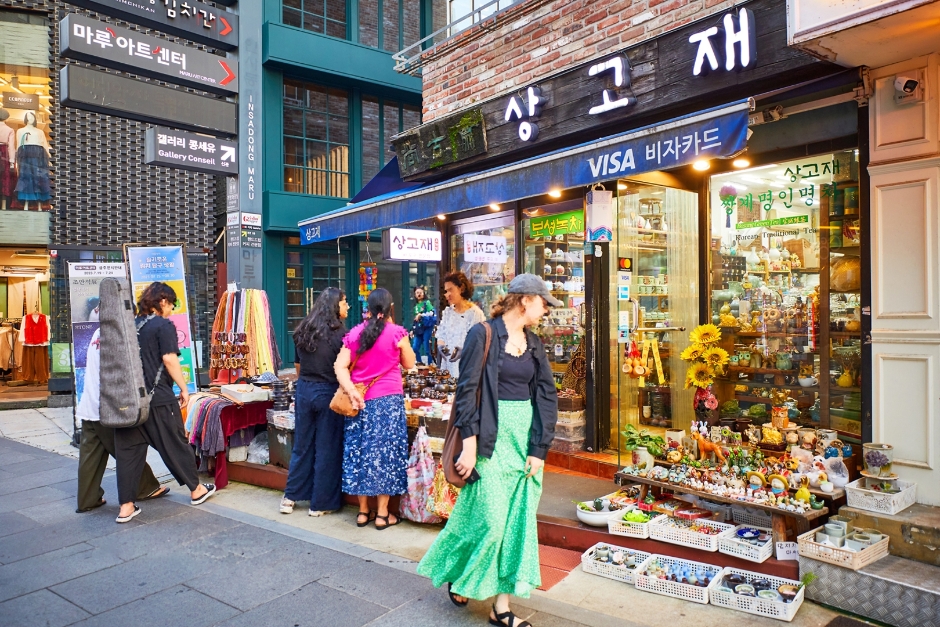
Insadong Cultural Street (인사동 문화의 거리)
7.5Km 2023-12-26
Insa-dong, Jongno-gu, Seoul Metropolitan City
Insadong Cultural Street is a popular tourist destination for visitors from all around the world, thanks to its numerous art galleries, restaurants serving Korean table d’hote, traditional teahouses, and street vendors lining the streets. Its most recognizable feature is the use of Hangeul (Korean script) in storefronts, which allows the visitors to really see just what makes this place so special. Unlike the nearby Ikseon-dong Hanok Street, Insadong Cultural Street has larger streets with wider stores, so it is much easier to traverse. On evenings and weekends, one can find buskers performing on the side of the road.
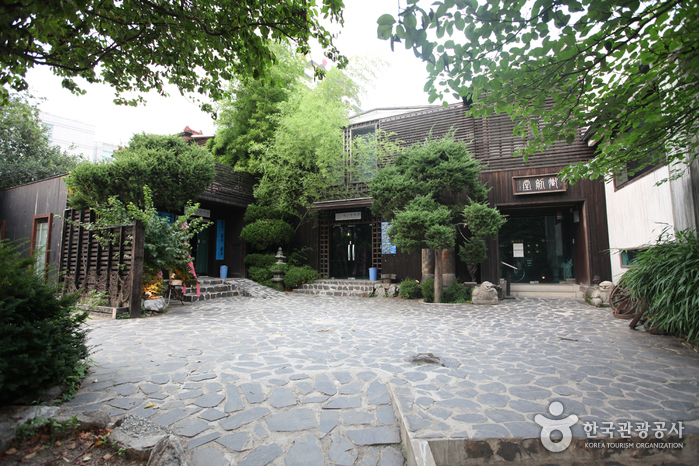
Kyung-In Museum of Fine Art (경인미술관)
7.5Km 2024-03-04
11-4, Insadong 10-gil, Jongno-gu, Seoul
+82-2-733-4448
Kyung-In Museum of Fine Art is located in Insa-dong. It has six exhibition rooms, an atelier, an outdoor exhibition area, and a traditional tea house. It hosts outdoor concerts in spring and fall, and Q&A sessions with authors can also be found as well. The traditional tea house offers about 15 types of traditional Korean tea in a space that overlooks the garden.

Jeontong Dawon (전통다원)
7.5Km 2024-03-18
11-4 Insadong 10-gil, Jongno-gu, Seoul
+82-2-730-6305
Jeontong Dawon is a hanok-style tea house located in Insa-dong. It offers seating both inside the hanok and in the outdoor garden, allowing guests to choose their preferred spot. Visitors can enjoy various types of traditional Korean tea along with traditional Korean snacks such as yugwa (fried rice sweet). It is situated within the Kyung-in Museum of Fine Art premises, offering the opportunity to explore the museum as well.
![Jigum - Jongno Branch [Tax Refund Shop] (JIGUM 종로)](http://tong.visitkorea.or.kr/cms/resource/52/2889052_image2_1.jpg)
Jigum - Jongno Branch [Tax Refund Shop] (JIGUM 종로)
7.5Km 2024-04-18
F1, F2, 21-8, Bukchon-ro, Jongno-gu, Seoul
-
![Seoul Gongyesa [Tax Refund Shop] (서울공예사)](http://tong.visitkorea.or.kr/cms/resource/10/2878210_image2_1.jpg)
Seoul Gongyesa [Tax Refund Shop] (서울공예사)
7.5Km 2024-04-16
1F, 27-1, Insadong-gil, Jongno-gu, Seoul
-
Bukchon Museum (북촌생활사박물관)
7.5Km 2022-08-30
90, Bukchon-ro 5na-gil, Jongno-gu, Seoul
+82-2-736-3957
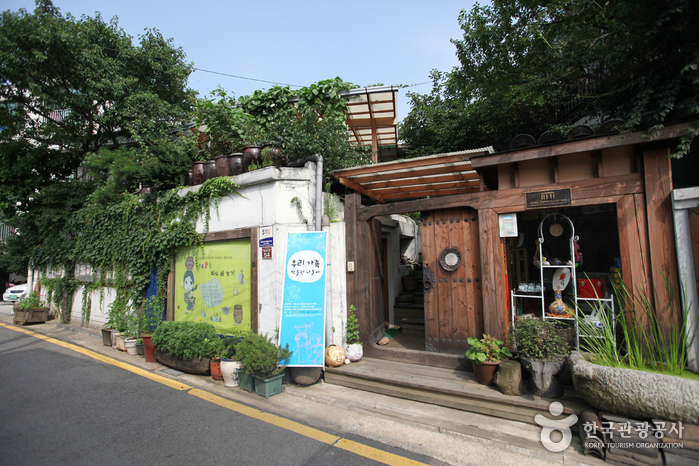
The Bukchon Museum displays items that have been collected from Bukchon, a historical village that was once home to the nation’s nobility. The museum was founded to observe urban development that took place in the recent decades through collected and preserved veryday household items that were used by Bukchon residents. Visitors are even allowed to touch items on display to better be able to imagine life in Korea before industrialization.
Isae - Insa Branch (No. 2) [Tax Refund Shop] (이새 인사2호)
7.5Km 2024-04-18
30-1, Insadong-gil, Jongno-gu, Seoul
-
Hamcho Ganjanggejang (함초간장게장)
7.5Km 2024-03-11
27, Myeongdong 8ga-gil, Jung-gu, Seoul
+82-2-318-1624
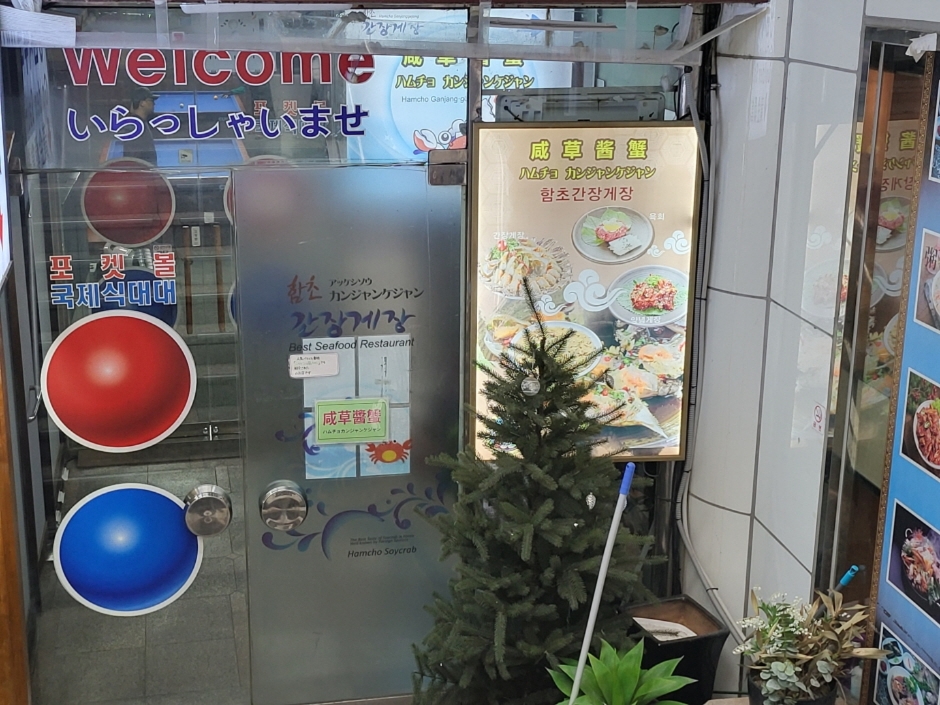
Situated in Myeongdong Street, Hamcho Ganjanggejang specializes in ganjang gejang (soy sauce marinated crab). Their signature dish, ganjang gejang, is made by marinating blue crab in soy sauce and is a favorite among Koreans. Saeu jang (soy sauce marinated shrimp) and other seafood dishes (abalone, octopus, etc.) are also a must-try. In addition, the traditional Korean side dishes are so tasty that the restaurant never runs out of customers.
 English
 한국어
한국어 日本語
日本語 中文(简体)
 Deutsch
 Français
 Español
 Русский


