
![Topten - Mecenatpolis Branch [Tax Refund Shop] (탑텐 메세나점)](http://tong.visitkorea.or.kr/cms/resource/53/2891053_image2_1.jpg)
Topten - Mecenatpolis Branch [Tax Refund Shop] (탑텐 메세나점)
2.3Km 2024-04-19
45, Yanghwa-ro, Mapo-gu, Seoul
-
![Muji - Mecenatpolis Branch [Tax Refund Shop] (무지 메세나점)](http://tong.visitkorea.or.kr/cms/resource/58/2891058_image2_1.jpg)
Muji - Mecenatpolis Branch [Tax Refund Shop] (무지 메세나점)
2.3Km 2024-04-19
45, Yanghwa-ro, Mapo-gu, Seoul
-
Olive Young - MECENATPOLIS Branch [Tax Refund Shop] (올리브영 메세나점)
2.3Km 2024-04-19
45, Yanghwa-ro, Mapo-gu, Seoul
-
Olive Young - MECENATPOLIS Branch [Tax Refund Shop] (올리브영 합정메세나폴리스)
2.3Km 2024-04-18
B1, 45, Yanghwa-ro, Mapo-gu, Seoul
-
Seodaemun Prison History Museum (서대문형무소역사관)
2.4Km 2024-12-02
251 Tongil-ro, Seodaemun-gu, Seoul
Seodaemun Prison was built under the Japanese administration to imprison independence movement activists. It first opened on October 21, 1908 under the name Gyeongseong Prison. Eventually, so many activists were imprisoned that the building had to be expanded. At that time, the name changed to Seodaemun Prison on September 3, 1912. Eighty years later, the prison was turned into Seodaemun Independence Park on August 15, 1992 to commemorate the Korean patriots who were tortured in prison, giving their lives for freedom. Of the many buildings, only seven were preserved for their historical significance, among which three prison buildings and the execution site were designated as a Historic Site. In 1998, the park underwent another transformation into today's Seodaemun Prison History Hall to educate the public on the importance of Korea's independence and the sacrifices of those who fought to achieve it.
Youngone Corporation [Tax Refund Shop] (주식회사 영원무역)
2.4Km 2024-04-19
159, Mallijae-ro, Jung-gu, Seoul
-
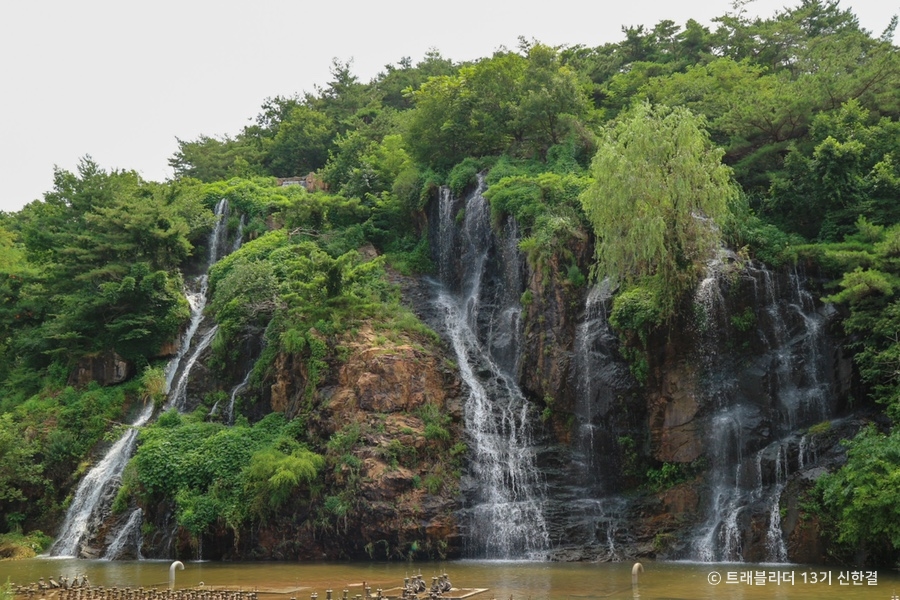
Hongjecheon Artificial Waterfall (홍제폭포)
2.4Km 2024-11-07
Yeonhui-dong, Seodaemun-gu, Seoul
Hongjecheon Artificial Waterfall is located along Hongjecheon Stream in Seodaemun-gu, Seoul. The waterfall was built in 2011 and is 25 meters tall and 60 meters wide. Despite being a man-made waterfall, the design and construction were so well-done that many find it hard to believe it wasn't a naturally formed waterfall. The area around the waterfall features various places for citizens and visitors to relax, while there are many cafes and cultural spaces in the area to make a visit more enjoyable.
Dongnimmun Gate (독립문)
2.4Km 2022-12-15
251, Tongil-ro, Seodaemun-gu, Seoul
Dongnimmun stands at the location originally known as Yeongeun, where envoys were once treated. When a Chinese envoy visited, the King would go out through this door to greet. In 1898, to announce the independence from Japan, Dongnimun was constructed with the fund collected by the citizens. The traces of the past still remain on Dongnimmun with two pillars in front of Dongnimmun being the remains of Yeongeunmun.
The Arc de Triomphe in France can be recalled in comparison to Dongnimmun. Dongnimmun was built using granite with a passageway x_height of 14.28 meters. On the top it is written ‘Dongnimmun’ in Korean with the national flag drawn on each side. On the inner-left side there are stone stairs leading to the attic. The national flower Mugunghwa are planted around Dongnimmun. Now it is surrounded by roads and it is eye-catching to view when passing by.
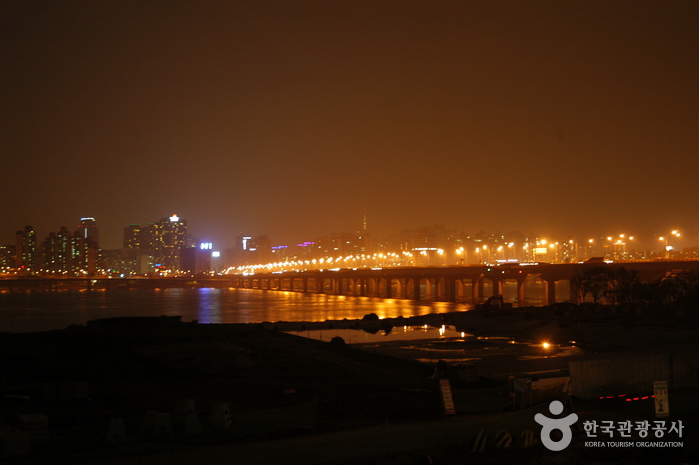
Mapodaegyo Bridge (마포대교 야경)
2.4Km 2021-03-26
Mapo-dong, Mapo-gu, Seoul
+82-2-3153-8365
Mapodaegyo Bridge connects Yonggang-dong, Mapo-gu and Yeouido-dong, Yeongdeungpo-gu. The bridge is 1,400 meters long and 25 meters wide (6-lane road), and was the fourth bridge to be built over the Hangang River, following the construction of Hannam Bridge. The construction of the bridge first started in February of 1968 and was completed in May of 1970. At the time of its completion the bridge was named Seouldaegyo Bridge, but was later changed to Mapodaegyo Bridge in 1984.
 English
 한국어
한국어 日本語
日本語 中文(简体)
 Deutsch
 Français
 Español
 Русский


