
WENERD Corp. (주식회사 위너드)
2.7Km 2025-10-23
#201, Saul Building, 21 Seongmisan-ro 1-gil, Mapo-gu, Seoul
Wenerd provides a total care solution through “Wenerd Care”, combining premium wellness tourism with health check-ups to comprehensively manage clients’ health and beauty.
Seoul Hyochang Park (서울 효창공원)
2.7Km 2024-07-09
177-18 Hyochangwon-ro, Yongsan-gu, Seoul
+82-2-2199-7608
Hyochang Park covers 122,245 square meters spanning across Hyochang-dong and Cheongpa 2-dong. It is a historic landmark that once contained several royal tombs, and was known at that time as Hyochangwon. The cemeteries that were originally located in Hyochangwon belonged to Crown Prince Munhyo, King Jeongjo’s first son who died at the age of five; Royal Noble Consort Uibin of the Seong Clan, King Jeongjo’s royal concubine and Crown Prince Munhyo’s mother; Royal Noble Consort Sugui of the Park Clan, King Sunjo’s royal concubine; and her daughter Princess Yeongon. The royal tombs were moved to Seooreung Tombs in the waning months of the Japanese colonial period. The Japanese empire began the development of Hyochangwon into a park in 1924, and the Japanese governor-general officially assigned the site as a park in 1940.
Presently, several of Korea’s greatest leaders are buried in Hyochang Park. The remains mostly belong to independence activists including Yoon Bong-gil, Lee Bong-chang, and Baek Jeong-gi, whose graves are collectively known as Samuisa Tomb. A statue of Lee Bong-chang has been built in the graveyard. Among the other patriotic martyrs who are interred in the park are Kim Gu and some of the key figures of the provisional government such as Lee Dong-nyeong, Cha I-seok, and Cho Seong-hwan. An ancestral shrine named Uiyeolsa has been built along the main gate and holds the portraits of the deceased independence activists.
Olive Young - Dongnimmun Branch [Tax Refund Shop] (올리브영 독립문)
2.8Km 2024-04-18
99, Songwol-gil, Jongno-gu, Seoul
-
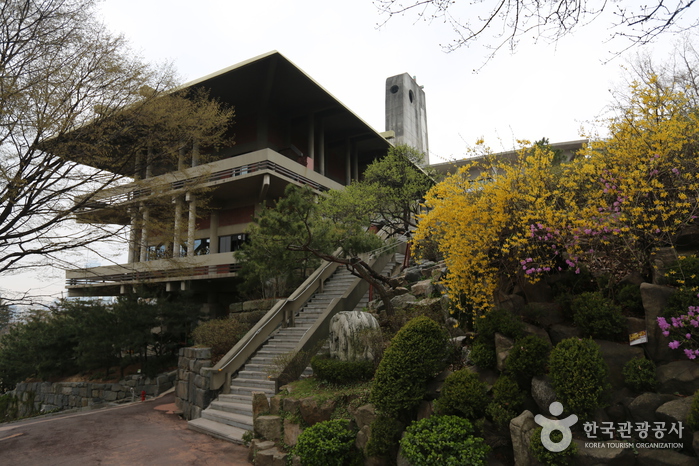
Korean Martyrs' Museum (한국천주교순교자박물관)
2.8Km 2023-01-03
6, Tojeong-ro, Mapo-gu, Seoul
+82-2-3142-4434
Korean Martyrs’ Museum was opened in October of 1967 as Jeoldusan Martyrs' Shrine, in memory of the Catholic martyrs who lost their lives during the Byeongin Persecution of 1866. The name of the museum changed to the current Korean Martyrs' Museum in August 2008. The museum displays artifacts and materials in exhibitions related to the Catholic Bishops' Conference of Korea.
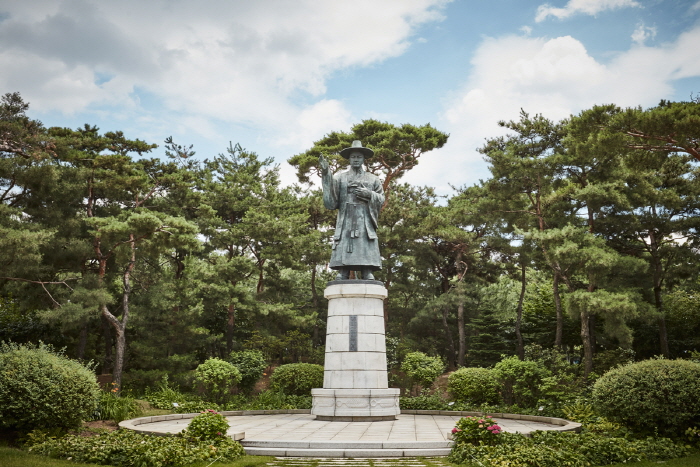
Jeoldusan Martyrs' Shrine (절두산순교성지)
2.8Km 2024-03-12
6 Tojeong-ro, Mapo-gu, Seoul
+82-2-3142-4434
Jeoldusan Martyrs' Shrine is the site where many Catholic believers were executed in 1866 due to persecution. In commemoration of the 100th anniversary of the martyrdom, the Korean Catholic Church opened the Memorial Hall in October 1967, exhibiting materials, relics, and souvenirs related to the Korean Catholic Church and operating a museum. Pope Johannes Paulus II visited the site in 1984, and Mother Teresa visited in 1985.
Mangwon Market (망원시장)
2.8Km 2025-07-11
27 Poeun-ro 6-gil, Mapo-gu, Seoul
Mangwon Market is one of the representative traditional markets of Seoul. Its proximity to both Mangnidan Street and Hangang Park makes it a great place to do some shopping in preparation for a riverside picnic. The market isn’t very large, but it is packed with delicious treats. One can find classics like the deep-fried and braised chicken, braised pigs' feet, crispy deep-fried green chili pepper, and other snack fare there, along with stores offering food and lifestyle items for some browsing.
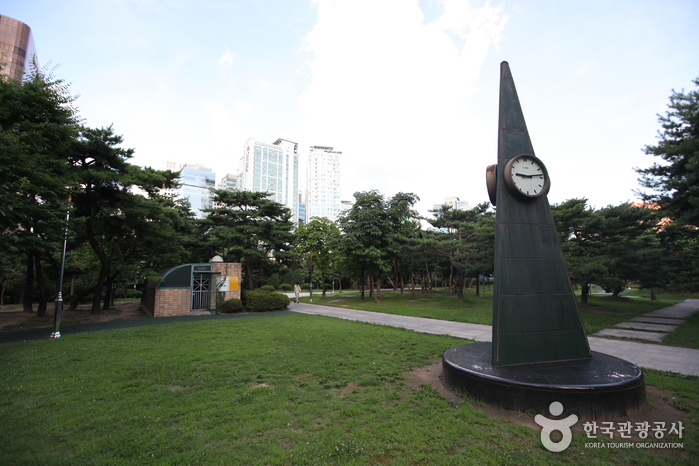
Seosomun Historical Park (서소문역사공원)
2.8Km 2023-08-11
5, Chilpae-ro, Jung-gu, Seoul
The Seosomun Gate area, which is located outside Seosomun Gate, was used as a persecution site in the 19th century before it turned into the local park of today. Many Catholics were suppressed and martyred here, making the area a holy site for Korean Catholics. Seosomun Gate was a gateway to Chilpae Market located near Namdaemun Gate. It was always busy with passerbys and the persecution site was established outside the gate to set an example of crime punishment to all the witnesses.
On May 15, 1999, a memorial tower was raised at the center of the park in honor of the martyrs. In 2013, Seoul's Jung-gu district also founded Seosumun Holy Shrine History Museum with a memorial exhibition hall in their honor.
![Zara - Lotte Seoul Station Branch [Tax Refund Shop] (자라 롯데 서울역점)](http://tong.visitkorea.or.kr/cms/resource/25/2878425_image2_1.jpg)
Zara - Lotte Seoul Station Branch [Tax Refund Shop] (자라 롯데 서울역점)
2.8Km 2024-04-22
378, Cheongpa-ro, Yongsan-gu, Seoul
-
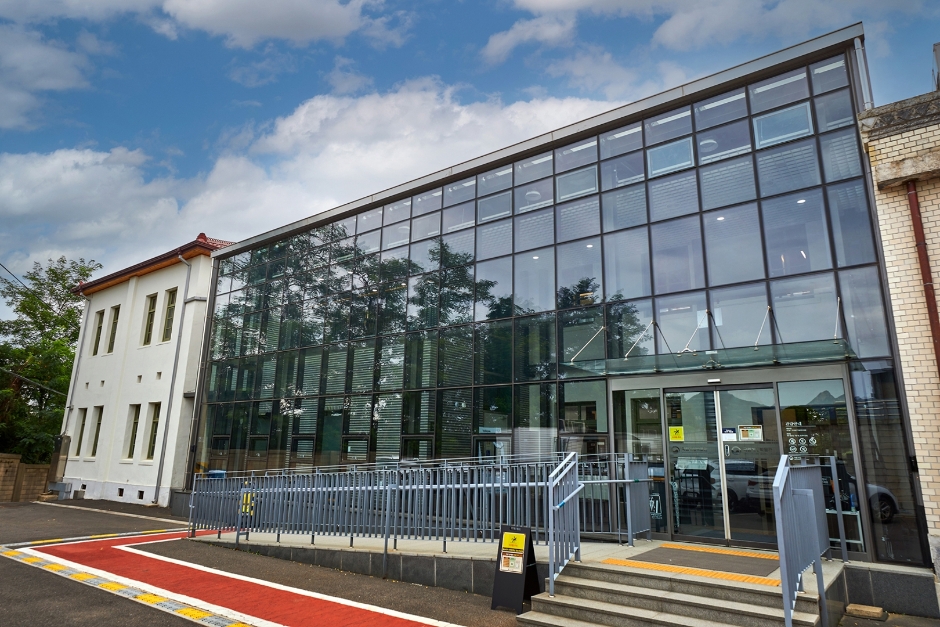
National Meteorological Museum of Korea (국립기상박물관)
2.9Km 2024-03-26
52 Songwol-gil, Jongno-gu, Seoul
A museum where one can look at Korea's meteorological observation history and technological development through exhibitions. The museum has the world's first rain gauge, invented in 1441, in the early Joseon dynasty. The museum operates approximately 350 meteorological observatories across Korea and focuses on promoting the uniqueness and excellence of Korea's meteorological science. There are permanent collections and special exhibitions. The permanent collections focus on the history of meteorological science in Korea. At the same time, the special exhibitions take a closer look at the history and information about meteorological science and natural disasters (e.g., earthquakes) that occurred in various regions of Korea. There are experience programs related to meteorological science, such as making a rain gauge or learning about rain gauges.
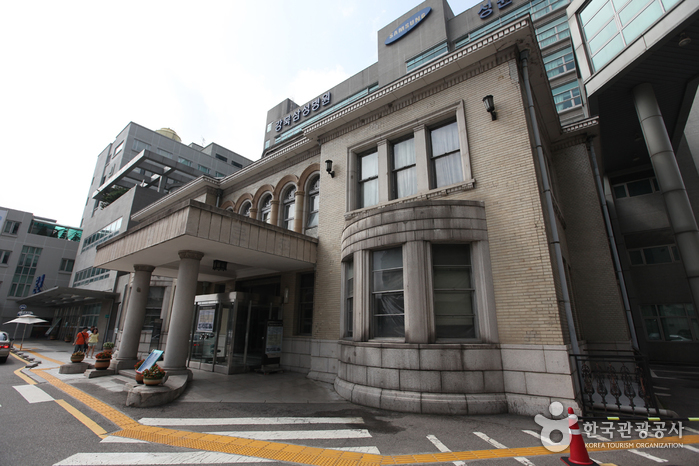
Seoul Gyeonggyojang House (서울 경교장)
2.9Km 2021-09-15
29, Saemunan-ro, Jongno-gu, Seoul
+82-2-735-2038
Gyeonggyojang House, a designated Historic Site, was the location of the provisional government and the place where Baekbeom Kim Koo passed away. Seoul reproduced the historical site, Gyeonggyojang House, to use the area as an educational site. Also, the house exhibits the history of the provisional government in order to see the history more clearly.
Restoration work included the demolition of the interior that was changed when the building was turned into a hospital facility and embassy after Kim Koo passed away in 1949. During the work, the remaining parts were maintained with the utmost care. Reconstructed parts were based on the building's floor plan written in Chosun and Architecture (8th edition in 1938). Visitors can see various contents related to the Korean Provisional Government history through relics, video, and information searching corners.
 English
 한국어
한국어 日本語
日本語 中文(简体)
 Deutsch
 Français
 Español
 Русский


