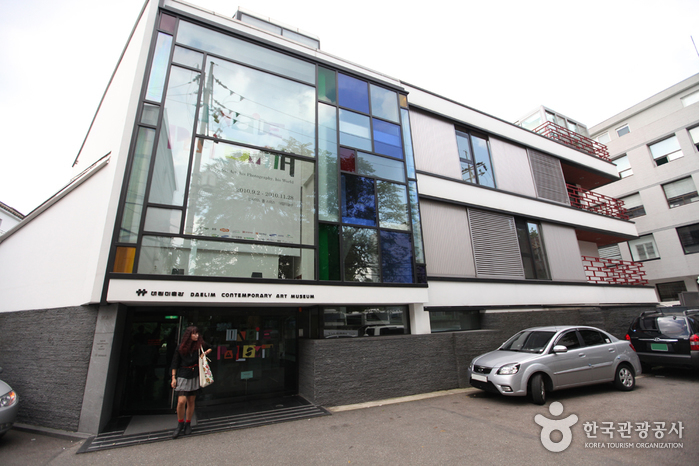
Daelim Museum (대림미술관)
3.8Km 2022-07-29
21, Jahamun-ro 4-gil, Jongno-gu, Seoul
+82-2-720-0667
The Daelim Museum, built by the Daelim Group, was first established in Daejeon in 1996 and later moved to Jongno, Seoul in 2002. The art gallery studies, analyzes, and presents modern art through the lens of photography and holds exhibitions centered around photo media.
The museum is located in the residential area of Tongui-dong, near the time-honored Gyeongbokgung Palace. The museum, which was designed by French architect, Vincent Cornu, and built by the Daelim Corporation, opened its door to the public in late May 2002.
On the first floor, there is a garden, parking lot, reception desk, storage area, and conference room. On the second and third floor are offices and exhibition hall approximately 595 m² in size, consisting of small and large rooms, a long gallery, and a special high-ceilinged exhibition space. On the fourth floor, there is a seminar room that can seat up to 120 guests and a balcony with a beautiful view. From the balcony of the seminar room, Visitors can also enjoy a wide open view of Inwangsan Mountain and Bukhansan Mountain. The stained glass panels (designed to reflect the beauty of traditional Korean wrapping cloth) and the scenic lounges on the 2nd and 3rd floors of the building add to the overall charm.
Above all else, the museum was designed with consideration of the photos, which are very sensitive to humidity, light, and temperature.

Shinsegae Department Store - Main Store (신세계백화점 (본점))
3.8Km 2025-04-07
63 Sogong-ro, Jung-gu, Seoul
+82-1588-1234
Shinsegae Department Store opened its doors as the first modern department store in the country in 1960. It stands where Korea's first department store, the Japanese Misreukkosi Department Store, used to be in the 1930s. After undergoing remodeling in 2007, it reopened as a luxury hall, featuring diverse brands ranging from the top three international luxury brands to new designer brands. In addition, the Trinity Gardens and art halls in the department store serve as a cultural space for a shopping experience that combines art and shopping.
Cheonggye Pharmacy - Cheonggyecheon Branch [Tax Refund Shop] (청계약국 청계천)
3.8Km 2024-04-17
14, Cheonggyecheon-ro, Jung-gu, Seoul
-
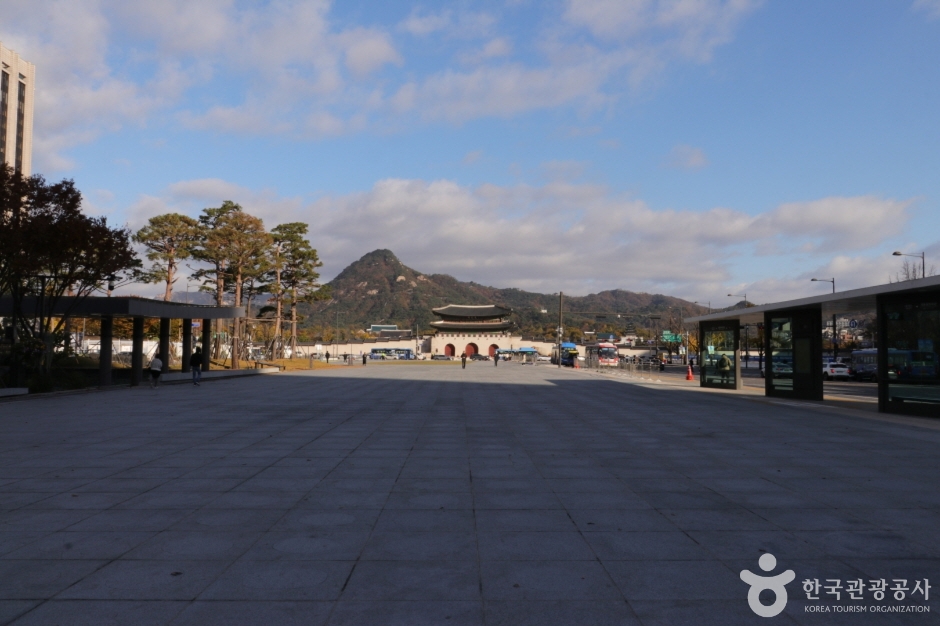
Gwanghwamun Plaza (광화문 광장)
3.8Km 2025-03-13
172 Sejong-daero, Jongno-gu, Seoul
+82-2-120
Gwanghwamun Plaza was opened to the public in August 2022 after renovation. Sejong-ro, the main street of Seoul with 600 years of history, has been reborn as a space for historical and cultural experiences by restoring Yukjo Street. Woldae (Elevated Ceremonial Stage) was reconstructed at the entrance of the "Plaza that Recovers the History of Gwanghwamun," and the statue of Haetae, an imaginary animal that judges good and evil, has been restored. In addition, traces of Yukjo Street, the main street of Hanyang in the past, were restored in the ‘Plaza that recreates the scenery of Yukjo Street’ near Sejong-ro Park, with a scale model installed. This is an excellent place for a stroll with beautiful scenery, including Gyeongbokgung Palace and Bugaksan Mountain.
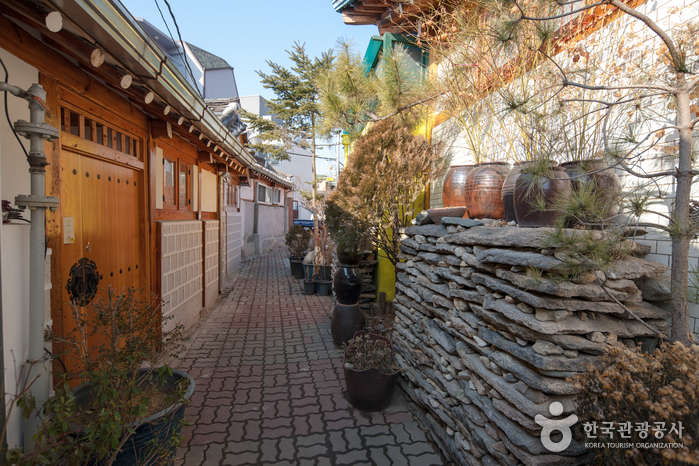
Seochon Village (서촌마을)
3.8Km 2024-12-02
45 Pirundae-ro, Jongno-gu, Seoul (Nuha-dong)
Seochon Village is the name given to the area to the west of Gyeongbokgung Palace. It is a historic village, home to old shops and hanok buildings that have stood the test of time. Korean traditions and contemporary sensibilities coexist within Seochon Village’s maze-like alleyways, creating the unique ambience that makes the district so beloved. One can find shops, guesthouses, cafés, and restaurants in the village.
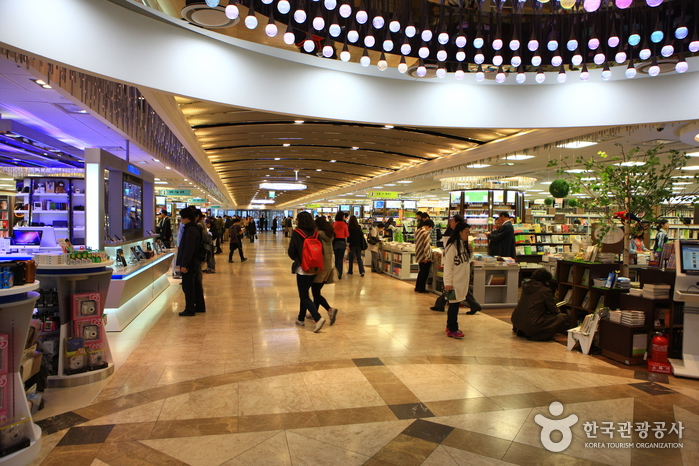
Kyobo Book Centre Gwanghwamun (교보문고)
3.8Km 2024-12-04
1 Jong-ro, Jongno-gu, Seoul
02-3295-0312
Kyobo Book Centre is the first large-scale bookstore in Korea, and this particular store can be found next to Gwanghwamun Square. Kyobo Book Centre Gwanghwamun divides its internal area into 11 sections and organizes them in a way that allows readers to find books easily. The store also has specialized shops for stationery, digital devices, and accessories, as well as exhibition spaces and cafés.
![Draw A Circle - Shinsegae Main Branch [Tax Refund Shop] (드로어써클 신세계본점)](http://tong.visitkorea.or.kr/cms/resource/84/2888084_image2_1.jpg)
Draw A Circle - Shinsegae Main Branch [Tax Refund Shop] (드로어써클 신세계본점)
3.8Km 2024-04-17
B1, Main Bldg., 63, Sogong-ro, Jung-gu, Seoul
-
![Damiani - Shinsegae Main Branch [Tax Refund Shop] (다미아니 신세계본점)](http://tong.visitkorea.or.kr/cms/resource/19/2888319_image2_1.jpg)
Damiani - Shinsegae Main Branch [Tax Refund Shop] (다미아니 신세계본점)
3.8Km 2024-04-17
B1, 63, Sogong-ro, Jung-gu, Seoul
-
![Hermes - Shinsegae Main Branch [Tax Refund Shop] (에르메스 신세계본점)](http://tong.visitkorea.or.kr/cms/resource/02/2888402_image2_1.jpg)
Hermes - Shinsegae Main Branch [Tax Refund Shop] (에르메스 신세계본점)
3.8Km 2024-04-23
5, Seolleung-ro 162-gil, Gangnam-gu, Seoul
-
![Kumkang Shoes - Shinsegae Main Branch [Tax Refund Shop] (KK신세본점(금강 금강제화))](http://tong.visitkorea.or.kr/cms/resource/64/2888664_image2_1.jpg)
Kumkang Shoes - Shinsegae Main Branch [Tax Refund Shop] (KK신세본점(금강 금강제화))
3.8Km 2024-04-18
63, Sogong-ro, Jung-gu, Seoul
-
 English
 한국어
한국어 日本語
日本語 中文(简体)
 Deutsch
 Français
 Español
 Русский


