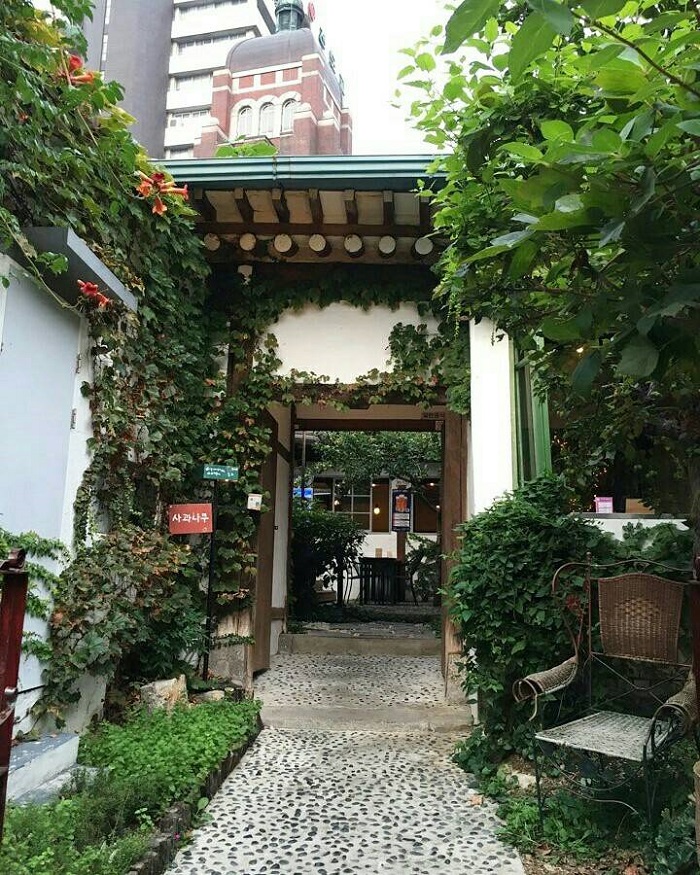
Insadong Sagwanamu (인사동사과나무)
751.6M 2021-03-29
24-1, Insadong 14-gil, Jongno-gu, Seoul
+82-2-722-5051
This is where you can dine on the outdoor terrace. This restaurant's signature menu is steak. This Western dishes restaurant is located in Jongno-gu, Seoul.

Bukchon Hanok Village Gamgodang Street (북촌한옥마을 감고당길)
753.8M 2024-10-30
Anguk-dong, Jongno-gu, Seoul
An alley with cute cafes and galleries
This is the road that appeared in the last episode and the flashback scene where Choi Ung (played by Choi Woosik) and Kuk Yeonsoo (played by Kim Dami) got drunk. Behind the Seoul Craft Museum in Bukchon Hanok Village, it extends for about 440m from Poongmoon Girls' High School to Jeongdok Library. There are many pretty cafes and galleries on the cozy road, and there are also craft markets open, so there is plenty to look around. The alley where Kuk Yeonsoo walked with the drunken Choi Ung on her back is Yunboseon Street in the middle of Gamgodang Street. It stretches along the hill between narrow tiled walls and stone walls, giving off a unique atmosphere.
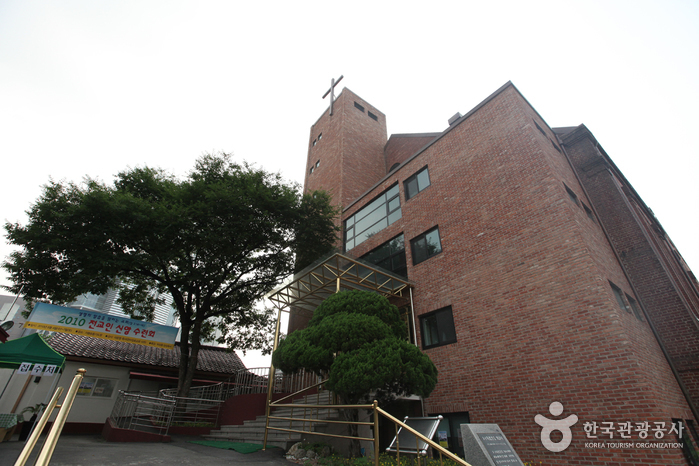
Seungdong Church (승동교회)
755.9M 2020-04-02
7-1, Insadong-gil, Jongno-gu, Seoul
+82-2-732-2340
Seungdong Presbyterian Church was designated Tangible Cultural Asset No. 130 by the Seoul Metropolitan Government on April 6, 2001. Originally known as “Gondanggol Church,” the church was established by Samuel Foreman Moore (1860-1906) in 1893. In those days, the church was known as a “baekjeong church” since it primarily drew Korea’s social underdogs such baekjeong (the butchers), the untouchable class of Joseon society.
Following a number of relocations and name changes (called “Gondanggol,” “Jungang,” and finally “Seungdong”) the church was moved to its current location in Insadong. After Moore died in 1906, Charles Allen Clark became the pastor of the church and Mongyang Yuh Woon-hyung, a key figure in the political history of Joseon, became active in the church. The church was attended by many other activists as well. In fact, the large student demonstration that took place during the March 1st Independence Movement in 1919 was organized by a group of young church members. The church once again made its mark on history with the establishment of the Joseon Theological Seminary in 1939.
Seungdong Church (B1-2F) covers a total of 660 square meters. No record has been found on its architect or builder, but the building is said to have been one of the more magnificent buildings in the area before its beauty was obscured by newer structures.
Jirisan Restaurant (지리산)
757.2M 2019-08-01
30, Insadong 14-gil, Jongno-gu, Seoul
+82-2-723-4696
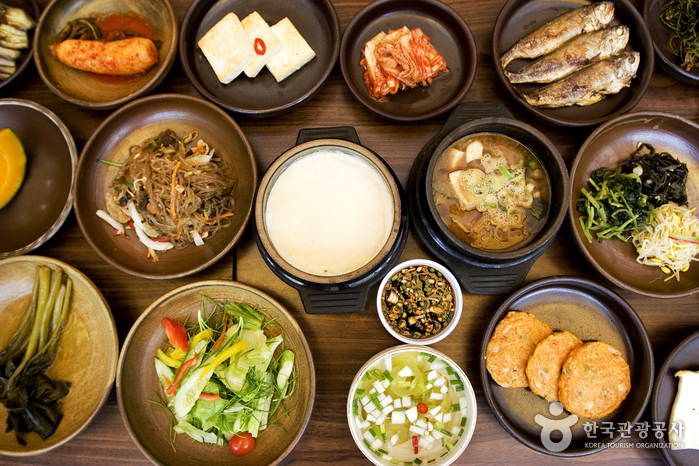
Jirisan is one of the representative Korean restaurants in Insa-dong, an area known for its traditional culture. One of the trademarks of this restaurant, besides its amazingly delectable bean and tofu dishes, is a wooden sign that welcome guests into a neat and cozy interior.
Each day, fresh beans are ground at the restaurant to prepare dishes such as soybean paste, soft tofu, and bean-curd tofu stew. Bean-curds are prepared by using seawater, which gives the tofu a unique flavor. The fresh and clean taste of the tofu is one of the many reasons that choosey tofu aficionados flock to the restaurant.
Not just limited to tofu, Jirisan presents customers with a full-range of side dishes such as kimchi, japchae (glass noodles with sautéed vegetables), cucumber kimchi, seasoned seaweed, braised lotus roots, roasted yellow corbinas (a type of fish), leafy greens, bean-curd stew, and more. The restaurant gives visitors a chance to experience a hearty traditional Korean-style meal, but has thoughtfully toned down its seasonings to appeal to a wider audience (particularly those not used to spicy foods).
One of the recommended menu items is the Jirisan set meal, which offers diners the chance to sample foods that are popular in the Jirisan region. Adventurous diners may want to try the sea urchin soup or dried Pollack soup.
The restaurant, originally a traditional Korean house, has been modified over the years to better suit the needs of its customers. The walls surrounding the structure were removed and a glass ceiling was installed to allow guests to enjoy the natural light of the sun as they sample some of the area’s best traditional Korean cuisine.
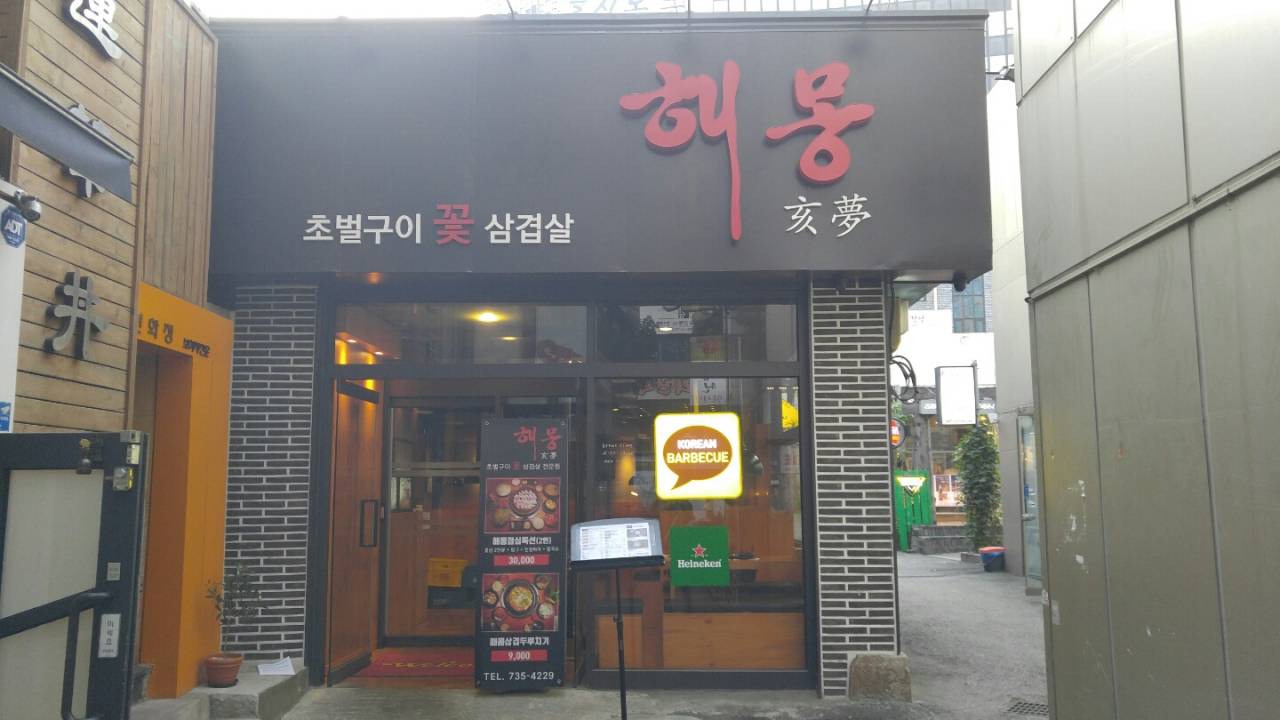
Haemong (해몽)
757.6M 2021-03-19
15-5, Insadong-gil, Jongno-gu, Seoul
+82-2-735-4229
A barbecue specialty restaurant located in Insa-dong, Seoul. The most famous menu is grilled pork belly. A Korean BBQ restaurant.

Choedaegamne (최대감네)
758.9M 2024-03-18
12-3 Insadong 8-gil, Jongno-gu, Seoul
+82-2-733-9355
Choedaegamne is a traditional Korean restaurant located in a hanok in Insa-dong, with a garden and a pond, and has been in operation for over 100 years. One of their popular dishes is the sangchu shabu jeongsik (shabu with rice in a cabbage set menu), where vegetables and meat are cooked in a broth and then enjoyed with noodles, served with a small rice ball on lettuce. They also offer a so galbijjim jeongsik (steamed beef ribs set menu) and bulgogi jeongsik (bulgogi set menu), served with lotus leaf rice and soybean paste jjigae. After the meal, guests can enjoy tea in the garden.
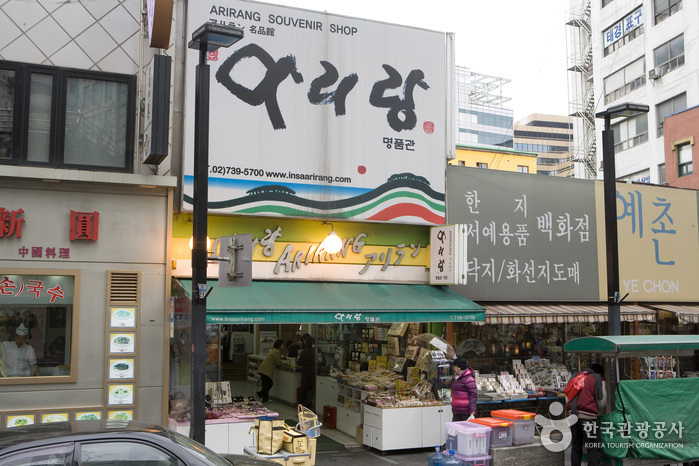
Arirang Master Crafts Shop (아리랑명품관)
761.7M 2021-12-01
17-1, Insadong-gil, Jongno-gu, Seoul
+82-2-739-5700
Arirang Master Crafts Shop is a comprehensive shopping center dealing with traditional Korean crafts. It covers traditional crafts by famous artists, pottery for daily use, decorative pottery, lacquer ware inlaid with mother-of-pearl, crafts made of traditional Korean paper and more. Every product has a fixed price. In addtion, customers can enjoy diverse works displayed in the Migak Museum (Migak means delicate sculpture for eyes to see), located in the shop.
![National Museum of Modern and Contemporary Art, Deoksugung [MMCA Deoksugung] (국립현대미술관 덕수궁)](http://tong.visitkorea.or.kr/cms/resource/09/2991509_image2_1.jpg)
National Museum of Modern and Contemporary Art, Deoksugung [MMCA Deoksugung] (국립현대미술관 덕수궁)
763.6M 2023-06-23
99, Sejong-daero, Jung-gu, Seoul
+82-2-2022-0600
The National Museum of Modern and Contemporary Art, Deoksugung [MMCA Deoksugung] was originally built as an annex to the National Museum of Contemporary Art. The museum specializes in seeking out and researching modern art, exhibiting and preserving it, supporting and developing educational programs, and furthering publications and international exchanges. Located within Deoksugung Palace, the center maintains a unique traditional atmosphere. The museum planned and showcased a total of 38 unique exhibitions from 1998 to 2005. Besides the exhibitions, the center has various performances such as music and mime, as well as lectures or seminars on artists' works.
Insa-dong Maneul Bossam (인사동마늘보쌈)
765.9M 2024-03-18
12-5 Insadong 8-gil, Jongno-gu, Seoul
+82-2-735-7885
Insa-dong Maneul Bossam is a Korean restaurant nestled in the alleys of Insa-dong. Specializing in dishes like maneul bossam (kimchi cabbage wraps with pork and garlic), kimchi jjim (braised kimchi), nakji bokkeum (stir-fried octopus), buchujeon (chive pancake), kimchijeon (kimchi pancake), yeolmu naengmyeon (cold buckwheat noodles with young summer radish kimchi), and bam makgeolli (unrefined chestnut rice wine). Their signature dish, the bossam jeongsik (kimchi cabbage wraps with pork set menu), features pork belly boiled in a secret broth, served with a sweet garlic sauce for dipping, along with seaweed soup, fresh vegetables for wrapping, dried radish salad, and side dishes. They also offer set menus for two people, and neomu hansang set menu.
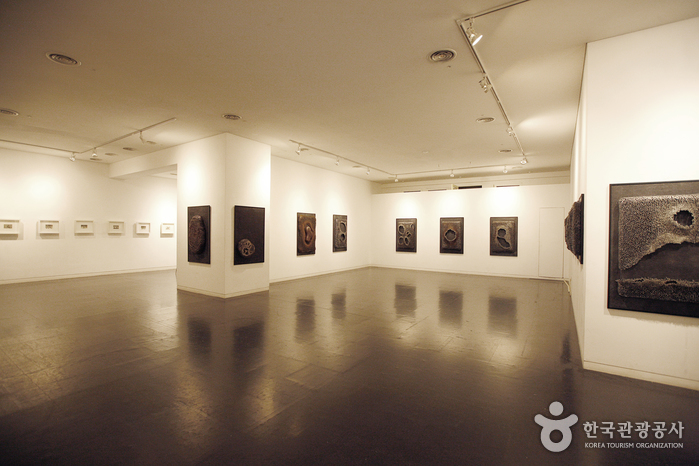
Seoul Art Center Gongpyeong Gallery (서울아트센터 공평갤러리)
766.6M 2021-06-19
24, Insadong-gil, Jongno-gu, Seoul
+82-70-4214-0070
Opened in 1992, Seoul Art Center Gongpyeong Gallery is a 17,791㎡, two-story building with four exhibition halls. It is one of the main galleries of Insa-dong, displaying diverse artwork ranging from Western and Korean paintings to sculptures. Due to the great interest in Korean paintings, 2~3 of the annual long-term exhibitions focus solely on them.
 English
 한국어
한국어 日本語
日本語 中文(简体)
 Deutsch
 Français
 Español
 Русский


