![Saeran Glasses - Lotte Hotel Main Branch [Tax Refund Shop] (세란안경 롯데호텔 본점)](http://tong.visitkorea.or.kr/cms/resource/44/2890244_image2_1.jpg)
Saeran Glasses - Lotte Hotel Main Branch [Tax Refund Shop] (세란안경 롯데호텔 본점)
1.6Km 2024-04-19
B1, 30, Eulji-ro, Jung-gu, Seoul
-
![Balenciaga - Lotte Main Branch [Tax Refund Shop] (발렌시아가 롯데 본점)](http://tong.visitkorea.or.kr/cms/resource/17/2890417_image2_1.jpg)
Balenciaga - Lotte Main Branch [Tax Refund Shop] (발렌시아가 롯데 본점)
1.6Km 2024-04-18
B1, 30, Eulji-ro, Jung-gu, Seoul
-

Fendi - Lotte Main Branch [Tax Refund Shop] (펜디 롯데 본점)
1.6Km 2024-04-18
81, Namdaemun-ro, Jung-gu, Seoul
-
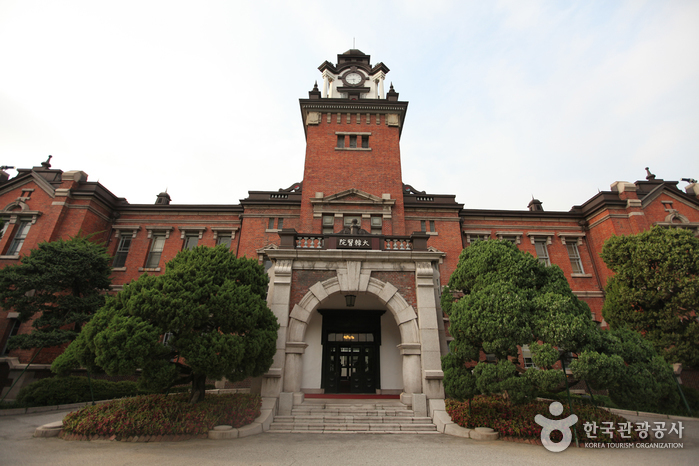
The Museum of Medicine (서울대학교병원의학박물관)
1.6Km 2024-03-18
101 Daehak-ro, Jongno-gu, Seoul
The Museum of Medicine is located in the building of the former Daehan Medical Center, the oldest modern hospital in Korea. It is a medical museum that provides a comprehensive view of the development of modern medicine in Korea, the history of medical devices, and the transformation of Seoul National University Hospital. Through permanent and special exhibitions, the museum showcases medical artifacts and documents related to the history of medicine.
![Sulwhasoo SPA - Lotte Hotel Seoul Branch [Tax Refund Shop] (설화수스파롯데호텔서울점)](http://tong.visitkorea.or.kr/cms/resource/38/3314438_image2_1.jpg)
Sulwhasoo SPA - Lotte Hotel Seoul Branch [Tax Refund Shop] (설화수스파롯데호텔서울점)
1.6Km 2024-06-27
30, Eulji-ro, Jung-gu, Seoul
-
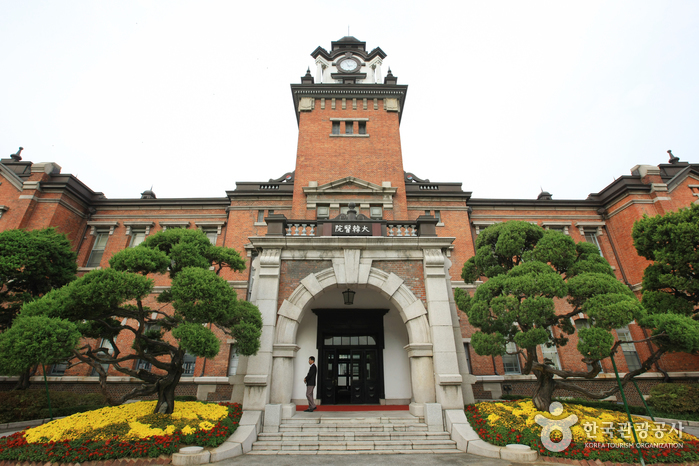
Seoul Daehan Hospital (서울 대한의원)
1.6Km 2021-12-23
101, Daehak-ro, Jongno-gu, Seoul
+82-2-2148-1842
Daehanuiwon (Daehan Medical Center) is an antique two-story brick building within the grounds of Seoul National University Hospital. It was established under the direct administration of the Uijeongbu (State Council), combining the Gwangjewon (under the Home Ministry), Gyeongseong Medical School and the Korean Red Cross Hospital (under the Royal Household).
Built in the Madubong Hill area, this location where Hamchunwon, the outer garden of Changgyeonggung Palace, once stood in 1484 (15th year of King Seongjong), was also once the site of Gyeongmogung Palace, where King Jeongjo enshrined the mortuary tablet of his birth father Crown Prince Sado Seja in 1776 (the year King Jeongjo ascended to the throne).
These places that held importance for the royal family were destroyed as the Japanese built Gyeongseong Empire University in its place. In 1907, with the announcement of the plan to establish Daehan Medical Center, construction began on the main building, seven wards and affiliated buildings. Construction was completed in November 1908.
The Daehan Medical Center opened in Gwangjewon, but upon Japanese colonization in 1910, its name was changed to the Japanese Viceroyalty Hospital. In 1926, it was included as a part of Gyeongseongjeguk University to become a university hospital. Since the liberation of Korea in 1945, it has been a hospital affiliated with Seoul National University.
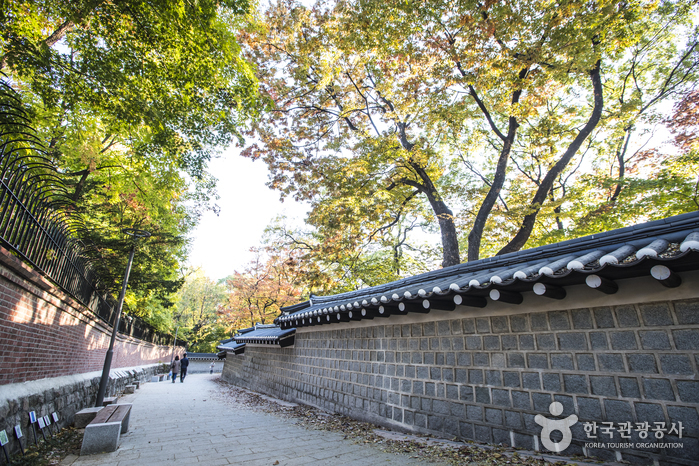
Deoksugung Stone Wall Path (덕수궁 돌담길)
1.6Km 2025-01-10
24 Sejong-daero 19-gil, Jung-gu, Seoul
The Deoksugung Stone Wall Path runs along the wall of Deoksugung Palace. It is beautifully lit and landscaped, giving it a romantic atmosphere even at night. There are street performances and flea markets, and the area boasts many famous cafes and restaurants along Jeongdong street. In autumn, the ginkgo trees and walls form a stunning scene. Close to major cultural facilities such as the Seoul Museum of Art and Seoul Museum of History, it attracts numerous visitors come for a stroll.
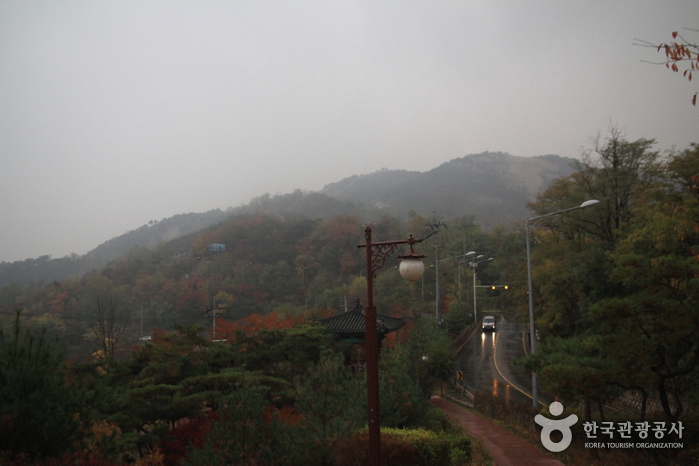
Inwangsan Mountain (인왕산)
1.6Km 2024-03-04
San 2-1, Muak-dong, Jongno-gu, Seoul
+82-2-2148-2834
Inwangsan Mountain is a rocky mountain located to the northwestern side of Seoul. It stands 338m tall. The Seoul City Wall is built along its ridge, connecting to the Baegak Mountain Trail. From the summit, one can see the three mountains of Naksan Mountain, Namsan Mountain, and the Bugaksan Mountain surrounding the historical center of Hanyang, the historical name for Seoul in Joseon period, with the Gyeongbokgung Palace at the center. There are five hiking trails, all taking about two hours to complete. It takes about three hours if you want to visit all the peaks of the mountain.

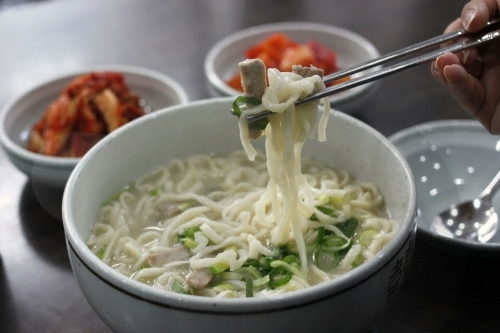
Jeongdong Guksi (정동국시)
1.7Km 2024-06-19
5 Jeongdong-gil, Jung-gu, Seoul
02-732-0114
Jeongdong Guksi features a rich soup with a clean taste, created by carefully removing the oil dozens of times while boiling Korean beef bones for 15 hours. The restaurant uses this same beef bone broth in their mandutguk (dumpling soup), something not many restaurants do. The rich flavor of the broth combined with the soft dumplings, made in-house daily, is a must-try. The restaurant is also surrounded by many cultural and artistic spaces, making it a great addition to tours in the area.
 English
 한국어
한국어 日本語
日本語 中文(简体)
 Deutsch
 Français
 Español
 Русский


