
Samcheong-dong Street (삼청동길)
554.5M 2025-01-22
107 Samcheong-ro, Jongno-gu, Seoul
It is said that Samcheong-dong was named from the story about the three "cheong" (Chinese character meaning clean) of the area, namely the mountain, water, and people. Another theory is that the origin of the region's name came from Samcheongjeon Hall where three tablets called "Taecheong," "Sangcheong," and "Okcheong," were set up based on Taoism. Samcheong-dong Street features a mixture of old scenes of hanok buildings with traditional beauty and modern scenes of galleries and cafés, creating a unique atmosphere. Visitors can feel the abundant cultural mood at every corner of the street through the art galleries, museums, antique shops, and quiet pathways.
Gwanghwamun Gate (광화문)
561.4M 2024-12-04
161 Sajik-ro, Jongno-gu, Seoul
+82-2-3700-3900
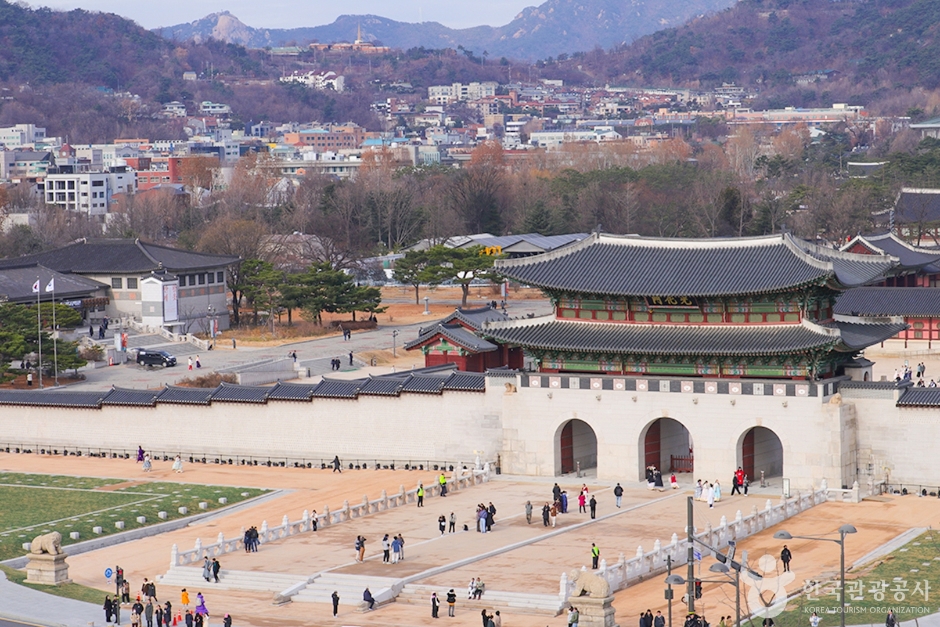
Built in 1395 under the reign of King Taejo, the first king of the Joseon dynasty, Gwanghwamun Gate is the southern gate of Gyeongbokgung Palace. It is also the main gate of the palace, therefore larger and fancier in comparison to the other gates. Gwanghwamun Gate consists of three arched gates; the center gate was used by the king, while the other two were used by the crown prince and royal officials. The tall granite walls of the gate serve as a platform for the wooden gate tower that watches over the city. The gate has a sign with its name written at the top center of the gate tower.
Gwanghwamun Gate went through several damages and restorations over the course of history. It was first severely damaged during the Imjin War (1592-1598) and was not restored until the reconstruction of Gyeongbokgung Palace in 1864. Under the Japanese administration, the gate was demolished and relocated to the north of the palace's eastern gate, followed by series of damages during the Korean War (1950-1953). In 1968, Gwanghwamun Gate was relocated back to the south of the palace and was rebuilt using concrete; however, the gate’s position was shifted a few meters away from its original location. In 2006, a major reconstruction project took place to restore Gwanghwamun Gate to its original state and location, disassembling the structure completely and replacing concrete with granite and wood. After three years and eight months of construction, Gwanghwamun Gate was fully restored to its original form and was open to the public on August 15, 2010.
Insa-dong (인사동)
571.8M 2024-05-17
62, Insadong-gil, Jongno-gu, Seoul
+82-2-734-0222
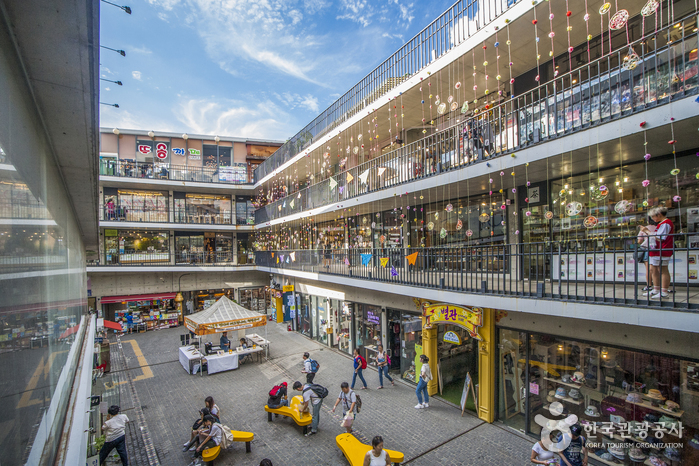
Insa-dong, located in the heart of the city, is an important place where old but precious traditional goods are on display. There is one main road in Insa-dong with alleys on each side. Within these alleys are galleries, traditional restaurants, teahouses, and cafes.
The galleries are the heartbeat of Insa-dong. There are about 100 galleries in the area offering every example of traditional Korean fine art from paintings to sculptures. The most famous galleries are Hakgojae Gallery, which functions as the center of folk art, Gana Art Gallery, which promotes many promising artists, and Gana Art Center.
The teahouses and restaurants are the perfect complement to the galleries. They are hidden deep within the twisting alleyways, making it feel like a treasure hunt. The shops in Insa-dong are very popular among all age groups, because each one is unique.
Every Saturday from 14:00 to 22:00 and Sunday from 10:00 to 22:00, the main street is blocked to vehicular traffic and it becomes a cultural space. Stores set up booths outside and Korean candy merchants and fortune teller stalls can easily be found; there are traditional performances and exhibits as well. Insa-dong is especially popular among international tourists. This is where they can experience and see traditional Korean culture first-hand, and also purchase pieces of fine art.
High - Anguk Branch [Tax Refund Shop] (하이엔드코리아 안국)
582.5M 2024-04-17
1F, 62-5, Insadong-gil, Jongno-gu, Seoul
-
The Place Seoul (traditional Korean-style guesthouse) / 복합한옥공간 곳
599.5M 2025-03-05
52-11 , Gyedong-gil, Jongno-gu, Seoul
+82-10-3255-1289
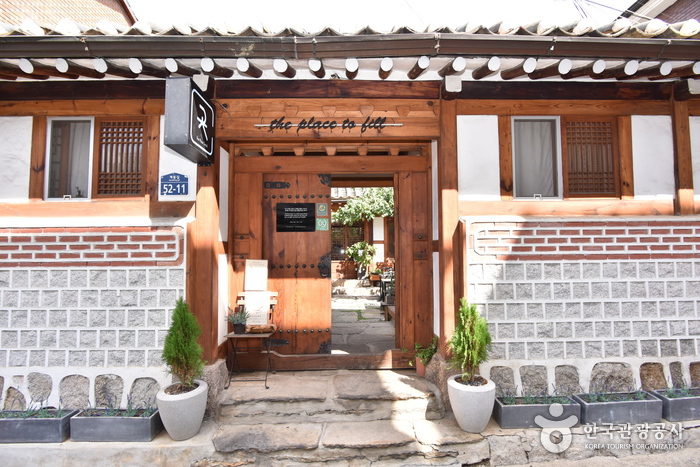
The Place Seoul in Gye-dong, Jongno-gu, Seoul, is a meeting place of traditional and modern Korea. It has a yard with a beautiful 80 year-old dogwood tree, and a small garden in which guests can enjoy the passage of the seasons. The Place Seoul is an environment-friendly place which uses eco-friendly consumables such as toilet paper and shampoo. Breakfast is simple and healthy. There are many good cafes in nearby Bukchon, and local tourist attractions include the National Palace Museum of Korea and the National Museum of Modern and Contemporary Art.
HANILKWAN - Gwanghwamun Branch (한일관 광화문)
606.3M 2024-03-18
50, Jong-ro 1-gil, Jongno-gu, Seoul
+82-2-722-7557
It is a store that has been operating with a long tradition since 1939. This Korean dishes restaurant is located in Jongno-gu, Seoul. The most famous menu is bulgogi.
Woo Joo Yon Clinic (우주연한의원)
607.5M 2025-10-23
(2nd Floor, Hanok), 41 Bukchon-ro 12-gil, Jongno-gu, Seoul
Woojooyon Clinic takes an integrative approach considering the patient's overall health. Rather than merely treating the affected area, we listen to the patient's story, understand their daily life, and focus on identifying and correcting the root causes of imbalances in the body. Our goal is to pursue true healing and happiness by treating with a delicate touch that connects with the patient's soul. We aim to restore the body to its original state, ensuring a holistic examination of both body and mind, as well as habits and personality. Woojooyon Clinic is committed to helping patients regain a healthy life by applying the wisdom of traditional Korean medicine. We value our relationships with patients and strive to always do our best.
Boan1942 (보안1942)
628.3M 2023-08-17
33 , Hyoja-ro, Jongno-gu, Seoul
Prior to becoming an art space in 2007, Tongui-dong Boan served as a place for rest for travelers from 1942 to 2005. After a short suspension, the place was renovated into a cultural space in 2017 to carry on the historical legacy and provide creative inspiration under the concept of "Boanstay."
Boan1942 is divided into a cultural space consisting of a cafe, project workshop, book shop, and exhibition area, and Boanstay on the 3rd and 4th floors that offer temporary lodging services to the cultural nomads. Located in Seochon, the center of culture, history, and convenient traffic in Seoul, Boanstay offers a splendid view of Seoul's historical and cultural assets such as Gyeongbokgung Palace, Cheong Wa Dae, and Seochon Hanok Village.
<Credit: Boanstay>
National Palace Museum of Korea (국립고궁박물관)
637.5M 2023-03-24
12, Hyoja-ro, Jongno-gu, Seoul
+82-2-3701-7500
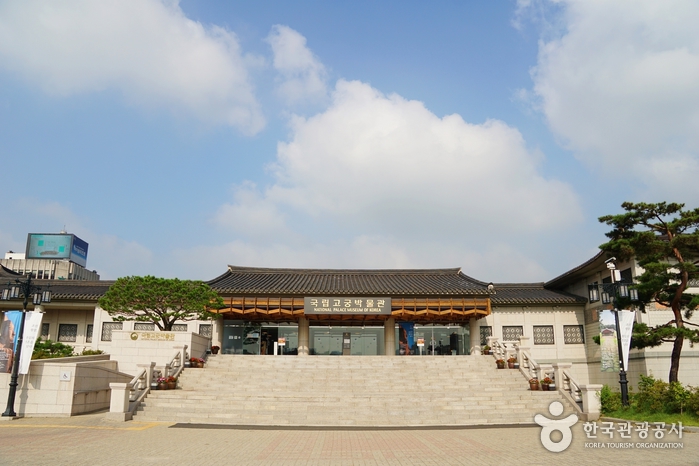
The National Palace Museum of Korea displays over 40,000 relics from the Joseon dynasty. With various treasures on exhibit, the museum continues to provide information on the dignity of royal culture and the creativity of royal cultural assets.
 English
 한국어
한국어 日本語
日本語 中文(简体)
 Deutsch
 Français
 Español
 Русский


