![Lush Korea - Gyeongnidangil Spa Branch [Tax Refund Shop] (㈜러쉬코리아 경리단길 스파)](http://tong.visitkorea.or.kr/cms/resource/49/2890649_image2_1.jpg)
Lush Korea - Gyeongnidangil Spa Branch [Tax Refund Shop] (㈜러쉬코리아 경리단길 스파)
3.8Km 2024-04-23
2F, 10, Hoenamu-ro 42-gil, Yongsan-gu, Seoul
-
![Lush Korea - Gyeongnidangil Branch [Tax Refund Shop] (㈜러쉬코리아 경리단길점)](http://tong.visitkorea.or.kr/cms/resource/01/2890701_image2_1.jpg)
Lush Korea - Gyeongnidangil Branch [Tax Refund Shop] (㈜러쉬코리아 경리단길점)
3.8Km 2024-04-19
1F, 10, Hoenamu-ro 42-gil, Yongsan-gu, Seoul
-

Golden Tour Korea DMC (골든투어코리아 디엠씨)
3.8Km 2025-10-23
(#1227), 173 Mapo-daero, Mapo-gu, Seoul
Since its establishment in 2013, Golden Tour Korea DMC has been offering high-quality, customized travel services worldwide, focusing on premium travel experiences and diverse Korean tour products. In addition, the company actively organizes incentive tours, corporate meetings, government forums, business trips, family vacations, educational programs, and foreign patient attraction activities in Europe. Golden Tour Korea DMC designs tour products tailored to meet customers’ needs, with expert tour operators providing consulting to enhance customer satisfaction. The company maintains strong collaborations with numerous international partners. With extensive experience and expertise in the travel industry, Golden Tour Korea DMC will do its best to create beautiful memories and make the next chapter of your life unforgettable.
Ewha Womans University (이화여자대학교)
3.9Km 2023-07-04
52, Ewhayeodae-gil, Seodaemun-gu, Seoul
+82-2-3277-2114
Ewha Womans University is Korea's first women's university founded in 1886 by American Methodist missionary Mary Scranton. Ewha Womans University is also the most famous women's university in Korea and its name originates from Ehwa Hakdang, a name given by Empress Myeongseong in 1887. Ewha Womans University created a four-year university course in 1910, and in 1943, the name of Ewha was taken away during the Japanese colonial period and downgraded to a one-year school. In October 1945, the year of Korea's independence from Japan, it regained the name of Ewha and was promoted to a university with eight departments. Currently, it consists of 15 graduate schools, 11 colleges, and 67 departments, and there are 8 affiliated research institutes.
The street in front of Ewha Womans University is famous for shopping. This place is full of clothing stores and neat food that boast a popping sensation to suit the tastes of female college students. The shopping street in front of Ewha Womans University is a straight road that lies ahead of Exits 2 and 3 of Seoul Subway Line 2. Alleyways stretch out like branches around this street and are filled with various accessory shops, clothing stores, shoe stores, restaurants, cafes, and beauty salons.
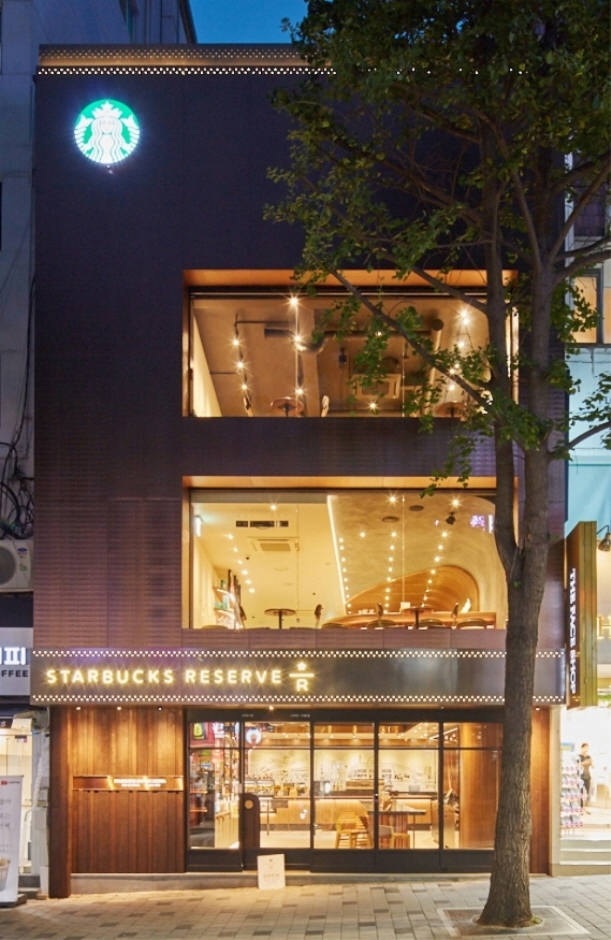
Starbucks Edae R (스타벅스 이대R)
3.9Km 2024-12-27
34 Ewhayeodae-gil, Seodaemun-gu, Seoul
Starbucks Edae R store is the first Starbucks store opened in 1999 and Korea's first Reserve only store
Starbucks Edae R store is the first Starbucks store opened in Korea. It is located 150 meters from the front gate of Ewha Womans University. The store has been loved by customers for over two decades since 1999. In celebrating its 20th anniversary in 2019, the store re-opened as Korea's first Reserve-only store. It specializes in offering specialty coffee and memorable experiences to many customers visiting Korea's first Starbucks store. As the leading store presenting the history and future of Starbucks, it offers high-quality coffee in a beautifully decorated setting, along with unique beverages and exclusive merchandise available only at this particular store.
![Jellycrew - Ewha Womans Univ. Branch [Tax Refund Shop] (젤리크루 이대점)](http://tong.visitkorea.or.kr/cms/resource/58/3313658_image2_1.jpg)
Jellycrew - Ewha Womans Univ. Branch [Tax Refund Shop] (젤리크루 이대점)
3.9Km 2024-06-27
26, Ewhayeodae-gil, Seodaemun-gu, Seoul
-
Gyeongnidan Street (경리단길)
3.9Km 2023-01-18
Itaewon-dong, Yongsan-gu, Seoul
Gyeongnidan Street refers to the 937-meter-long road from the main gate of MND Financial Management Corps to Grand Hyatt Seoul as well as all of the nearby streets and alleys. It is called Gyeongnidan Street because the Korean army's central finance corps, or Gyeongnidan in Korean, used to be located here, and has gained fame for presenting a different vibe than that of Itaewon despite being part of Itaewon-dong. Gyeongnidan Street is an area of culture and youth where people are able to enjoy diverse and special cuisine and dishes at unique restaurants and cafes. Although it resembles a typical neighborhood of Seoul, it features foreigners who have come from many different places around the globe living in natural harmony with Korean locals, which exudes a unique, exotic atmosphere. It is fun to walk along the various streets and alleys to discover novel and sophisticated shops.

Grand Hyatt Seoul (그랜드 하얏트 서울)
3.9Km 2025-10-23
322, Sowol-ro, Yongsan-gu, Seoul
+82-2-797-1234
The Grand Hyatt Seoul is an international business hotel located 10 minutes away from the center of the city and 20 minutes away from Yeouido and Gangnam, boasting a view of the Hangang River to the south and the scenery of Namsan Mountain to the north. It is also located only 70 minutes and 50 minutes away from Incheon International Airport and Gimpo International Airport respecitvely, making the hotel a convenient option for international travelers.
Grand Hyatt Seoul has twelve restaurants and bars that serve authentic meals and develop menus that lead the culinery trend. The hotel is also equipped with conference rooms, sports facilities, and spa services.
![Hansarang Pharmacy - Ewha Womans Univ. Branch [Tax Refund Shop] (한사랑약국 이대)](http://tong.visitkorea.or.kr/cms/resource/36/2889036_image2_1.jpg)
Hansarang Pharmacy - Ewha Womans Univ. Branch [Tax Refund Shop] (한사랑약국 이대)
3.9Km 2024-04-23
183, Sinchon-ro, Seodaemun-gu, Seoul
-
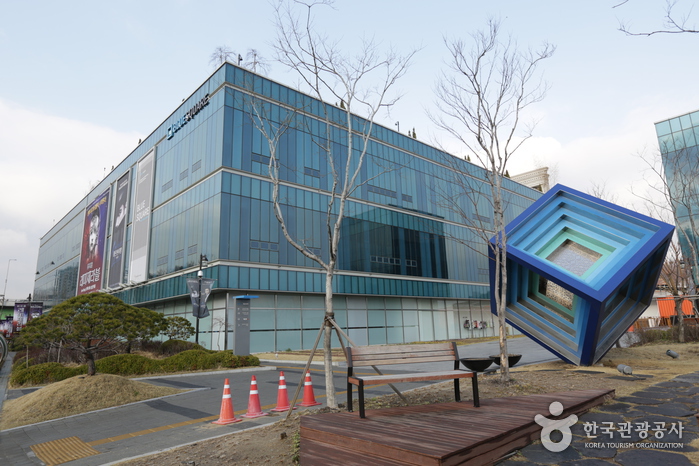
Blue Square (블루스퀘어)
3.9Km 2024-03-05
294, Itaewon-ro, Yongsan-gu, Seoul
+82-1544-1591
Blue Square is a multipurpose performance venue located in Hannam-dong. It includes Shinhan Card Hall, a performance hall dedicated to musicals with 1,776 seats, and Mastercard Hall, a multipurpose performance hall with 1,400 seats. Blue Square also includes the Book Park, which has a collection of nearly 75,000 books, and a café with a terrace that looks toward the Namsan Mountain. Many visitors come to the Blue Square to see its collection of popular musicals and other performances.
 English
 한국어
한국어 日本語
日本語 中文(简体)
 Deutsch
 Français
 Español
 Русский


