
Bank of Korea Money Museum (화폐박물관)
1.3Km 2024-03-18
39 Namdaemun-ro, Jung-gu, Seoul
This Renaissance-style three-story stone building is the museum of the Bank of Korea. The older Bank of Korea was established as the central bank of the Korean Empire in 1909 and has been designated as a National Historical Site. During the Japanese colonial period, the bank was renamed the Bank of Joseon, and the building was used as the main and head office of the Bank of Korea until 2001. The building has been used as the nation’s Money Museum since June 2001 in celebration of the 50th anniversary of the Bank of Korea. The museum has 13 exhibition rooms on two floors, with one basement floor and two above-ground floors. It holds special exhibitions of various currency and art collections to provide domestic and foreign visitors with the opportunity to enjoy the history and culture of currency. Visitors can learn about the Bank of Korea and the central banking system, as well as how to identify counterfeit notes and how money is produced and circulated. It is also a good place for children to learn about currencies from around the world. Advance reservations are required, and parking is not available. The museum can easily be reached via subway by getting off at Hoehyeon Station (Seoul Subway Line 4) and exiting through Exit 7.
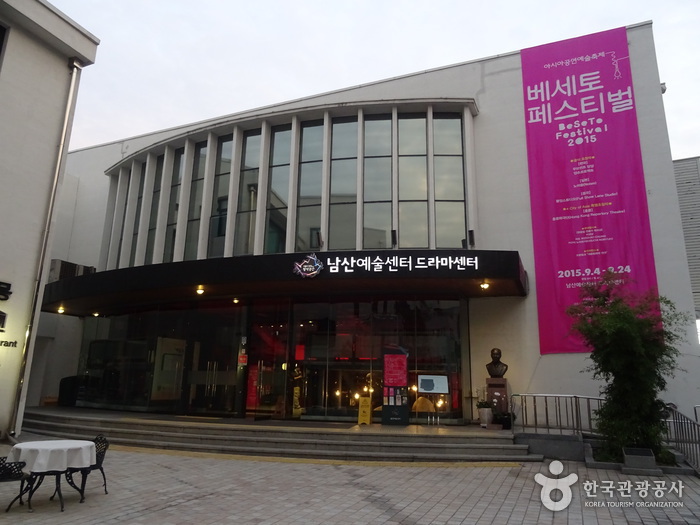
Namsan Arts Center (남산예술센터)
1.3Km 2021-08-26
138, Sopa-ro, Jung-gu, Seoul
+82-2-758-2150
Namsan Arts Center, reopened as a creative space in Seoul in September 2009. It redefined the colors and characteristics of the theater, aiming for a modern theater production center centered on creative premieres, a contemporary performance venue where visitors can feel the pulse of the times, and a theater capable of various experiments.
Namsan Arts Center Drama Center is the first modern folk theater in Korea and the oldest performance hall in which the original architectural form has been preserved. Under the concept of "Contemporary & New Wave," the center continues to produce domestic original plays, and through active exchanges with excellent overseas theaters, build a repertoire of high-quality works that can read domestic and overseas trends, and present contemporary cultural diversity.
![Davich Optical - Myeongdong Branch [Tax Refund Shop] (다비치안경 명동점)](http://tong.visitkorea.or.kr/cms/resource/98/2878598_image2_1.jpg)
Davich Optical - Myeongdong Branch [Tax Refund Shop] (다비치안경 명동점)
1.3Km 2024-06-27
62, Sogong-ro, Jung-gu, Seoul
-
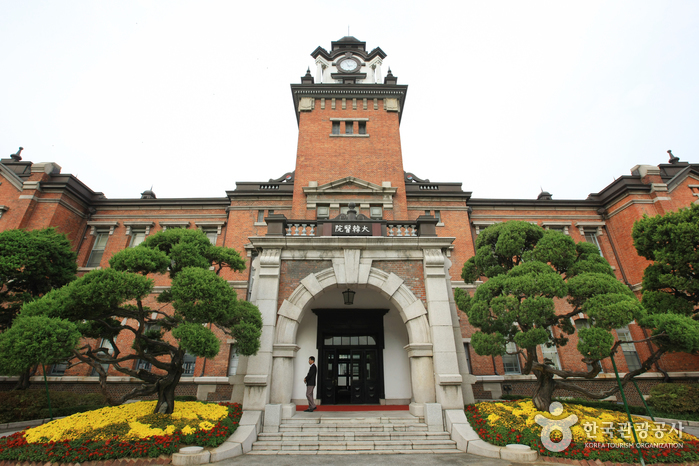
Seoul Daehan Hospital (서울 대한의원)
1.3Km 2021-12-23
101, Daehak-ro, Jongno-gu, Seoul
+82-2-2148-1842
Daehanuiwon (Daehan Medical Center) is an antique two-story brick building within the grounds of Seoul National University Hospital. It was established under the direct administration of the Uijeongbu (State Council), combining the Gwangjewon (under the Home Ministry), Gyeongseong Medical School and the Korean Red Cross Hospital (under the Royal Household).
Built in the Madubong Hill area, this location where Hamchunwon, the outer garden of Changgyeonggung Palace, once stood in 1484 (15th year of King Seongjong), was also once the site of Gyeongmogung Palace, where King Jeongjo enshrined the mortuary tablet of his birth father Crown Prince Sado Seja in 1776 (the year King Jeongjo ascended to the throne).
These places that held importance for the royal family were destroyed as the Japanese built Gyeongseong Empire University in its place. In 1907, with the announcement of the plan to establish Daehan Medical Center, construction began on the main building, seven wards and affiliated buildings. Construction was completed in November 1908.
The Daehan Medical Center opened in Gwangjewon, but upon Japanese colonization in 1910, its name was changed to the Japanese Viceroyalty Hospital. In 1926, it was included as a part of Gyeongseongjeguk University to become a university hospital. Since the liberation of Korea in 1945, it has been a hospital affiliated with Seoul National University.
![Olive Young - CJ CheilJedang Center Branch [Tax Refund Shop] (올리브영 제일제당센터)](http://tong.visitkorea.or.kr/cms/resource/75/2878675_image2_1.jpg)
Olive Young - CJ CheilJedang Center Branch [Tax Refund Shop] (올리브영 제일제당센터)
1.3Km 2024-04-22
330, Dongho-ro, Jung-gu, Seoul
-
Olive Young - Sejong-ro Branch [Tax Refund Shop] (올리브영 세종로)
1.3Km 2024-04-16
161, Sejong-daero, Jongno-gu, Seoul
-
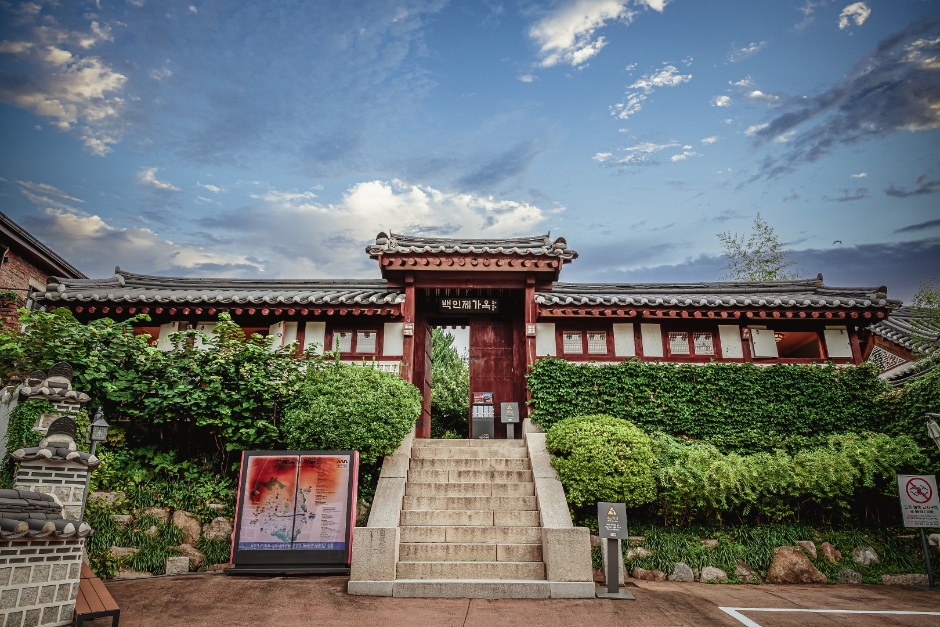
Baek In-je House (백인제가옥)
1.3Km 2025-10-24
16 Bukchon-ro 7-gil, Jongno-gu, Seoul
+82-2-724-0200
Baek In-je House, located in Bukchon Hanok Village, is a hanok built during the Japanese administration period that portrays modern hanok features. The structure consists of a main room offering a good view of the whole village, spacious bedrooms, a large garden, and annex buildings. As it maintains the beauty of a traditional hanok while incorporating the modern trend of its time, Baek In-je House is considered to be highly valuable in means of both architecture and history, representing the Bukchon Hanok Village together with Yun Bo-seon House.
Baek In-je House was built from black pine, which was first introduced in Seoul during the Gyeongseong Expo in 1907, distinguishing itself from other upper-class houses of its time. Unlike other traditional hanok designs that separate the main building from the other rooms, Baek In-je House connects the two with a hallway, allowing convenient access between the two structures. The house also consists of a Japanese-style hallway and floor mat rooms, reflecting the interior trends of that period. Baek In-je House is also unique in that the main room is partially built as a two-story structure, a style that was never seen in any traditional hanok built during the Joseon period.
![Godiva - Gwanghwamun Branch [Tax Refund Shop] (고디바 광화문점)](http://tong.visitkorea.or.kr/cms/resource/25/2878225_image2_1.jpg)
Godiva - Gwanghwamun Branch [Tax Refund Shop] (고디바 광화문점)
1.3Km 2024-04-22
1F, to 3F, 159, Sejong-daero, Jongno-gu, Seoul
-
![Nature Collection - Gwanghwamun Branch [Tax Refund Shop] (네이처컬렉션 광화문)](http://tong.visitkorea.or.kr/cms/resource/54/2888854_image2_1.jpg)
Nature Collection - Gwanghwamun Branch [Tax Refund Shop] (네이처컬렉션 광화문)
1.3Km 2024-04-18
1F, 105, Saemunan-ro, Jongno-gu, Seoul
-
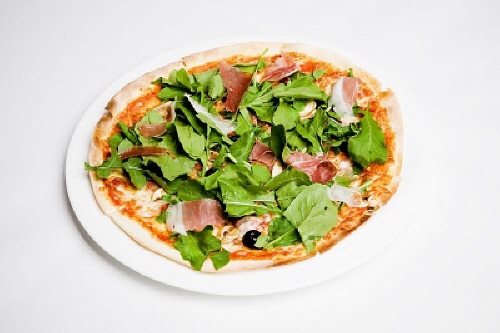
The Hanok Smith Likes (스미스가 좋아하는 한옥)
1.3Km 2024-03-11
22-7 Samcheong-ro, Jongno-gu, Seoul
+82-2-722-7003
The Hanok Smith Likes is a restaurant located near Gyeongbokgung Palace, housed in a renovated hanok. It offers a fusion of Korea's traditional beauty with Italian cuisine. Specializing in oven-baked pizza and pasta, it also features a variety of Italian dishes. The oven-baked pizzas are particularly popular, known for their chewy crusts and generous toppings. In 2023, it was selected for the Michelin Guide Seoul.
 English
 한국어
한국어 日本語
日本語 中文(简体)
 Deutsch
 Français
 Español
 Русский


