
CU - National Museum of Korea Branch [Tax Refund Shop] (cu중앙박물관점)
2.0Km 2024-06-26
137, Seobinggo-ro, Yongsan-gu, Seoul
-
Yejiwon (예지원)
2.0Km 2022-09-19
72, Jangchungdan-ro, Jung-gu, Seoul
+82-2-2253-2211
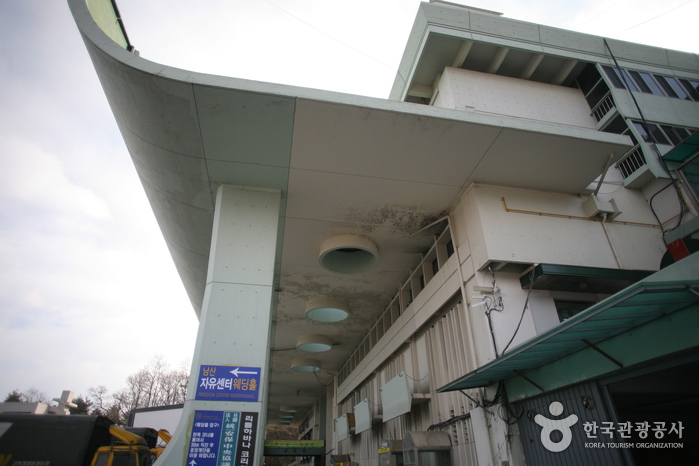
The Yejiwon is located in Seoul Jung-gu Jangchung-dong and has been offering traditional Korean etiquette education programs since its inception on September 16th, 1974. Furthermore, the Yejiwon also serves to introduce the traditional cultures and living cultures of Korean etiquettes to foreigners.
Most programs offered are short-term classes, and reservations can be made on the homepage up to 15 days in advance. Reservations are only available for groups of 10 or more and classes are instructed in Korean only, so it may be a good idea to be accompanied by a guide.
National Theater of Korea (국립극장)
2.1Km 2024-03-06
59, Jangchungdan-ro, Jung-gu, Seoul
+82-2-2280-4114
The National Theater of Korea opened in 1950 as the first national theater in Asia. It is the only production theater that takes traditional arts to recreate them as contemporary art. It offers various types of theaters, such as Haeoreum Grand Theater, Daloreum Theater (middle-size), Immersive Studio ByeolByeol (small-size), and Haneul Round Theater with a circular stage structure. In addition, the Museum of Performing Arts, Cultural Plaza, and other convenience stores and coffe shops offer pleasure and relax to its visitors.
Seoul Wave Art Center (서울웨이브아트센터)
2.2Km 2025-10-27
145-35 Jamwon-ro, Seocho-gu, Seoul
Seoul Wave Art Center is located within Jamwon Hangang Park, and focuses on promoting the relationship between the sky and earth, people and nature, and people and people. The art center opened in 2020 and has continued to host a range of new exhibitions.
![Olive Young - Sookmyung Women’s Univ. Station Branch [Tax Refund Shop] (올리브영 숙대입구역)](http://tong.visitkorea.or.kr/cms/resource/87/2888087_image2_1.jpg)
Olive Young - Sookmyung Women’s Univ. Station Branch [Tax Refund Shop] (올리브영 숙대입구역)
2.2Km 2024-04-17
1F, 285, Hangang-daero, Yongsan-gu, Seoul
-
Namsan Library (서울특별시교육청 남산도서관)
2.2Km 2021-07-07
109, Sowol-ro, Yongsan-gu, Seoul
+82-2-754-7338
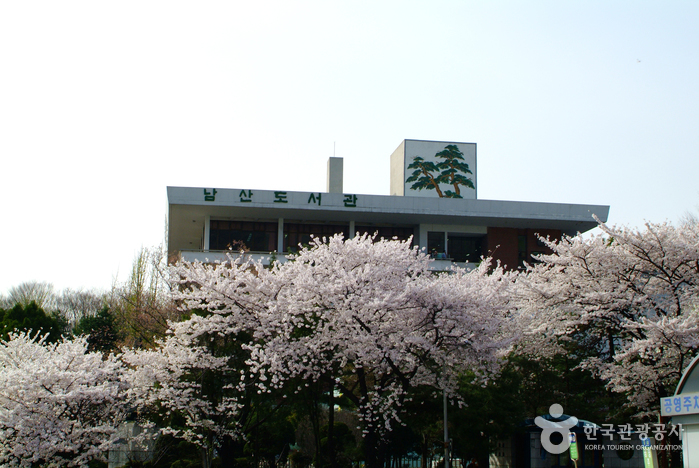
Namsan Library opened as Kyeongseong Prefectural Library in 1922 as a public library in Myeong-dong, Jung-gu, Seoul. The library was moved to the current site in 1964 with a newly built building and its name changed to Namsan Library in 1965. This concrete building was built in 1964 and was designed by architect Lee Haeseong. It was designated as Seoul Future Heritage in 2013, credited for its preservation value.
It is comprised of 19 rooms and educational areas including the Humanity and Social Science Hall, Nature Science Hall, Language and Literature Hall, Electronic Information Room and more. Since opening, the library has collected nearly 500,000 books, 16,000 non-book materials, 700 continuing resources, and other special materials like old books, oriental books (including Japanese books), and more. Namsan Library also operates a reading treatment program unique to this library that began in 2005. The program includes remodeling of reading consultation room, training for people in charge of reading treatment, workshops, programs for individuals and groups. Also, various exhibitions, lectures, shows, cultural classes and other events are available all year long to enhance lifelong education.
Jamwon Hangang Park Outdoor Swimming Pool (한강시민공원 잠원수영장(실외))
2.2Km 2022-09-06
221-124, Jamwon-ro, Seocho-gu, Seoul
+82-2-536-8261
Six of the city's Hangang Parks have outdoor swimming pools, including Jamwon Hangang Park. Supported by meticulous water quality management, they are not only safe, but also an inexpensive alternative to private facilities. Excellent amenities include swimming equipment rentals, food, and beverages.
Jamwon Hangang Park (잠원한강공원)
2.3Km 2024-10-23
221-124 Jamwon-ro, Seocho-gu, Seoul
+82-2-3780-0531
Jamwon Hangang Park is a public recreation area on the Hangang River. Nearby attractions include athletic facilities (running tracks, soccer fields, basketball courts, etc.), various water sports facilities, and an 8.2-kilometer inline skating path. A bicycle path along the Hanfgang River, an outdoor swimming pool in summer, and a snow sledding center in winter are the most frequently used ones by may citizens. Jamwon was once a mulberry field, so there is also a thematic nature learning center that depicts the life of the silkworm.
![Olive Young - Dongbuichon Branch [Tax Refund Shop] (올리브영 동부이촌)](http://tong.visitkorea.or.kr/cms/resource/03/2888303_image2_1.jpg)
Olive Young - Dongbuichon Branch [Tax Refund Shop] (올리브영 동부이촌)
2.3Km 2024-04-17
16, Ichon-ro 75-gil, Yongsan-gu, Seoul
-
Amorepacific Museum of Art (아모레퍼시픽미술관)
2.3Km 2024-12-31
100 Hangang-daero, Yongsan-gu, Seoul
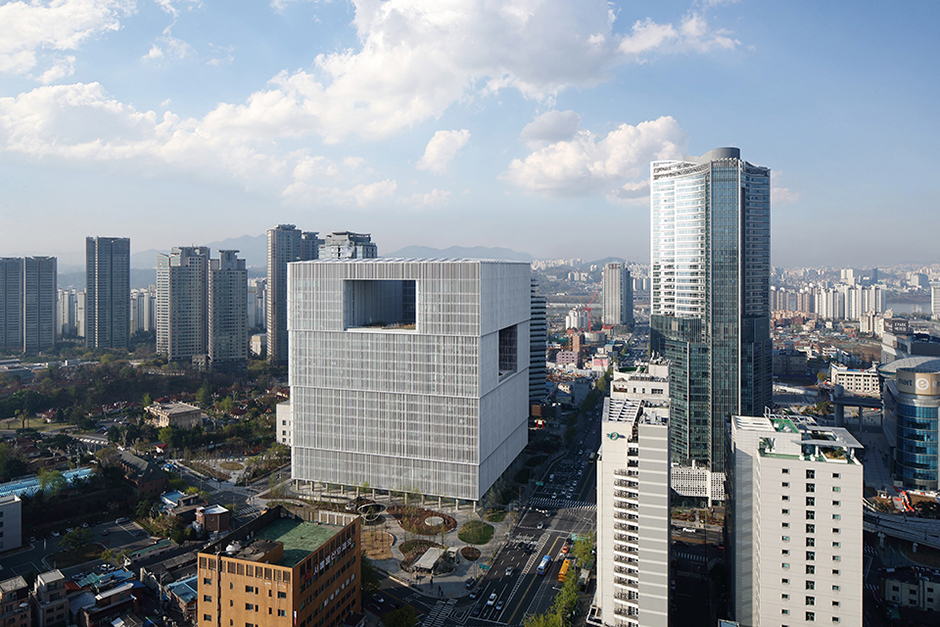
Amorepacific Museum of Art, located in Yongsan-gu, Seoul, was originally a museum exhibiting artworks collected by the late Seo Seong-hwan, the founder of Amorepacific, but later changed its name to Amorepacific Museum of Art, or APMA, in 2009 and has since been operating as an art exhibition hall. The mission upon its foundation was seeking to be "a space where beauty in the midst of daily lives is discovered" and communicating with the public. In accordance with this objective, the museum collects, researches, and exhibits Korean ancient art and both Korean and international contemporary art while, also, aiding researchers, scholars, and young artists. The underground exhibition hall hosts diverse exhibits encompassing ancient art, contemporary art, and Korean art. The 1st floor of the "Atrium," an enormous space that continues from the 1st to 3rd floors, features the museum lobby, a museum shop, an exhibition space called "APMA Cabinet" and apLAP, which is a library of art exhibition brochures from around the world. The art museum is located on the 1st floor of the new Amorepacific headquarters building, a famous work of architectural beauty of Yongsan designed after white porcelain.
 English
 한국어
한국어 日本語
日本語 中文(简体)
 Deutsch
 Français
 Español
 Русский


