Hwanghak-dong Flea Market (Dokkaebi Market / Manmul Market) (황학동 벼룩시장 (도깨비시장/만물시장))
1.7Km 2025-04-11
11-7 Majang-ro 5-gil, Jung-gu, Seoul
Hwanghak-dong Flea Market was named after the way how merchants travel from one place to another all over the country, as if like fleas hopping around from one spot to another, to collect rare and valuable items. This market was once a haven of antiques and collectibles, but with the formation of old-fashioned art street in 1983 in Janganpyeong, many classic art shops had moved out, leaving only used item and general goods stores. Now, visitors can find stores selling antiques, used furniture, electronics, clocks, jewelry, musical instruments, camera, and machinery – pretty much anything one can name. Hwanghak-dong Flea Market is also referred to as Dokkaebbi Market, to describe how even the most rundown items become just like new, as if like the work of a dokkaebi (Korean folk goblin).
![Gugus - Myeong-dong Branch [Tax Refund Shop] (구구스 롯데 명동점)](http://tong.visitkorea.or.kr/cms/resource/86/2878586_image2_1.jpg)
Gugus - Myeong-dong Branch [Tax Refund Shop] (구구스 롯데 명동점)
1.7Km 2024-04-23
11, Namdaemun-ro 7-gil, Jung-gu, Seoul
-

Myeongdong Yeongyang Center (명동 영양센터)
1.7Km 2024-03-11
52, Myeongdong 2-gil, Jung-gu, Seoul
+82-2-776-2015
Myeongdong Yeongyang Center specializes in roasted chicken and ginseng chicken soup. The jeongi gui tongdak (rotisserie chicken) is light and juicy with just the right amount of fat, and the crispy skin is excellent. The vinegar-marinated radishes are a must-have side dish. Samgye tang (ginseng chicken soup) is also the signature dish of the restaurant. The lunch special, Tongdak set menu (Roasted chicken set menu), features roasted chicken, chicken soup, nutritional bread, and vegetables, offering a satisfying ensemble.
![Golfzon Market - Yaksu Branch [Tax Refund Shop] (골프존마켓 약수)](http://tong.visitkorea.or.kr/cms/resource/43/2878743_image2_1.jpg)
Golfzon Market - Yaksu Branch [Tax Refund Shop] (골프존마켓 약수)
1.7Km 2024-04-19
214, Dongho-ro, Jung-gu, Seoul
-
![PungGyeong [Korea Quality] / 풍경 [한국관광 품질인증]](http://tong.visitkorea.or.kr/cms/resource/80/2633780_image2_1.jpg)
PungGyeong [Korea Quality] / 풍경 [한국관광 품질인증]
1.7Km 2023-05-02
32-6 , Seonggyungwan-ro, Jongno-gu, Seoul
+82-10-7103-6993
PungGyeong, located opposite Sungkyunkwan Academy in Jongno-gu, Seoul, is a hanok-style guest house whose outer wall is painted with a stylish blue pine tree. The guest house is equipped with bedrooms and a kitchen/diner with a table. Residents can have toast for breakfast, and simple Korean meals are provided for guests staying more than two days. In the winter you can sample traditional Korean tea brewed by the owner.
Olive Young - Mugyodong Branch [Tax Refund Shop] (올리브영 무교동점)
1.7Km 2024-06-26
1F, 24, Mugyo-ro, Jung-gu, Seoul
-
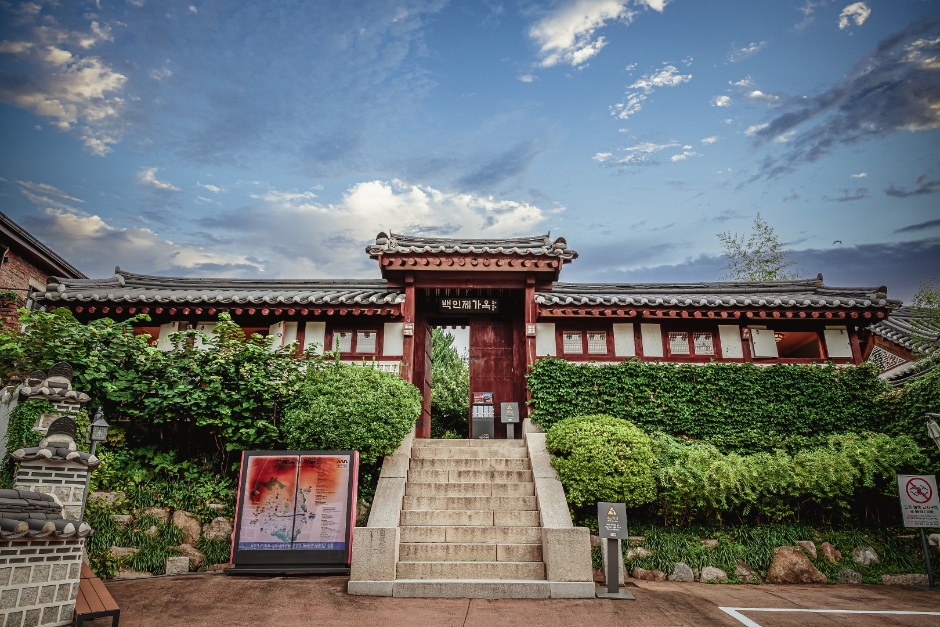
Baek In-je House (백인제가옥)
1.8Km 2025-10-24
16 Bukchon-ro 7-gil, Jongno-gu, Seoul
+82-2-724-0200
Baek In-je House, located in Bukchon Hanok Village, is a hanok built during the Japanese administration period that portrays modern hanok features. The structure consists of a main room offering a good view of the whole village, spacious bedrooms, a large garden, and annex buildings. As it maintains the beauty of a traditional hanok while incorporating the modern trend of its time, Baek In-je House is considered to be highly valuable in means of both architecture and history, representing the Bukchon Hanok Village together with Yun Bo-seon House.
Baek In-je House was built from black pine, which was first introduced in Seoul during the Gyeongseong Expo in 1907, distinguishing itself from other upper-class houses of its time. Unlike other traditional hanok designs that separate the main building from the other rooms, Baek In-je House connects the two with a hallway, allowing convenient access between the two structures. The house also consists of a Japanese-style hallway and floor mat rooms, reflecting the interior trends of that period. Baek In-je House is also unique in that the main room is partially built as a two-story structure, a style that was never seen in any traditional hanok built during the Joseon period.
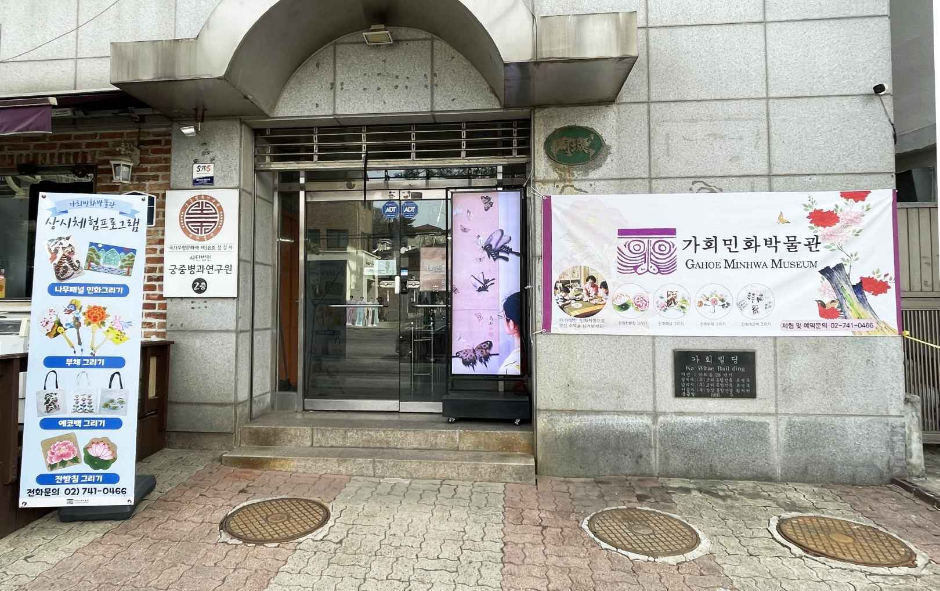
Gahoe Museum (가회민화박물관)
1.8Km 2025-10-31
52 Bukchon-ro, Jongno-gu, Seoul
+82-2-741-0466
Opened in 2002, Gahoe Museum exhibits folk paintings and amulets reflecting the lifestyle and wishes of the Korean people from ancient times. Inside the Hanok gallery, visitors can immerse themselves in the traditions of Korea, including old paintings depicting people's lifestyle in the past and religious beliefs, and roof tiles in the shape of humans or goblins. Visitors will also find folding screens and religious objects used in the past that show skills and knowledge of Korean ancestors.
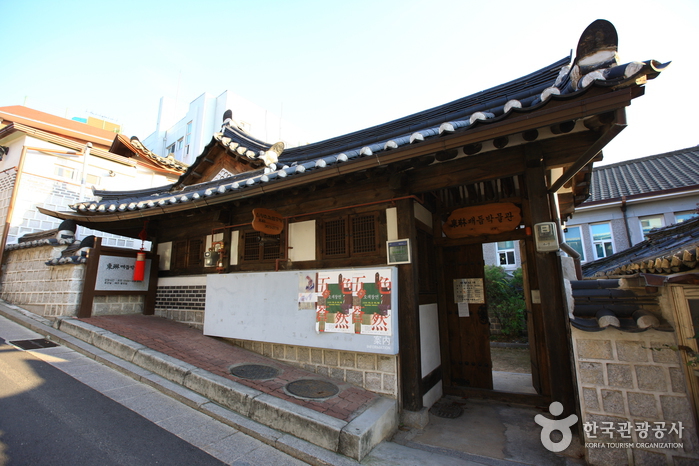
Dong-Lim Knot Museum (동림매듭박물관)
1.8Km 2021-12-21
10, Bukchon-ro 12-gil, Jongno-gu, Seoul
+82-2-3673-2778
Opened in April 2004, Dong-Lim Knot Museum exhibits a variety of decorative traditional Korean maedeup (knots): norigae for hanbok, belts, pouches, as well as materials like thread, cord, and accessories. Housed in a hanok, a traditional Korean house, the gallery has a variety of exhibits, including old and new artwork, and creations that reflect modern trends.
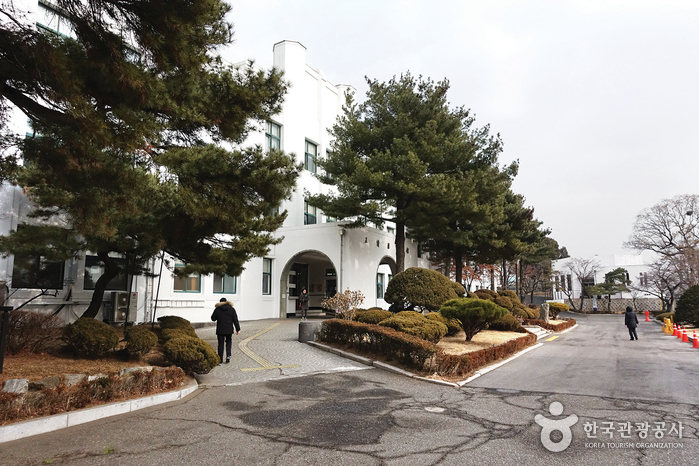
Jeongdok Library (서울특별시교육청 정독도서관)
1.8Km 2021-05-08
48, Bukchon-ro 5-gil, Jongno-gu, Seoul
+82-2-2011-5799
Jeongdok Library opened in January 1977 on the former site of the Gyeonggi High School in Bukchon, Jongno-gu, Seoul. As a public city library, it boasts little under half a million books and 16,300 reference materials. The Seoul Education Museum in the library houses a collection of 12,000 reference materials.
In addition to basic library functions (lending books and offering archives and reading rooms to the public), the library runs various cultural programs such as monthly lectures by invited authors, photo exhibitions, reading seminars, and music/dance performances.
 English
 한국어
한국어 日本語
日本語 中文(简体)
 Deutsch
 Français
 Español
 Русский


