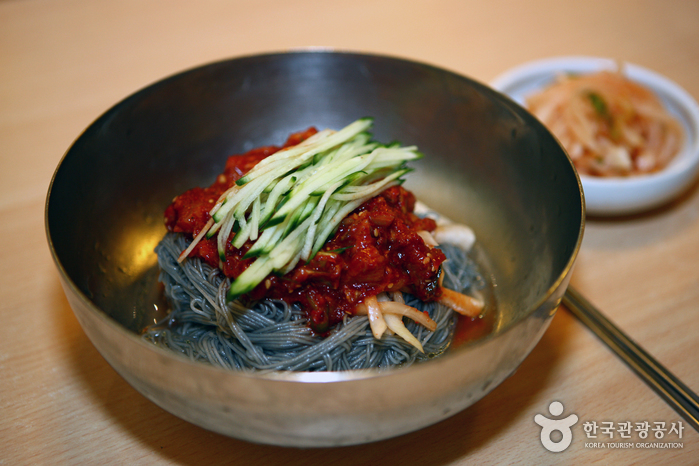
Ojang-dong Hamheung Naengmyeon (오장동 함흥냉면)
6.5Km 2024-02-22
108 Mareunnae-ro, Jung-gu, Seoul
Ojang-dong Hamheung Naengmyeon originated when grandma Han Hyesun, who migrated from Hamgyeongnam-do to Seoul during the Korean War, began selling Hamheung-style "nongma guksu (starch noodles)," eventually naming it Hamheung naengmyeon (Hamheung cold buckwheat noodles). Its signature dish, bibim naengmyeon (spicy buckwheat noodles), features chewy noodles infused with a tangy-sweet seasoning, showcasing the expertise behind its preparation. Alongside the flavorful broth served as a base, the menu also includes variations like hoe naengmyeon (cold buckwheat noodles with raw fish), mul laengmyeon (cold buckwheat noodles), suyuk (boiled pork slices) and mandu.

Regal Optical [Tax Refund Shop] (리갈안경)
6.5Km 2024-04-19
Store #123, Section Ra-3 of Myeongdong Underground Shopping Center, 2, Namdaemun-ro, Jung-gu, Seoul
-
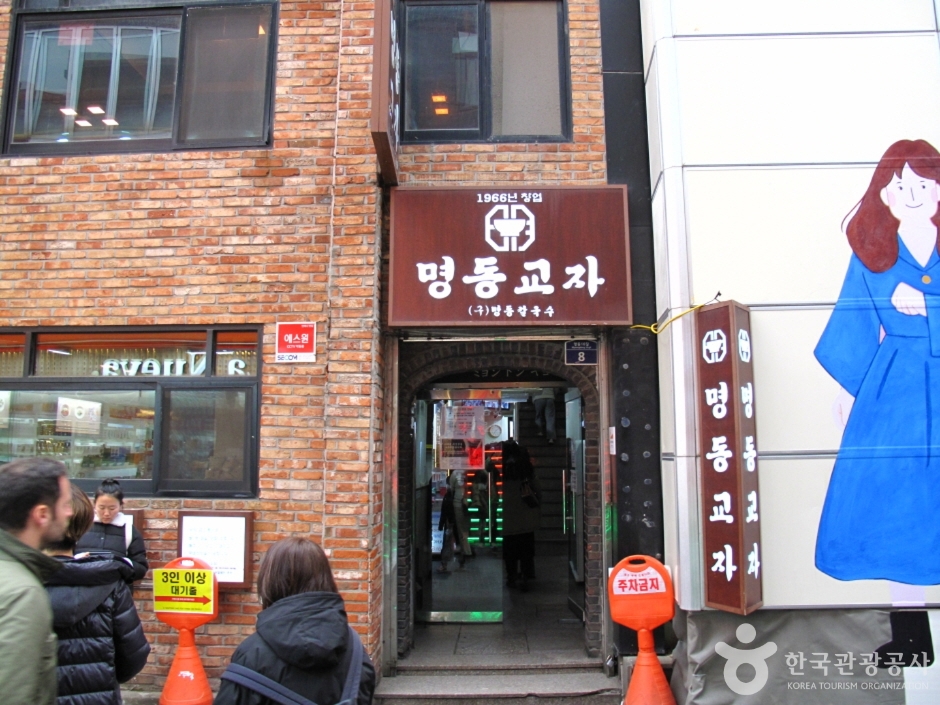
Myeongdong Kyoja (명동교자)
6.5Km 2024-03-25
29 Myeongdong 10-gil, Jung-gu, Seoul
+82-2-776-5348
Since 1970, Myeongdong Kyoja has been a staple in Myeongdong for its kalguksu (noodle soup), believed to be the progenitor of the Myeongdong-style kalguksu known for its rich broth and delicious gyoja (mandu). The restaurant's hallmark dish, kalguksu, features handmade noodles served in a deep, flavorful broth. In addition to its famous noodle soup, other beloved dishes include mandu and bibim guksu (spicy noodles).
![Innisfree - Myeong-dong 2(i)-ga Branch [Tax Refund Shop] (이니스프리 명동2가점)](http://tong.visitkorea.or.kr/cms/resource/70/2887870_image2_1.jpg)
Innisfree - Myeong-dong 2(i)-ga Branch [Tax Refund Shop] (이니스프리 명동2가점)
6.5Km 2024-04-22
1F, 2F (Myeongdong 2-ga), 27, Myeongdong 10-gil, Jung-gu, Seoul
-
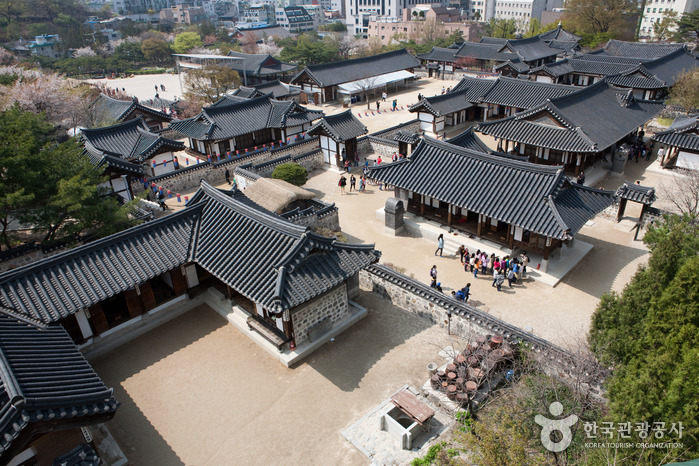
Myeong-dong, Namdaemun, Bukchang-dong, Da-dong and Mugyo-dong Special Tourist Zone (명동 남대문 북창동 다동무교동 관광특구)
6.5Km 2021-12-30
40, Sejong-daero, Jung-gu, Seoul
+82-2-3396-4622
Myeong-dong, Namdaemun, Bukchang-dong and Da-dong are widely known among international visitors as hot spots for shopping and food.
Myeong-dong is a popular destination for shopping, culture, arts and fashion. Major shopping malls such as Lotte Department Store, Shinsegae Department Store, Myeong-dong Migliore and Samik Fashion Town are located here. Shoppers can find a variety of products here from high-end items to relatively inexpensive clothes. There’s also no shortage of street food, traditional restaurants, coffee shops and fancy cafes.
Namdaemun Market is the biggest traditional market in Korea. Visitors can purchase souvenirs and local produce at an affordable price in the shopping complex crowded with stores and street stalls. The market sells a variety of clothes, kitchenware, toys, accessories, food, flowers and imported goods.
Bukchang-dong and Sogong-dong have high-end accommodations including Lotte Hotel Seoul and Westin Chosun Seoul, duty-free shops, and restaurants serving traditional dishes.
[Myeong-dong, Namdaemun Market and Bukchang-dong Special Tourist Zone]
Areas included: Myeong-dong, Bukchang-dong, Mugyo-dong and Da-dong, Seoul
Area size: 872,809 ㎡
Tourist attractions: Myeong-dong, Namdaemun Market and Bukchang-dong, Department Stores (Lotte Department and Shinsegae Department Store, etc.), Traditional Market, Duty-free Shop, Hanok Village, N Seoul Tower, etc.
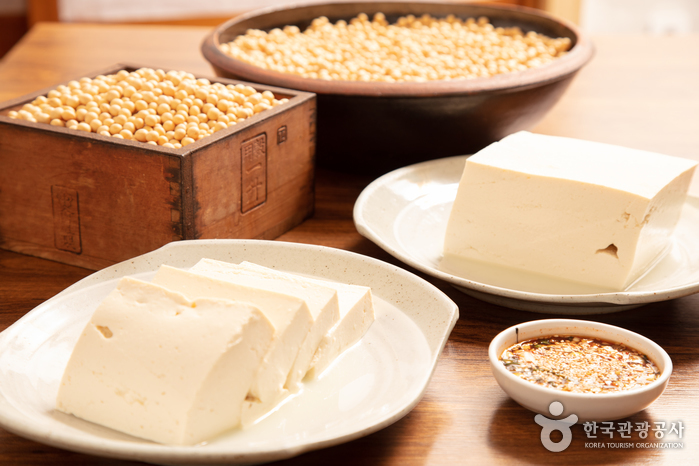
Hwanggeum Kongbat (황금콩밭)
6.5Km 2025-10-31
9 Mapo-daero 16-gil, Mapo-gu, Seoul
Hwanggeum Kongbat specializes in bean curd, using 100% Korean-grown soybeans and salt to make their bean curd fresh daily. The restaurant is famous for their method of making a bean curd that is smooth and maintains the nutty yet sweet flavor of the soybeans.
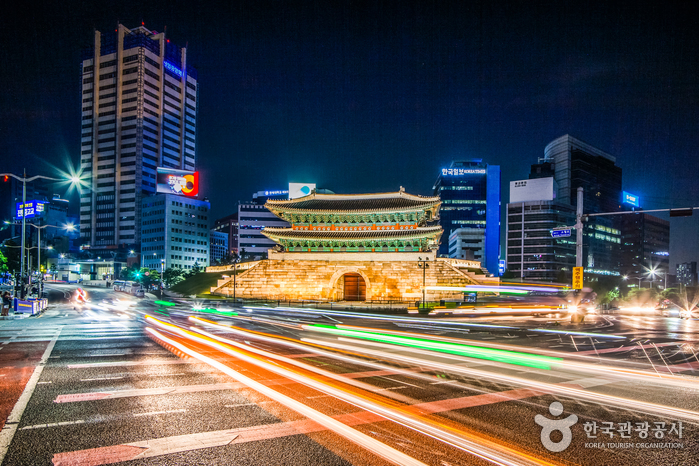
Sungnyemun Gate (숭례문)
6.5Km 2024-11-27
40 Sejong-daero, Jung-gu, Seoul
Sungnyemun Gate is Korea’s National Treasure No. 1, and its unofficial name is Namdaemun Gate. Sungnyemun Gate is the largest castle gate stone structure with an arched entrance in the middle. There’s a column on top of a platform, raising the roof, distinguishing the upper stories and lower stories of the building. Passageways for traffic are located at the east and west ends of the gate. Different from the other gates, Sungnyemun Gate’s tablet has its name written vertically.
On February 10, 2008, Sungnyemun was destroyed by fire. After a 5-year reconstruction work, the gate was re-opened to the public again on May 4, 2013.
![Whixcom [Tax Refund Shop] (휙스컴)](http://tong.visitkorea.or.kr/cms/resource/83/2878583_image2_1.jpg)
![Namsi Glasses [Tax Refund Shop] (남시안경)](http://tong.visitkorea.or.kr/cms/resource/21/3314721_image2_1.jpg)
 English
 한국어
한국어 日本語
日本語 中文(简体)
 Deutsch
 Français
 Español
 Русский


