![Angyeong Seonsaengnim - Jongno Branch [Tax Refund Shop] (안경선생님 종로)](http://tong.visitkorea.or.kr/cms/resource/90/2878190_image2_1.jpg)
Angyeong Seonsaengnim - Jongno Branch [Tax Refund Shop] (안경선생님 종로)
5.8Km 2024-04-18
1F, 393-1, Jong-ro, Jongno-gu, Seoul
-
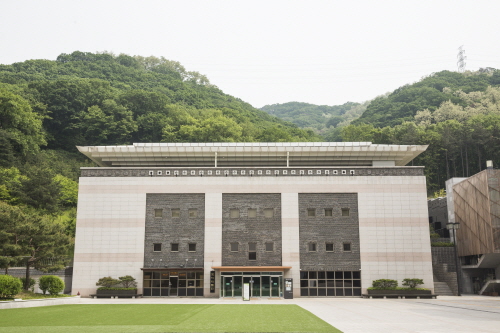
National Gugak Museum (국립국악박물관)
5.8Km 2021-08-13
2364, Nambusunhwan-ro, Seocho-gu, Seoul
+82-2-580-3130
The National Gugak Museum opened on February 23, 1995 as the first gugak museum in Korea, featuring approximately 6,000 pieces of gugak-related materials and relics which have both historical and cultural value. It is comprised of seven themed permanent exhibition halls that present 250 pieces of audio and video clips regarding gugak. In the 3D room, visitors can enjoy 3D animation at all times. The museum also hosts special exhibitions in unique and interesting themes.

National Gugak Center (국립국악원)
5.8Km 2025-01-17
2364 Nambusunhwan-ro, Seocho-gu, Seoul
The National Gugak Center is the governing body established to preserve and promote traditional Korean performing arts. The center can accommodate every type of traditional performing arts, such as palace music, court music, and all other genres including major productions of changgeuk (Korean musical drama). Originally opened in Busan in 1951, the center moved to its current location in Seoul in 1987. The center also opened branch locations in Namwon, Jindo, and Busan in 1992, 2004, and 2008 respectively.
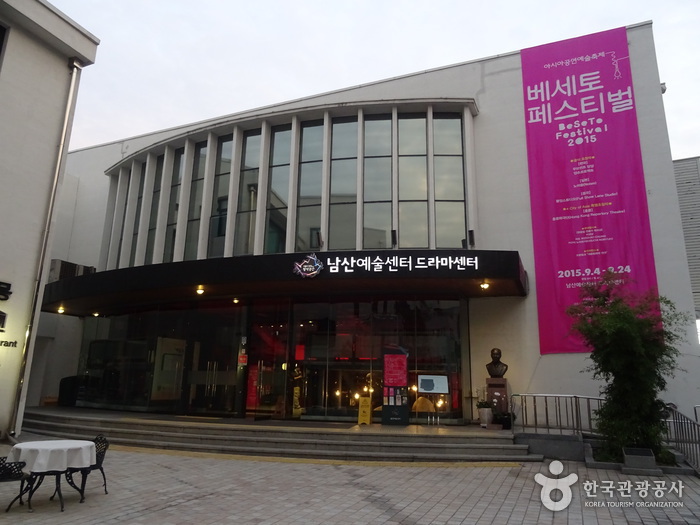
Namsan Arts Center (남산예술센터)
5.8Km 2021-08-26
138, Sopa-ro, Jung-gu, Seoul
+82-2-758-2150
Namsan Arts Center, reopened as a creative space in Seoul in September 2009. It redefined the colors and characteristics of the theater, aiming for a modern theater production center centered on creative premieres, a contemporary performance venue where visitors can feel the pulse of the times, and a theater capable of various experiments.
Namsan Arts Center Drama Center is the first modern folk theater in Korea and the oldest performance hall in which the original architectural form has been preserved. Under the concept of "Contemporary & New Wave," the center continues to produce domestic original plays, and through active exchanges with excellent overseas theaters, build a repertoire of high-quality works that can read domestic and overseas trends, and present contemporary cultural diversity.
![Olive Young - Sinseol-dong Station Branch [Tax Refund Shop] (올리브영 신설동역)](http://tong.visitkorea.or.kr/cms/resource/24/2888624_image2_1.jpg)
Olive Young - Sinseol-dong Station Branch [Tax Refund Shop] (올리브영 신설동역)
5.8Km 2024-04-16
4, Wangsan-ro, Dongdaemun-gu, Seoul
-
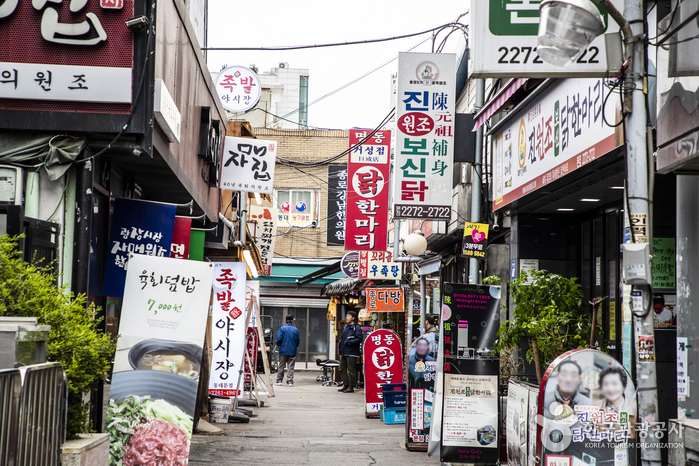
Dongdaemun Dak Hanmari Alley (서울 동대문 닭한마리 골목)
5.8Km 2024-03-04
37-7, Jongno 5(o)-ga, Jongno-gu, Seoul
+82-2-2236-9135
Located near the Dongdaemun Market, Dongdaemun Dak Hanmari Alley gets its name from the restaurants serving dak hanmari (whole chicken soup) that line the alley. Dak hanmari (whole chicken soup), literally “one whole chicken” in Korean, is a dish where a whole chicken is boiled in a soup and served with the alley’s special sauce. After the diners eat the meat, the broth is used to make kalguksu (noodle soup). Because the area is home to large-scale apparel and fashion material markets of the Dongdaemun Market, the district is always lively and bustling.
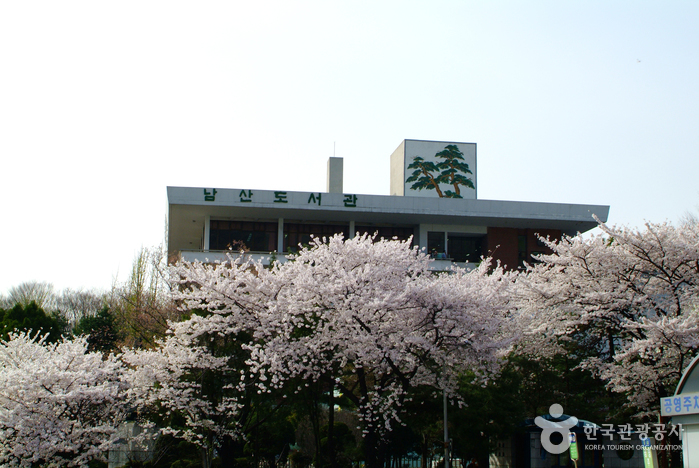
Namsan Library (서울특별시교육청 남산도서관)
5.8Km 2021-07-07
109, Sowol-ro, Yongsan-gu, Seoul
+82-2-754-7338
Namsan Library opened as Kyeongseong Prefectural Library in 1922 as a public library in Myeong-dong, Jung-gu, Seoul. The library was moved to the current site in 1964 with a newly built building and its name changed to Namsan Library in 1965. This concrete building was built in 1964 and was designed by architect Lee Haeseong. It was designated as Seoul Future Heritage in 2013, credited for its preservation value.
It is comprised of 19 rooms and educational areas including the Humanity and Social Science Hall, Nature Science Hall, Language and Literature Hall, Electronic Information Room and more. Since opening, the library has collected nearly 500,000 books, 16,000 non-book materials, 700 continuing resources, and other special materials like old books, oriental books (including Japanese books), and more. Namsan Library also operates a reading treatment program unique to this library that began in 2005. The program includes remodeling of reading consultation room, training for people in charge of reading treatment, workshops, programs for individuals and groups. Also, various exhibitions, lectures, shows, cultural classes and other events are available all year long to enhance lifelong education.
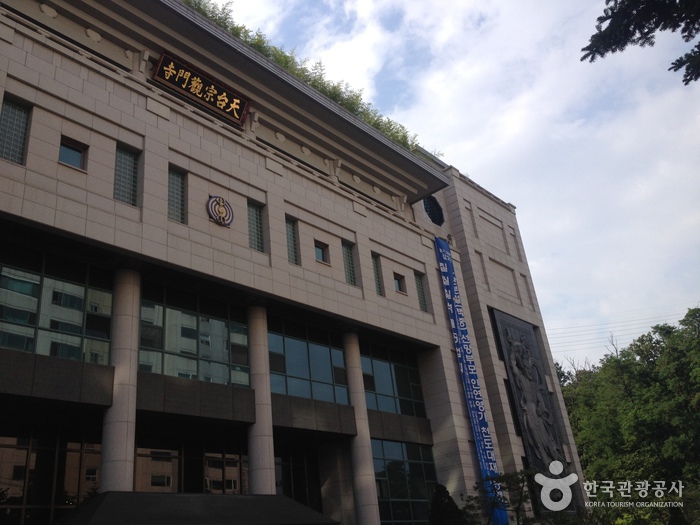
Seoul Gwanmunsa Temple (관문사(서울))
5.8Km 2021-06-01
111, Baumoe-ro 7-gil, Seocho-gu, Seoul
+82-2-3460-5300
Located at the foot of Umyeonsan Mountain in Seocho-gu, Seoul, Gwanmunsa Temple had its ground-breaking ceremony in 1993 and construction was completed in October 1998.
The temple site has a total area of 22,148.76 ㎡ with seven ground levels and four basement levels. The temple was constructed with a mixture of modern and traditional Buddhist architectural designs. Inside the temple, cutting-edge facilities are used for various cultural events, conferences, and sacred ceremonies.
Neighbored by Cheonggyesan Mountain, Umyeonsan Mountain, and Yangjaecheon Stream, the temple is located near many natural spots visitors can enjoy. In particular, Umyeonsan Mountain (alt. 293 m), where Gwanmunsa Temple is located, gets its name for its shape resembling a cow lying down. Designated as a city park and managed by Seoul Metropolitan Government, Umyeonsan Mountain has several valleys with clear spring waters and a dense forest inhabited by diverse animals and plants.
![Innisfree - Sinseol-dong Station Branch [Tax Refund Shop] (이니스프리 신설동역)](http://tong.visitkorea.or.kr/cms/resource/30/2888030_image2_1.jpg)
Innisfree - Sinseol-dong Station Branch [Tax Refund Shop] (이니스프리 신설동역)
5.8Km 2024-04-17
1F, 20, Wangsan-ro, Dongdaemun-gu, Seoul
-
Jingogae (진고개)
5.8Km 2024-03-12
19-1 Chungmu-ro, Jung-gu, Seoul
+82-2-2267-0955
Jingogae is a standing store that opened its doors in 1963. Its signature dish is the eobok jaengban (boiled meat slices hot pot), where thick slices of meat are stacked along with vegetables, mandu, rice cakes, and eggs, all boiled together. In addition to this, they also serve dishes such as gejang jeongsik (marinated crab set menu), gopchang jeongol (small intestine hot pot), galbitang (galbi soup), and yukgaejang (spicy beef soup). The spicy and richly seasoned yangnyeom gejang (spicy marinated crab) is also a popular menu item, which when paired with rice, enhances its flavors even further.
 English
 한국어
한국어 日本語
日本語 中文(简体)
 Deutsch
 Français
 Español
 Русский


