
Olympic Park (올림픽공원)
7.5Km 2023-10-19
424 Olympic-ro, Songpa-gu, Seoul
+82-2-410-1114
Olympic Park is an impressive leisure facility in which historic remains from the Baekje era share space with modern, state-of-the-art sports stadiums, an eco-friendly forest, and spacious grass fields. The legacy of the 1988 Seoul Olympics, the park not only houses the country’s largest sports arena, but has also become a place where Seoul residents come to relax and unwind.
Spread across approximately 1.45 million square meters, Olympic Park encompasses the land that was once Mongchontoseong Fortress and Mongchonhaeja (manmade lake) from the early Baekje period. The park is divided into several zones, including a leisure sports park, a cultural art park, an eco-park, and the History Experience Park dedicated to the area’s rich historic heritage.
Because Olympic Park is so large and takes over three hours to explore, visitors are advised to familiarize themselves with entrances and exits and travel routes before they start. To further save time, visitors can ride the Road Train (“Hodori Train”) located next to Peace Square.

Olive Young - Daehakro Jungang Branch [Tax Refund Shop] (올리브영 대학로중앙점)
7.5Km 2024-06-27
1F, 144, Daehak-ro, Jongno-gu, Seoul
-
Heoninneung Royal Tombs Ecological Preservation Area (Alder Tree Forests) (헌인릉 생태경관보전지역(오리나무림))
7.6Km 2021-12-11
34, Heonilleung-gil, Seocho-gu, Seoul
+82-2-445-0347
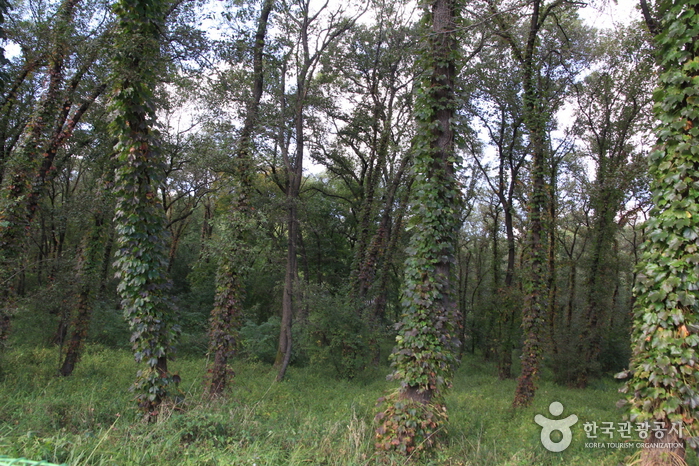
Heonninneung Royal Tombs Ecological Preservation Area is home to alder tree forests. It was officially designated as an ecological preservation area by the Seoul Metropolitan Government in 2005.
Artbox - Daehangno Branch [Tax Refund Shop] (아트박스 대학로)
7.6Km 2024-04-22
22, Daemyeong-gil, Jongno-gu, Seoul
-
Kyobo Book Centre Gwanghwamun (교보문고)
7.6Km 2024-12-04
1 Jong-ro, Jongno-gu, Seoul
02-3295-0312
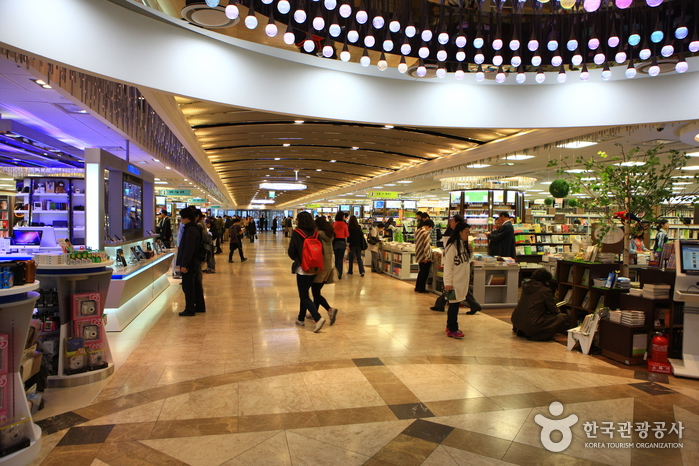
Kyobo Book Centre is the first large-scale bookstore in Korea, and this particular store can be found next to Gwanghwamun Square. Kyobo Book Centre Gwanghwamun divides its internal area into 11 sections and organizes them in a way that allows readers to find books easily. The store also has specialized shops for stationery, digital devices, and accessories, as well as exhibition spaces and cafés.
Hottracks - Gwanghwamun Branch [Tax Refund Shop] (핫트랙스 광화문점)
7.6Km 2024-04-23
1, Jong-ro, Jongno-gu, Seoul
-
Stenlee (스텐리)
7.6Km 2025-10-23
15th Floor, 1 Jongno (Kyobo Life Building), Jongno-gu, Seoul
Stenlee is a specialized agency that provides comprehensive support to medical patients, corporate groups and business delegations visiting Korea. We design and manage tailored MICE and medical programs (checkups, medical treatment, fam tours, medical trainings, seminars, incentive trips, etc) handling everything from booking to transportation, translation and interpretation. Our strength lies in optimizing schedules, cost and cultural immersion to ensure efficient results and comfortable stay for our clients.
Jogyesa Temple (조계사(서울))
7.6Km 2024-10-25
55 Ujeongguk-ro, Jongno-gu, Seoul
As the main temple as well as the district head temple of the Jogye order in Seoul, Jogyesa Temple is the center of Korean Buddhism. The temple was built in the late 14th century during the Goryeo period but was completely destroyed in a fire. It was rebuilt under the name of Gakwangsa Temple in 1910 with the effort of many respectful monks, namely Han Yong-un and Lee Hee-gwang. The temple was given a role as the head temple of Korea’s Buddhism and renamed to Tegosa Temple in 1936. In 1954, a purification drive took place to eliminate Japanese influence and revive traditional Buddhism, which established the present day Jogyesa Temple as a result.
Jogyesa Temple plays an important role in Korean Buddhism as the head temple of the Jogye order. Jogyesa Temple’s Dharma Hall serves as the main venue for several Buddhist events, holding rituals, lectures, ceremonies, and other events all year long. The annual lantern festival in celebration of Buddha's birthday also takes place at this temple.
Soma Museum of Art (소마미술관)
7.6Km 2023-04-13
424, Olympic-ro, Songpa-gu, Seoul
+82-2-425-1077
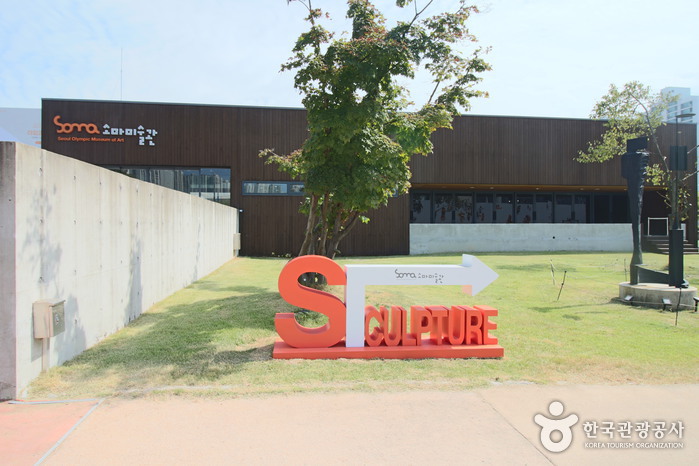
Soma Museum of Art was opened in September 2004 as a cultural space amid the nature of Seoul Olympic Park. The museum displays over 222 sculptures, and offers a variety of cultural and educational programs, including the nation's first drawing center and archive.
 English
 한국어
한국어 日本語
日本語 中文(简体)
 Deutsch
 Français
 Español
 Русский


