![Rawrow - Kwangjang Market Branch [Tax Refund Shop] (로우로우 광장시장)](http://tong.visitkorea.or.kr/cms/resource/29/2878229_image2_1.jpg)
Rawrow - Kwangjang Market Branch [Tax Refund Shop] (로우로우 광장시장)
6.1Km 2024-04-19
Store #239, Gwangjang Market, 88, Changgyeonggung-ro, Jongno-gu, Seoul
-
Euljiro Nogari Alley (을지로 노가리골목)
6.1Km 2025-11-06
Eulji-ro 129, Jung-gu, Seoul
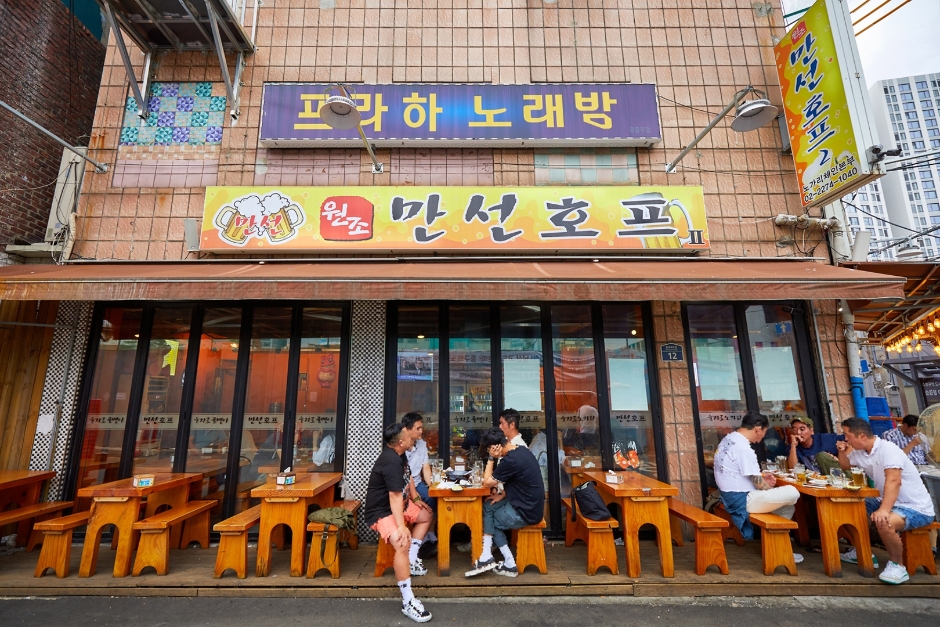
Going out of Exit 3 of Euljiro 3-ga Station on Seoul Metro Line 3 and turning to the alley, you will find many pubs selling Nogari/Dried Young Pollack (Korean people grill and dip it in red pepper paste to eat as a side dish with alcohol) and restaurants specializing in Golbaengi/Sea Snails (It is a kind of conch shell, and Korea people made it a seasoned dish and enjoy it with Somyeon/Thin Noodles or use it as a bar sack). People gather in small groups at every outdoor table and sit in every alley to enjoy beer and snacks on weekday evenings and weekends, so it isn't easy to find a seat.
Originally, this area was lined with various company buildings and shops selling tools. However, in 1980, the pub 'Eulji OB Bear' opened, and as similar pubs opened nearby, it naturally came to be called 'Euljiro Nogari Alley.' As the affordable prices of snacks and beer attracted nearby office workers and college students, it has become increasingly popular, leading to its current status.
Here, along with a cold draft beer, let's try the K-snacks only available in Korea, such as Nogari/Dried Young Pollack and Golbaengi/Sea Snails. In addition, snacks such as chicken and fried dishes are also available, so try various snacks.
![Daiso - Myeong-dong Station Branch [Tax Refund Shop] (다이소 명동역)](http://tong.visitkorea.or.kr/cms/resource/60/2878760_image2_1.jpg)
Daiso - Myeong-dong Station Branch [Tax Refund Shop] (다이소 명동역)
6.1Km 2024-04-22
B2F, 124, Singomae-ro, Giheung-gu, Yongin-si, Gyeonggi-do
-
![Olive Young - Gwangnaru Station Branch [Tax Refund Shop] (올리브영 광나루역)](http://tong.visitkorea.or.kr/cms/resource/92/2878792_image2_1.jpg)
Olive Young - Gwangnaru Station Branch [Tax Refund Shop] (올리브영 광나루역)
6.1Km 2024-04-18
1F, 607, Achasan-ro, Gwangjin-gu, Seoul
-
![CheongKwanJang - Jongno 4(sa)-ga Branch [Tax Refund Shop] (정관장 종로4가)](http://tong.visitkorea.or.kr/cms/resource/92/2878192_image2_1.jpg)
CheongKwanJang - Jongno 4(sa)-ga Branch [Tax Refund Shop] (정관장 종로4가)
6.1Km 2024-04-22
Gwangnim Bldg., 195, Jong-ro, Jongno-gu, Seoul
-
Myeong-dong Ttungttungi Jokbal (명동뚱뚱이족발)
6.1Km 2024-10-15
9, Toegye-ro, 20-gil, Jung-gu, Seoul
+82-2-778-8998
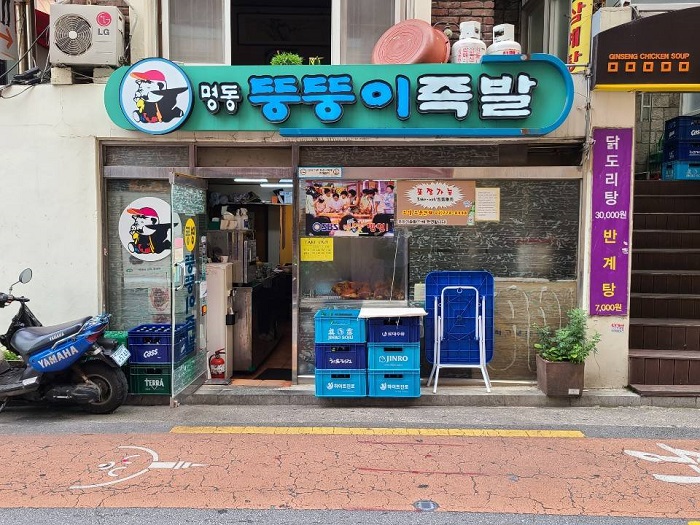
One of the old restaurants in Myeong-dong featured in Korean gourmet programs. This Korean dishes restaurant is located in Jung-gu, Seoul. The most famous menu is braised pigs' feet.
Maeheon Citizen's Forest (매헌시민의 숲)
6.1Km 2022-12-21
99, Maeheon-ro, Seocho-gu, Seoul
+82-2-575-3895
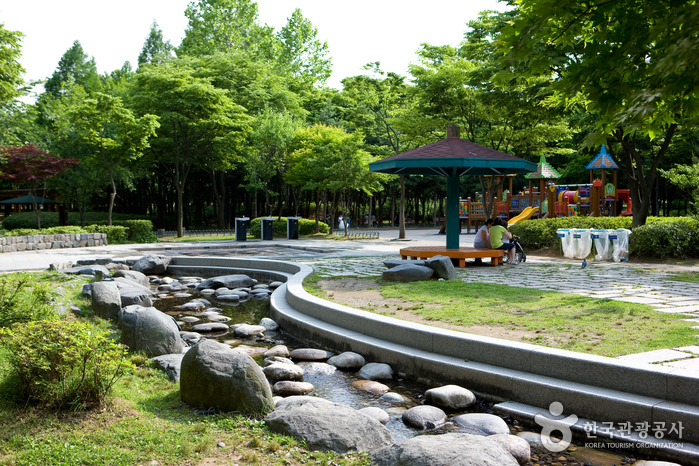
Maeheon Citizen's Forest, located near Yangjae Tollgate, was created in anticipation of the Seoul Asian Games in 1986 and the 24th Olympic Games in 1988. The forest provides a scenic habitat for 94,800 trees of 43 different species including pine, zelkova, purple bloom maple, horse chestnut, and nut pine. These trees are rarely seen in cities and the park is a popular date spot for couples. In the fall, the trees in the park bear an abundance of persimmons and quinces.
Amenities and facilities include an outdoor wedding hall, walking course, basketball court, volleyball court (also used for foot volleyball), tennis court, barefoot walking path, and outdoor workout equipment. Memorial sites and monuments like the memorial of Patriot Yun Bong-Gil can also be found scattered throughout the park grounds.
Chojun Textile & Quilt Art Museum (초전섬유ㆍ퀼트박물관)
6.1Km 2024-03-06
29, Toegye-ro 16-gil, Jung-gu, Seoul
+82-2-753-4074~5
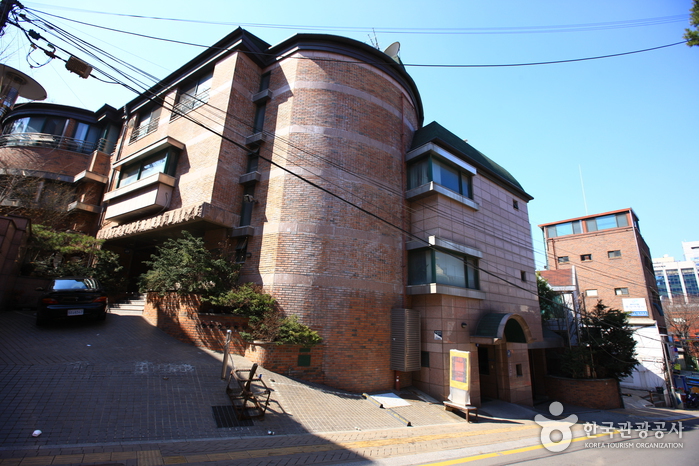
Opened in 1998, Chojun Textile & Quilt Art Museum is the only textile art museum in Korea. Visiotrs can learn about the excellence and tradition of Korean textiles by observing a wide range of domestic and international textile artworks. In addition to exhibiting its collection, the museum also holds special exhibitions as well as textile and quilt competitions, giving visitors the opportunity to get up close and personal with textile artworks.
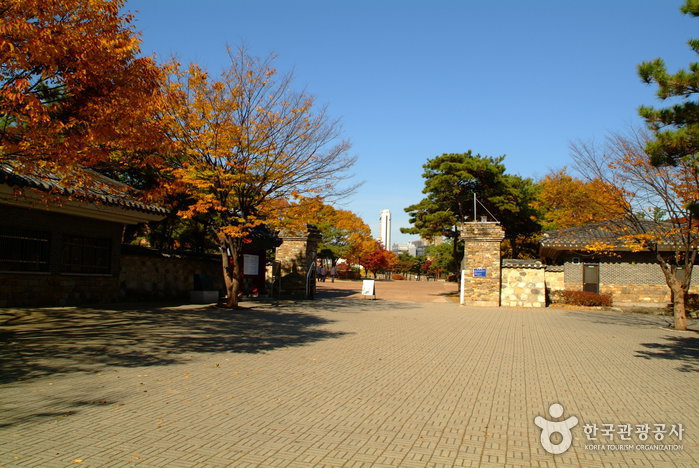
Seoul Seokchon-dong Ancient Tombs (서울 석촌동 고분군)
6.1Km 2021-02-26
21, Garak-ro 7-gil, Songpa-gu, Seoul
+82-2-421-0970
The Ancient Tombs in Seokchon-dong were found and investigated as part of the city development project in Jamsil district. It was impossible to determine the full scale of the ancient tombs in this area due to the severity of destruction. The largest tomb, the third tomb, measures 49.6 meters from east to west, 43.7 meters from south to north, and 4 meters in x_height. The tomb features three layers of stones topped by a smooth mound, which is a tomb style originating from the Goguryeo dynasty (37 BC-AD 668). The tombs are presumed to belong to one of the earliest leaders of the Baekje dynasty (18 BC-AD 660), which was founded by the people of Goguryeo who had come down southwards to establish a new kingdom around the Hangang River basin.
The square-shaped fourth tomb features a structure similar to the third tomb. Many pieces of earthenware from the early Baekje era were found in the fourth tomb. Also excavated around this site was a gold spangle earring. The third and fourth tombs have been registered as Historic Site No. 243. The tomb site offers valuable information concerning the culture and customs of the Baekje dynasty in its golden age around the 4th century, as well as the relations between the three ancient kingdoms (Goguryeo, Baekje, and Silla) around that time.

Seoul Arts Center (예술의전당)
6.1Km 2025-01-17
2406 Nambusunhwan-ro, Seocho-gu, Seoul
The Seoul Arts Center is the representative art complex of Korea. It is comprised of the Opera House, Concert Hall, Art Gallery, Calligraphy Museum, Art Material Hall, and an outdoor stage. You can enjoy various performances and exhibitions all in one site.
The Opera House and Concert Hall consist of a total of five performance halls offering an average of 800 performances ever year, whereas the Art Gallery and Calligraphy Museum has seven exhibition halls providing various exhibitions throughout the year. The outdoor stage also provides various genres of performances all year round.
 English
 한국어
한국어 日本語
日本語 中文(简体)
 Deutsch
 Français
 Español
 Русский


