![Jack Nicklaus [Tax Refund Shop] (잭니클라우스)](http://tong.visitkorea.or.kr/cms/resource/29/3313229_image2_1.jpg)
![Absorba [Tax Refund Shop] (압소바)](http://tong.visitkorea.or.kr/cms/resource/79/3313679_image2_1.jpg)
![Agabang Flex [Tax Refund Shop] (아가방플렉스)](http://tong.visitkorea.or.kr/cms/resource/60/3314560_image2_1.jpg)
![Motherpia [Tax Refund Shop] (마더피아)](http://tong.visitkorea.or.kr/cms/resource/89/3313889_image2_1.jpg)
![Volvik [Tax Refund Shop] (볼빅)](http://tong.visitkorea.or.kr/cms/resource/57/3314557_image2_1.jpg)
![Crocs [Tax Refund Shop] (크록스)](http://tong.visitkorea.or.kr/cms/resource/98/3313598_image2_1.jpg)
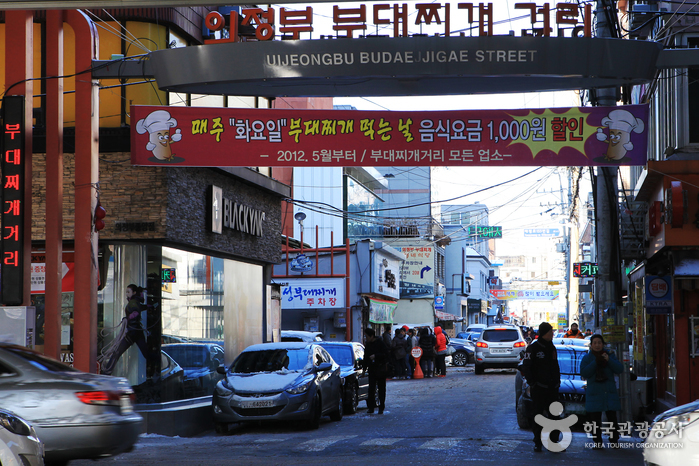
Uijeongbu Budaejjigae Street (의정부 부대찌개거리)
7.7Km 2023-10-27
7, Hoguk-ro 1309beon-gil, Uijeongbu-si, Gyeonggi-do
The word “budaejjigae” has two parts: “budae”, or military unit, and “jjigae,” a dish made by boiling ingredients and stock in a pot. It originates from the post-Korean War period, where processed meat from US Army bases was made into a jjigae with vegetables, glass noodles, ramyeon, and the like. While the exact origin of the dish is difficult to establish, a strong tradition of sausage jjigae was established in Uijeongbu, thanks to its proximity to US Army bases. These geographical characteristics created today’s Uijeongbu Budaejjigae Street. Starting with Odeng Sikdang, the origin of the street, restaurants specializing in sausage jjigae entered the area, creating a specialized street and a landmark of Uijeongbu.
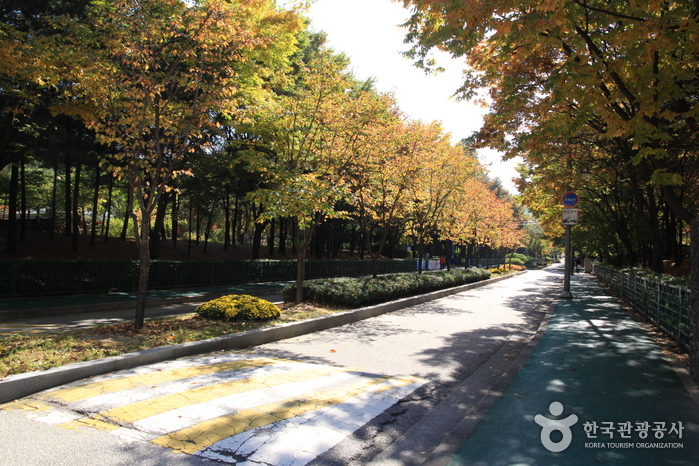
Bonghwasan Mountain - Seoul (봉화산 (서울))
7.9Km 2022-09-14
Sinnae-ro 21-gil, Jungnang-gu, Seoul
+82-2-2094-2353
Bonghwasan Mountain (alt. 160 meters) in Jungnang-gu, Seoul offers scenic views of Buramsan, Dobongsan, and Namsan mountains. From the mountain, hikers can even see as far as the Yangju area of Gyeonggi-do Province to the north. Officially designated a “neighborhood park” in July 1977, Bonghwasan Mountain has a variety of convenience facilities, not least of which is the beacon tower of Achasan Bongsudae (remolded in 1994) perched on the mountain summit. Also near the summit is Sansingak Shrine, which is the site of the annual Bonghwasan Dodanggut (Intangible Cultural Property of Seoul), a shamanistic rite performed on the third day of the third lunar month.
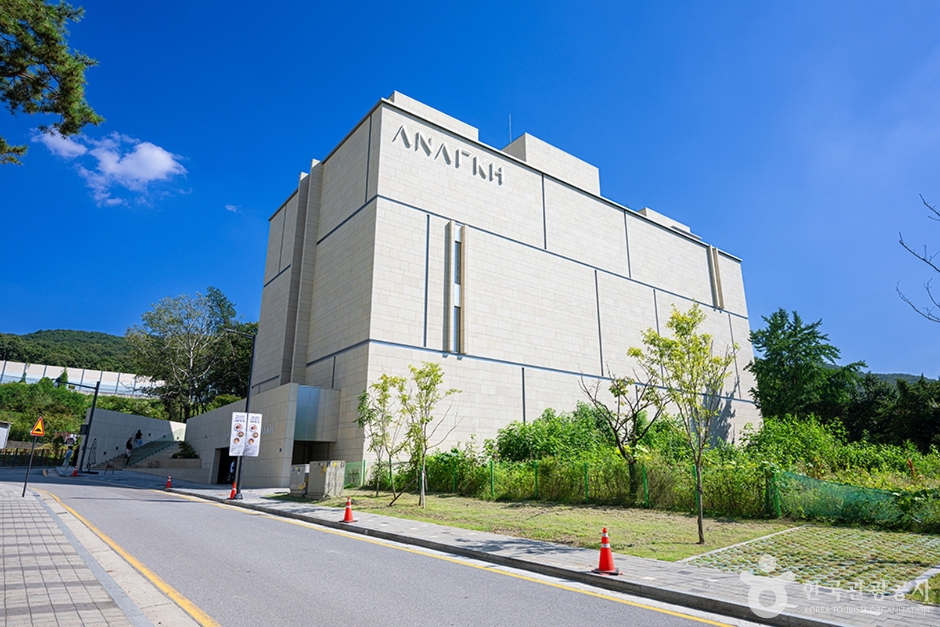
ANARKH (아나키아)
7.9Km 2024-02-07
22 Jandol-gil, Uijeongbu-si, Gyeonggi-do
ANARKH is a café and a restaurant. Its unique signature drink, the black tea cream latte, combines the richness of a caffè latte with a layer of creamed black tea. Their signature bakery item is walnut bread, distinctively flavored with a subtle hint of black tea and the nutty taste of walnuts. As for the restaurant's main dishes, the signature items include a steak salad, shrimp pasta, and chicken pie.
![Uireung Royal Tomb [UNESCO World Heritage] (서울 의릉(경종, 선의왕후) [유네스코 세계문화유산])](http://tong.visitkorea.or.kr/cms/resource/80/2690680_image2_1.jpg)
Uireung Royal Tomb [UNESCO World Heritage] (서울 의릉(경종, 선의왕후) [유네스코 세계문화유산])
7.9Km 2021-06-03
146-20, Hwarang-ro 32-gil, Seongbuk-gu, Seoul
+82-2-964-0579
Uireung is the royal tomb of King Gyeongjong (reign 1720-1724), the 20th ruler of the Joseon dynasty, and his second wife, Queen Seonui.
King Gyeongjong was the first son of King Sukjong and Janghuibin, who was one of King Sukjong’s concubines. King Gyeongjong, who was born weak and anemic, died four years after becoming the king, without any great political achievements. Uireung tombs differ from the other royal double tombs in that they are not placed side-by-side. Instead, according to geomantic theory, one tomb has been placed directly behind the other one. The arrangement also shows that when making tombs, Korean ancestors did their best to protect the natural environment. Another feature of Uireung Royal Tomb is the stone fence raised using twelve stone posts. Each post has a letter inscribed, representing one of the twelve sibijisin gods.
 English
 한국어
한국어 日本語
日本語 中文(简体)
 Deutsch
 Français
 Español
 Русский


