
Samcheong-dong Street (삼청동길)
11.9Km 2025-01-22
107 Samcheong-ro, Jongno-gu, Seoul
It is said that Samcheong-dong was named from the story about the three "cheong" (Chinese character meaning clean) of the area, namely the mountain, water, and people. Another theory is that the origin of the region's name came from Samcheongjeon Hall where three tablets called "Taecheong," "Sangcheong," and "Okcheong," were set up based on Taoism. Samcheong-dong Street features a mixture of old scenes of hanok buildings with traditional beauty and modern scenes of galleries and cafés, creating a unique atmosphere. Visitors can feel the abundant cultural mood at every corner of the street through the art galleries, museums, antique shops, and quiet pathways.
![Kum Bak Yeon [Tax Refund Shop] (금박연)](http://tong.visitkorea.or.kr/cms/resource/74/3313974_image2_1.jpg)
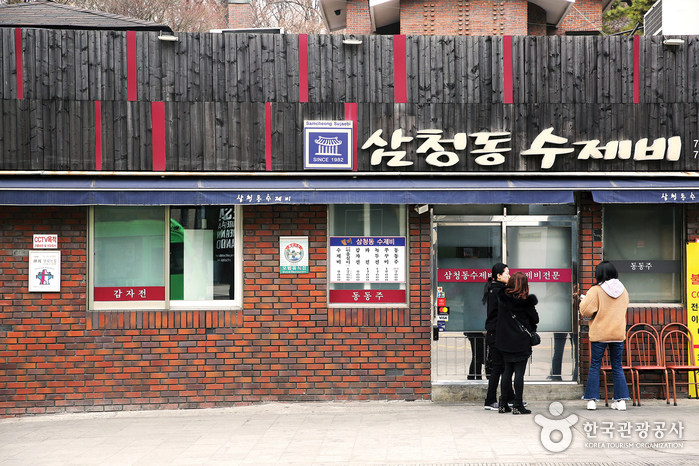
Samcheong Sujaebi (삼청동수제비)
11.9Km 2024-03-04
101-1 Samcheong-ro, Jongno-gu, Seoul
+82-2-735-2965
Samcheong Sujaebi is a handmade sujebi (hand-pulled dough soup) specialty restaurant located in Samcheong-dong. Sujebi is a dish made by tearing hand-pulled dough into pieces and boiling it in anchovy broth, among other broths. The signature menu features sujebi with sliced pumpkin, clams, and potatoes, all boiled together and served in a pot. Another specialty is the potato pancake made exclusively from 100% potatoes. Nearby attractions include Bukchon Hanok Village, the National Museum of Modern and Contemporary Art, and Gyeongbokgung Palace.
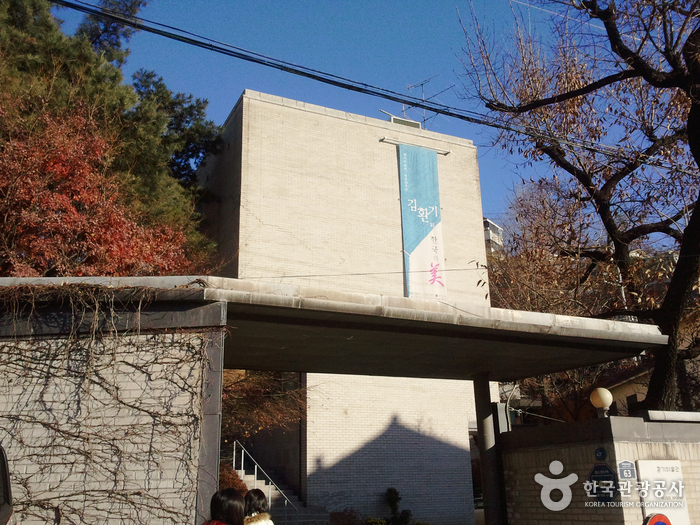
Whanki Art Museum (환기미술관)
12.0Km 2024-03-04
63, Jahamun-ro 40-gil, Jongno-gu, Seoul
+82-2-391-7701
Whanki Art Museum exhibits the works of Kim Whanki (1913-1974), the pioneer of Korean abstract art. Kim was inspired by traditional features such as Korean mountains and streams, the sky, moons and clouds, the white porcelain and traditional patterns, and worked to express them in abstract forms through points, lines, and surfaces. The main collection features nearly 300 works by Kim. One can also find an art shop and a café.
Seokparang (석파랑)
12.0Km 2024-09-02
309 Jahamun-ro, Jongno-gu, Seoul
+82-2-395-2500
Seokparang is a place built by relocating the Sarangchae of Heungseon Daewongun, the father of King Gojong of the Joseon dynasty. It boasts beautiful late Joseon-style gardens and three traditional hanok buildings. Here, one can enjoy authentic Gungjung hanjeongsik (royal Korean table d'hote) for both lunch and dinner, featuring meticulously prepared dishes such as traditional porridge, chilled salads, steamed prawns, kimchi cabbage wraps with pork, soybean paste jjigae set menu, and desserts. Diners can also savor traditional liquors crafted by artisans from across the country.
![Yeonwoohouse [Korea Quality] / 연우하우스 [한국관광 품질인증]](http://tong.visitkorea.or.kr/cms/resource/52/3009452_image2_1.jpg)
Yeonwoohouse [Korea Quality] / 연우하우스 [한국관광 품질인증]
12.0Km 2023-09-12
5-13 , Bukchon-ro 12-gil, Jongno-gu, Seoul
+82-2-742-1115
Yeonoo House is a quiet and cozy traditional hanok in Bukchon Hanok Village, Jongno, Seoul. There are two small rooms, each with its own bathroom. Residents can access a superb panoramic view of Bukchon Hanok Village by mounting a ladder up to the roof. As Yeonoo is an old building, careful attention is paid to hygiene management. Gyeongbokgung Palace, Cheonggyeonggung Palace, and Changdeokgung Palace are all nearby.
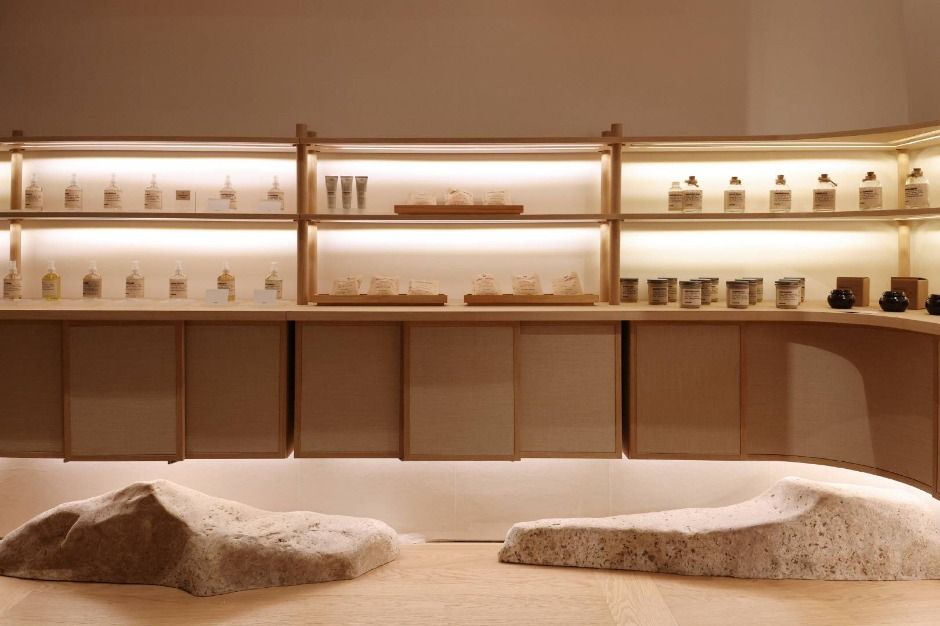
GRANDHAND. Gahoe (그랑핸드 가회점)
12.0Km 2025-12-04
61 Bukchon-ro 11-gil, Jongno-gu, Seoul
Launched in 2014 at a small hanok in Bukchon Hanok Village, this Korean perfume brand now has nine stores around Seoul. With no advertisements or online sales, GRANDHAND has preserved its roots for years. GRANDHAND. Gahoe located amidst the beautiful surroundings of Bukchon Hanok Village and various art museums has customers of all ages and nationalities.
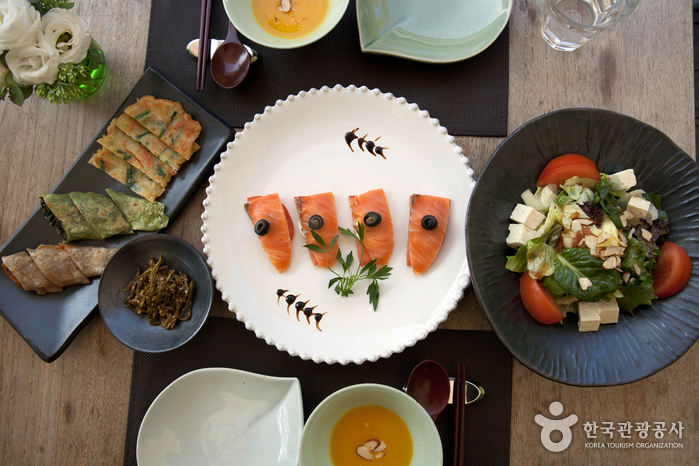
Sosohan Punggyeong (소소한 풍경)
12.0Km 2024-02-20
75 Jahamun-ro 40-gil, Jongno-gu, Seoul
Sosohan Punggyeong is the first restaurant that received the restaurant guide, Blue Ribbon Survey, in Korea. It is located in a renovated house with a courtyard. They offer a course menu featuring appetizers to desserts. One of the signature dishes is the gaji jjim (spicy eggplant soup), a dish made with eggplant and meat. It is recommended to make reservations in advance, as many guests prefer to book ahead.
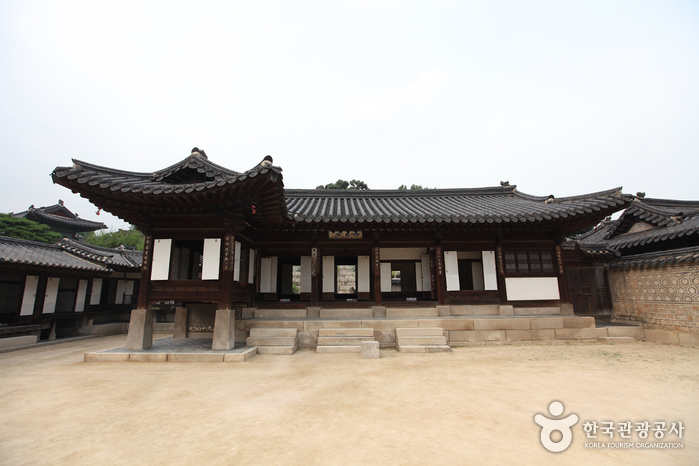
Nakseonjae Hall (낙선재)
12.0Km 2021-09-30
99, Yulgok-ro, Jongno-gu, Seoul
+82-2-2148-1822
Located inside Changdeokgung Palace, Nakseonjae Hall is a one-story structure built in ikgong style (bird wing-shaped eaves placed on top of the pillars) with a hip tiled and gable roof. It has 6 kan in the front and 2 kan (traditional unit of measurement of the space between pillars) to the sides. It originally belonged to the nearby Changgyeonggung Palace, but came to be considered a part of Changdeokgung Palace in more recent years.
The hall was constructed in 1846 (12th year of King Heonjong’s reign) and it is collectively called Nakseonjae together with the adjacent Seokbokheon Hall and Sugangjae Hall.
Behind the building is a flower garden made of stacked large stones. The chimney, the flowers, and the oddly shaped stones harmoniously blend into one another to create an outstanding landscape gardening.
Dal Café (달 카페)
12.0Km 2024-03-18
94-1 Samcheong-ro, Jongno-gu, Seoul
+82-2-735-7355
Dal Café is a café located in Bukchon Hanok Village, housed within a traditional Korean hanok. "Dal" means "moon" in Korean. The café is designed with lighting fixtures that give the impression of the moon hanging on the wall, making it a perfect spot for photography. The signature menu item here is the traditional Korean shaved ice with topping served in a traditional pot.
 English
 한국어
한국어 日本語
日本語 中文(简体)
 Deutsch
 Français
 Español
 Русский


