
National Theater of Korea (국립극장)
16.1Km 2024-03-06
59, Jangchungdan-ro, Jung-gu, Seoul
+82-2-2280-4114
The National Theater of Korea opened in 1950 as the first national theater in Asia. It is the only production theater that takes traditional arts to recreate them as contemporary art. It offers various types of theaters, such as Haeoreum Grand Theater, Daloreum Theater (middle-size), Immersive Studio ByeolByeol (small-size), and Haneul Round Theater with a circular stage structure. In addition, the Museum of Performing Arts, Cultural Plaza, and other convenience stores and coffe shops offer pleasure and relax to its visitors.
Olive Young - Seoul Forest Station Branch [Tax Refund Shop] (올리브영 서울숲역점)
16.1Km 2024-06-26
1F, 50, Wangsimni-ro, Seongdong-gu, Seoul
-
Yejiwon (예지원)
16.1Km 2022-09-19
72, Jangchungdan-ro, Jung-gu, Seoul
+82-2-2253-2211
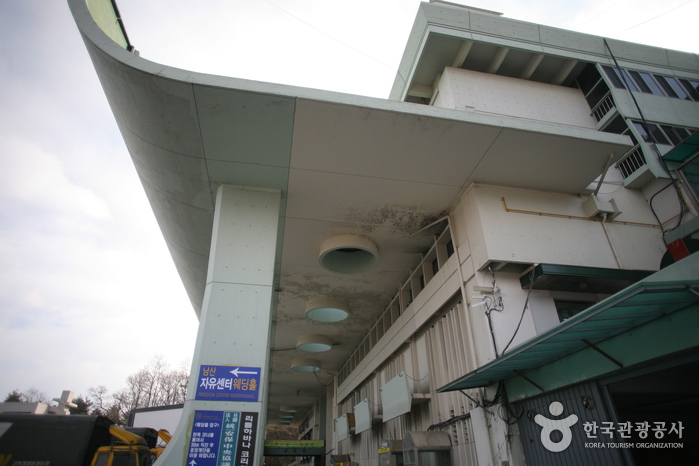
The Yejiwon is located in Seoul Jung-gu Jangchung-dong and has been offering traditional Korean etiquette education programs since its inception on September 16th, 1974. Furthermore, the Yejiwon also serves to introduce the traditional cultures and living cultures of Korean etiquettes to foreigners.
Most programs offered are short-term classes, and reservations can be made on the homepage up to 15 days in advance. Reservations are only available for groups of 10 or more and classes are instructed in Korean only, so it may be a good idea to be accompanied by a guide.
Dongnimmun Gate (독립문)
16.1Km 2022-12-15
251, Tongil-ro, Seodaemun-gu, Seoul
Dongnimmun stands at the location originally known as Yeongeun, where envoys were once treated. When a Chinese envoy visited, the King would go out through this door to greet. In 1898, to announce the independence from Japan, Dongnimun was constructed with the fund collected by the citizens. The traces of the past still remain on Dongnimmun with two pillars in front of Dongnimmun being the remains of Yeongeunmun.
The Arc de Triomphe in France can be recalled in comparison to Dongnimmun. Dongnimmun was built using granite with a passageway x_height of 14.28 meters. On the top it is written ‘Dongnimmun’ in Korean with the national flag drawn on each side. On the inner-left side there are stone stairs leading to the attic. The national flower Mugunghwa are planted around Dongnimmun. Now it is surrounded by roads and it is eye-catching to view when passing by.
![Tune [Tax Refund Shop] (튠)](http://tong.visitkorea.or.kr/cms/resource/14/3313814_image2_1.jpg)
Good Morning Eyewear [Tax Refund Shop] (굿모닝안경)
16.2Km 2024-04-22
61, Namdaemunsijang-gil, Jung-gu, Seoul
-
Olive Young - Konkuk Univeristy Town Branch [Tax Refund Shop] (올리브영 건대 타운)
16.2Km 2024-06-27
1F and 2F, 244, Achasan-ro, Gwangjin-gu, Seoul
-
Majanghosu Suspension Bridge (마장호수 출렁다리)
16.2Km 2023-09-14
313 Gisan-ro, Gwangtan-myeon, Paju-si, Gyeonggi-do
Majanghosu Suspension Bridge offers more than the bridge itself with amenities like benches, wildflowers, water sports, and a lakeside promenade. It's the perfect place for couples or a family day out. The bridge is surrounded by mountains and a lake, offering a scenic landscape that becomes even more spectacular at sunset. Midway through the bridge, the floor is partially made of bulletproof glass for a thrilling view below one's feet. The bridge has many noteworthy attractions in proximity such as Bogwangsa Temple, Byukchoji Gardens, and Gongneung Tourist Resort.
Seodaemun Prison History Museum (서대문형무소역사관)
16.2Km 2024-12-02
251 Tongil-ro, Seodaemun-gu, Seoul
Seodaemun Prison was built under the Japanese administration to imprison independence movement activists. It first opened on October 21, 1908 under the name Gyeongseong Prison. Eventually, so many activists were imprisoned that the building had to be expanded. At that time, the name changed to Seodaemun Prison on September 3, 1912. Eighty years later, the prison was turned into Seodaemun Independence Park on August 15, 1992 to commemorate the Korean patriots who were tortured in prison, giving their lives for freedom. Of the many buildings, only seven were preserved for their historical significance, among which three prison buildings and the execution site were designated as a Historic Site. In 1998, the park underwent another transformation into today's Seodaemun Prison History Hall to educate the public on the importance of Korea's independence and the sacrifices of those who fought to achieve it.
Rain Report Croissant (레인리포트 크루아상)
16.2Km 2024-03-12
1-2F, 32, Seongsui-ro 16-gil, Seongdong-gu, Seoul
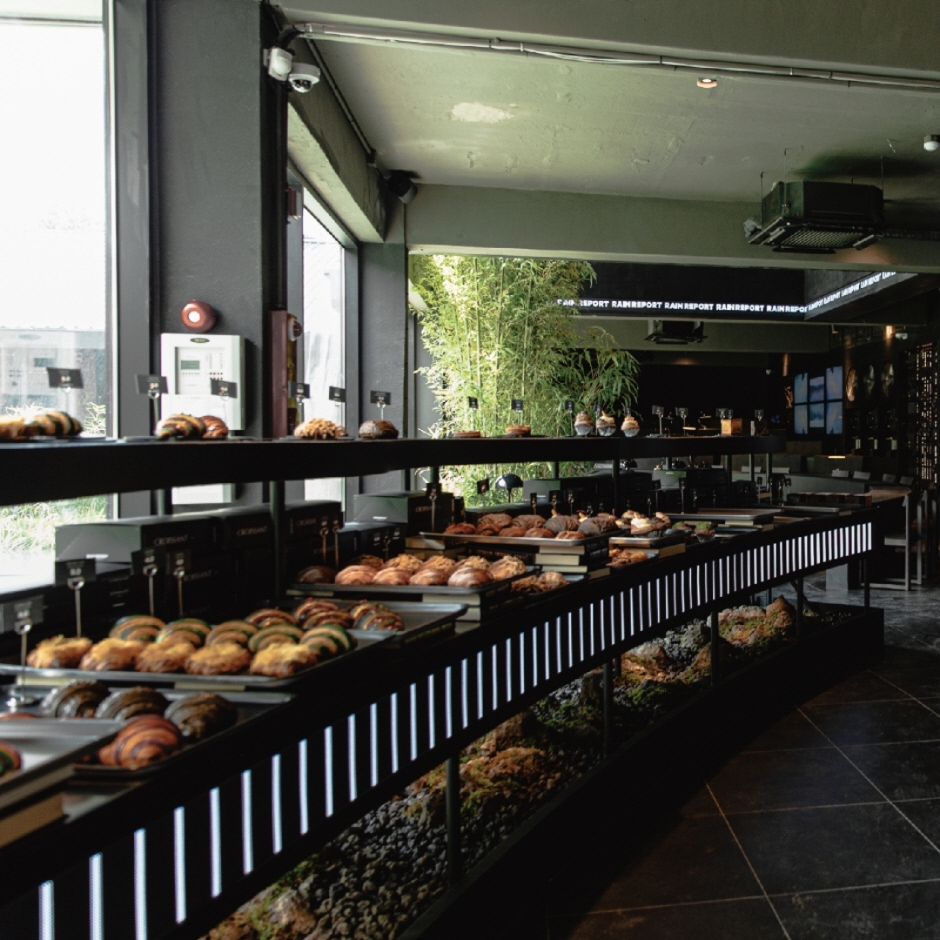
Rain Report Croissant is a dessert café with the concept of "rainy day". The theme is that it rains every day, and at each fixed time, a stream of water pours from the windows of the exterior wall as if it were raining. The café serves croissants and drinks, inspired by nature and the weather, with special ingredients. Their signature bakery are Rainbow Croissant and White Cloud Kaimak.
 English
 한국어
한국어 日本語
日本語 中文(简体)
 Deutsch
 Français
 Español
 Русский


