Seoul Museum of History (서울역사박물관)
10.1Km 2025-01-17
55 Saemunan-ro, Jongno-gu, Seoul
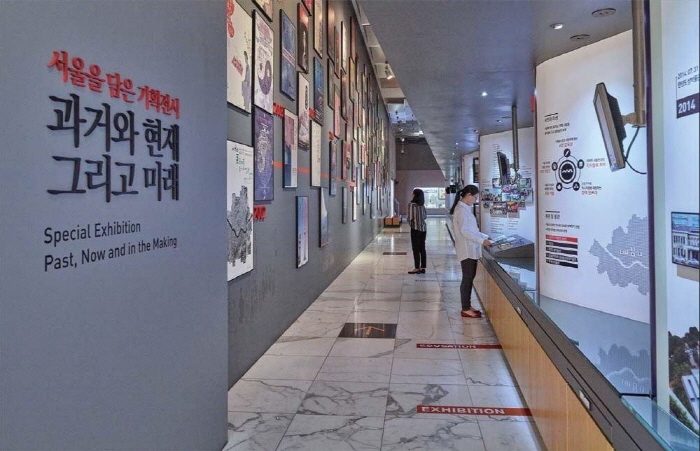
Seoul Museum of History covers everything about Seoul's history and culture from the prehistoric era to modern times, focusing especially on the Joseon era. The museum aims to raise cultural awareness and build a strong bond within the community by collecting, preserving, researching, and displaying artifacts and materials related to Seoul as well as promoting the city's history and culture to an international audience.

Seoul Hyochang Park (서울 효창공원)
10.1Km 2024-07-09
177-18 Hyochangwon-ro, Yongsan-gu, Seoul
+82-2-2199-7608
Hyochang Park covers 122,245 square meters spanning across Hyochang-dong and Cheongpa 2-dong. It is a historic landmark that once contained several royal tombs, and was known at that time as Hyochangwon. The cemeteries that were originally located in Hyochangwon belonged to Crown Prince Munhyo, King Jeongjo’s first son who died at the age of five; Royal Noble Consort Uibin of the Seong Clan, King Jeongjo’s royal concubine and Crown Prince Munhyo’s mother; Royal Noble Consort Sugui of the Park Clan, King Sunjo’s royal concubine; and her daughter Princess Yeongon. The royal tombs were moved to Seooreung Tombs in the waning months of the Japanese colonial period. The Japanese empire began the development of Hyochangwon into a park in 1924, and the Japanese governor-general officially assigned the site as a park in 1940.
Presently, several of Korea’s greatest leaders are buried in Hyochang Park. The remains mostly belong to independence activists including Yoon Bong-gil, Lee Bong-chang, and Baek Jeong-gi, whose graves are collectively known as Samuisa Tomb. A statue of Lee Bong-chang has been built in the graveyard. Among the other patriotic martyrs who are interred in the park are Kim Gu and some of the key figures of the provisional government such as Lee Dong-nyeong, Cha I-seok, and Cho Seong-hwan. An ancestral shrine named Uiyeolsa has been built along the main gate and holds the portraits of the deceased independence activists.
Palace Royal Guard Changing Ceremony (수문장 교대의식)
10.1Km 2025-07-11
161 Sajik-ro, Jongno-gu, Seoul
+82-2-3210-1645
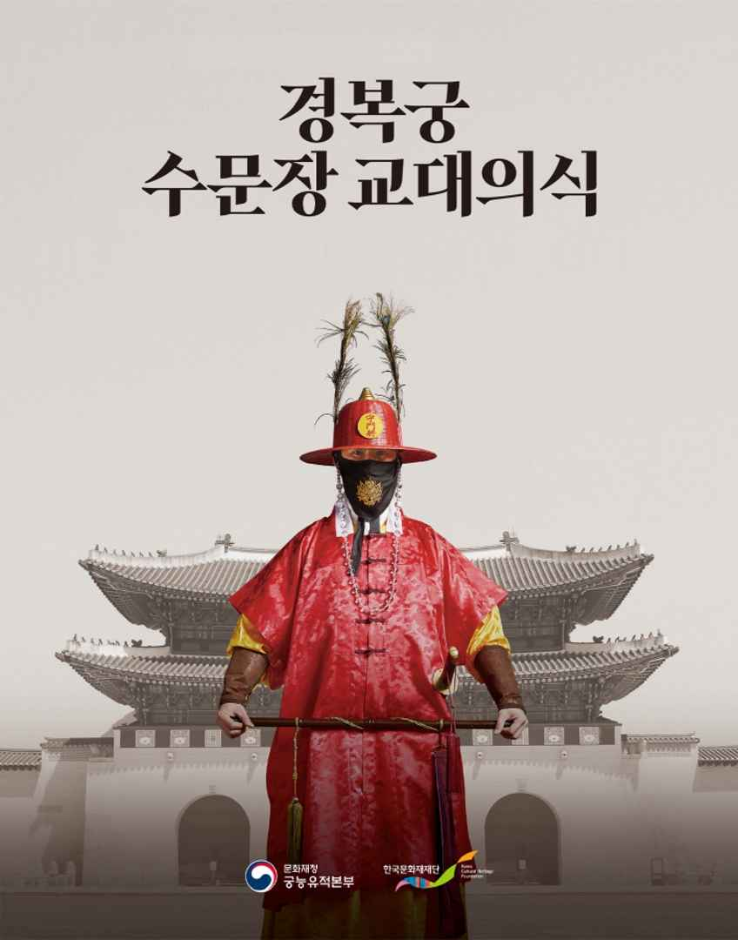
In the Joseon dynasty, the royal guards of the palace were gatekeepers who were responsible for guarding the the main gates of Gyeongbokgung Palace as well as the main gates of the city such as Heunginjimun Gate and Sungnyemun Gate. The royal guards worked in shift duties and were in charge of opening and closing Gwanghwamun Gate. Before the royal guard system was enforced in 1469, the palace gates were protected by soldiers of the central army. The Palace Royal Guard Changing Ceremony held at Gyeongbokgung Palace and the Gwanghwamun area reenacts the guard-changing procedure that took place during the Joseon dynasty, along with the reproduction of costumes and weapons, based on historical records.
SEVEN LUCK CASINO - Seoul Dragon City Branch (세븐럭카지노(서울드래곤시티점))
10.1Km 2023-07-21
95, Cheongpa-ro 20-gil, Yongsan-gu, Seoul
A special experience at the center of Seoul
Seven Luck Casino in Seoul Dragon City is located in Yongsan, Seoul, the center of Korean tradition and culture. This casino branch presents a grand x_height and wide space, decorated with a sensual interior design for elegance and comfort on a site of 3,146.96 m2. It is full of up-to-date casino facilities, such as Baccarat, Blackjack, Roulette, Tai-Sai, Seven Luck Poker, Casino War, Electronic Table Games (ETG), and slot machines. There are many famous hotels, tourist sites, and cultural heritage sites nearby Seven Luck Casino in Seoul Dragon City. Besides the casino, visitors can experience various traditional and contemporary cultures of South Korea.
* Seven Luck Casino is exclusively for the use of foreigners.
* Must be 19 years of age or older to enter.
* Passports are required to verify the age and nationality of patrons.
* Metal detectors are used as an added safety precaution.
![Cloche Jewelry - Yongsan Branch [Tax Refund Shop] (클로체 용산점)](http://tong.visitkorea.or.kr/cms/resource/80/2887780_image2_1.jpg)
Cloche Jewelry - Yongsan Branch [Tax Refund Shop] (클로체 용산점)
10.1Km 2024-04-16
95, Cheongpa-ro 20-gil, Yongsan-gu, Seoul
-
![Aritaum - Isu Branch [Tax Refund Shop] (아리따움 이수)](http://tong.visitkorea.or.kr/cms/resource/26/2880026_image2_1.jpg)
Aritaum - Isu Branch [Tax Refund Shop] (아리따움 이수)
10.1Km 2024-04-22
1F, 25, Dongjak-daero 29-gil, Dongjak-gu, Seoul
-
Dream Forest (북서울 꿈의숲)
10.1Km 2023-10-19
173 Wolgye-ro, Gangbuk-gu, Seoul
+82-2-2289-4000
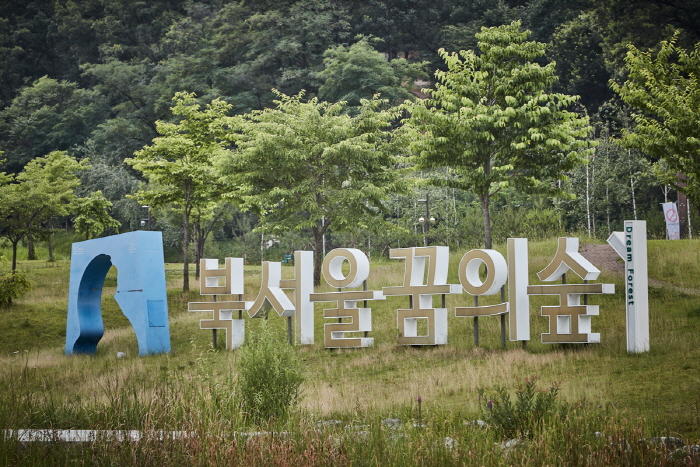
Dream Forest, previously known as Odong Neighborhood Park, is located in Gangbuk-gu, Seoul. The park is surrounded by cherry blossom trees, and the northern section is filled with maple trees, making the park especially attractive in spring and fall. The Changnyeongwigung Ritual House (Registered Cultural Heritage) has been restored with traditional landscaping such as a pond, pavilion and waterfall created nearby to double the genuine beauty of a traditional Korean park. Major attractions of the park include Wolyeongji Pond, Grass Square, Wolgwangpokpo Falls, Aewoljeong Pavilion, Chilbokji Falls, Event Garden, Children’s Gallery, Wild Grass Garden, Deer Ranch, Exploring Path, Forest Rest, and a water park. The slanted hillside which served as sledding slopes is now a complex cultural space with Buk-Seoul Art Center that houses a fantastic-looking observatory, performance hall, book café, gallery, restaurant, jumping fountain, and children’s playground.
Jeongdong-gil Road (정동길)
10.1Km 2024-06-19
2-1 Jeongdong-gil, Jung-gu, Seoul
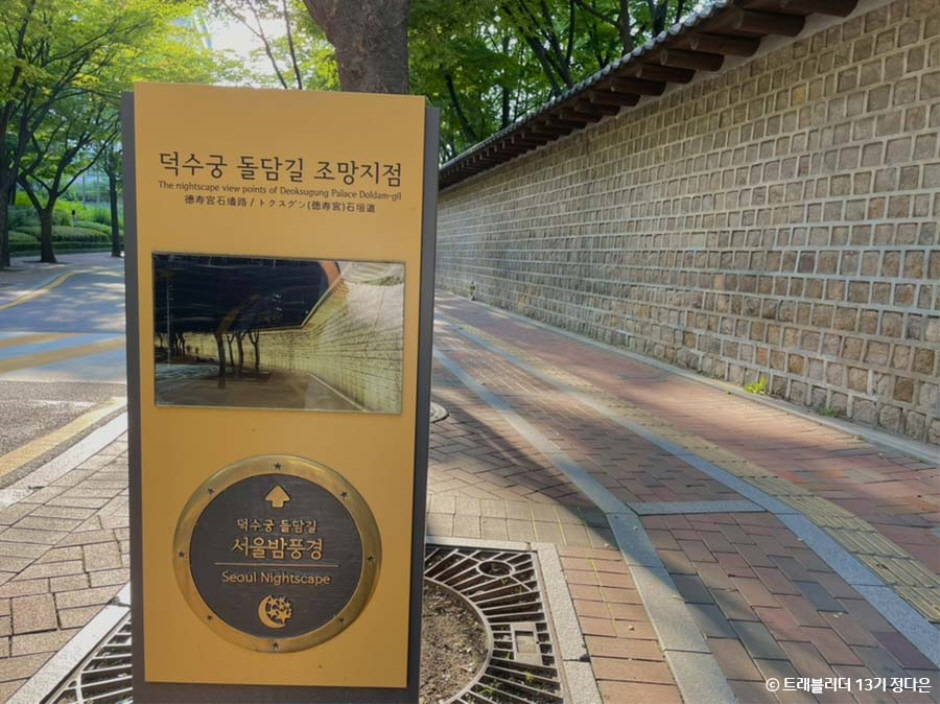
Jeongdong-gil Road is one of Seoul's most famous walking paths, stretching from the intersection in front of Jeongdong Church to Saemunan-gil Road. The street holds importance in Korea's modern history, with the surroundings serving as a living museum of this. During the Joseon dynasty, the area developed into a residental space for distant members of the royal family, with a palace and royal tombs in the area. In 1999, the pedestrian walking area was expanded by turning the two-way road into a one-way road. Since then, the road has earned many awards and honors.
Korean National Police Heritage Museum (경찰박물관)
10.2Km 2021-12-21
41, Saemunan-ro, Jongno-gu, Seoul
+82-2-3150-3681
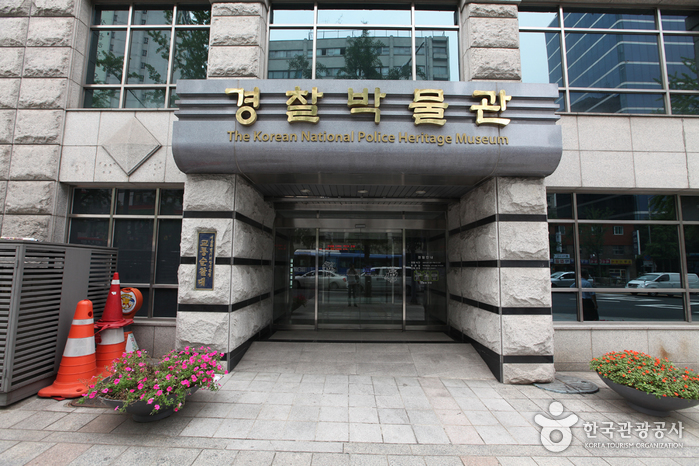
The police museum opened on October 14, 2005 to give a better understanding of the job of the police and to offer a formal education to children who wish to become police officers in the future. The history hall of the museum is designed for visitors to learn about the history of Korean police at a glance, exhibiting information on the police force from the Joseon dynasty up until current times.
Visitors to the museum can pretend to be police officers by touching actual equipment and learning about an officer's daily tasks. Visitors can also get in patrol cars, wear a police uniform, experience shooting a gun through a simulation, and learn self-defense martial arts and arrest techniques. Visitors can also go to the museum jail.
 English
 한국어
한국어 日本語
日本語 中文(简体)
 Deutsch
 Français
 Español
 Русский


