![LG Best Shop - Songpa Branch [Tax Refund Shop] (엘지베스트샵 송파점)](http://tong.visitkorea.or.kr/cms/resource/25/2879325_image2_1.jpg)
LG Best Shop - Songpa Branch [Tax Refund Shop] (엘지베스트샵 송파점)
459.1M 2024-04-18
476, Songpa-daero, Songpa-gu, Seoul
-
![Lordsystem [Tax Refund Shop] (주식회사 로드시스템)](http://tong.visitkorea.or.kr/cms/resource/15/2878915_image2_1.jpg)
Songpa Naru Park (Seokchonhosu Lake) (송파나루공원 (석촌호수))
533.2M 2025-10-23
136 Samhaksa-ro, Songpa-gu, Seoul
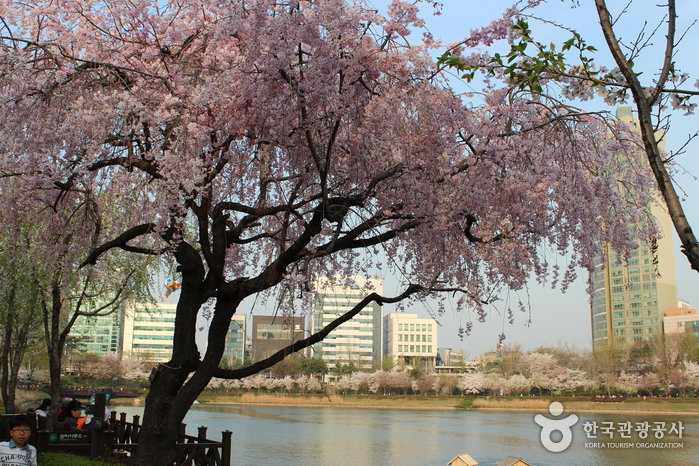
Songpa Naru Park, also commonly referred to as Seokchonhosu Lake, is a citizen park in Seoul with a jogging course and walking trails. It has two lakes with Songpa-daero Boulevard running in between. Originally, a branch of the Hangang River ran through the site, forming one large lake, but the lake was divided into two with the construction of Songpa-daero Boulevard. The total size of the two lakes is 217,850 ㎡, and they hold about 737 tons of water. The depth of the lakes is 4-5 meters.
Seokchon Lake Cherry Blossom Festival (호수벚꽃축제)
572.5M 2025-03-25
136 Samhaksa-ro, Songpa-gu, Seoul
+82-2-2147-2800
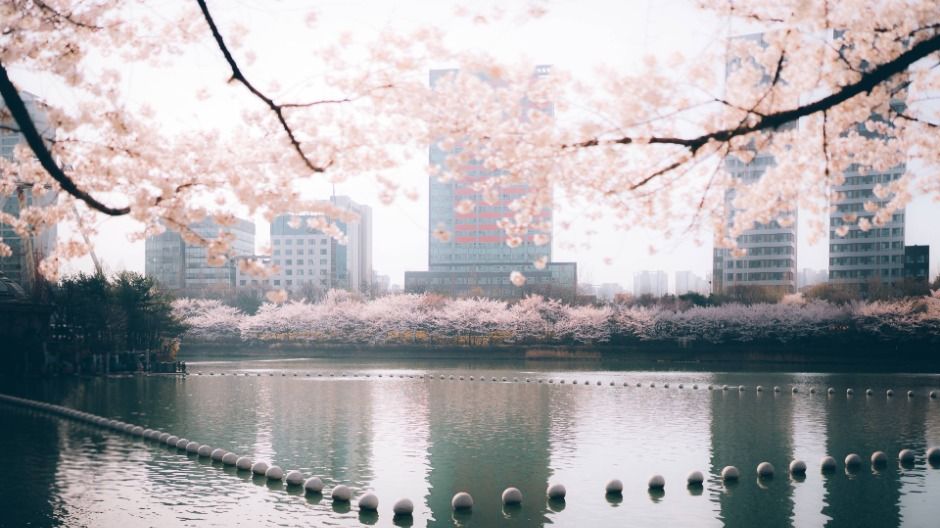
Seokchon Lake Cherry Blossom Festival is an annual event held at Seokchon Lake. The event takes place between late March to mid-April, when cherry blossoms beautifully decorate the lakeside park. In addition, a variety of performances, exhibitions, and hands-on activities also take place during the festival period.
Songnidan-gil Street (송리단길)
634.4M 2025-01-23
Baekjegobun-ro 43-gil, Songpa-gu, Seoul, and surrounding areas
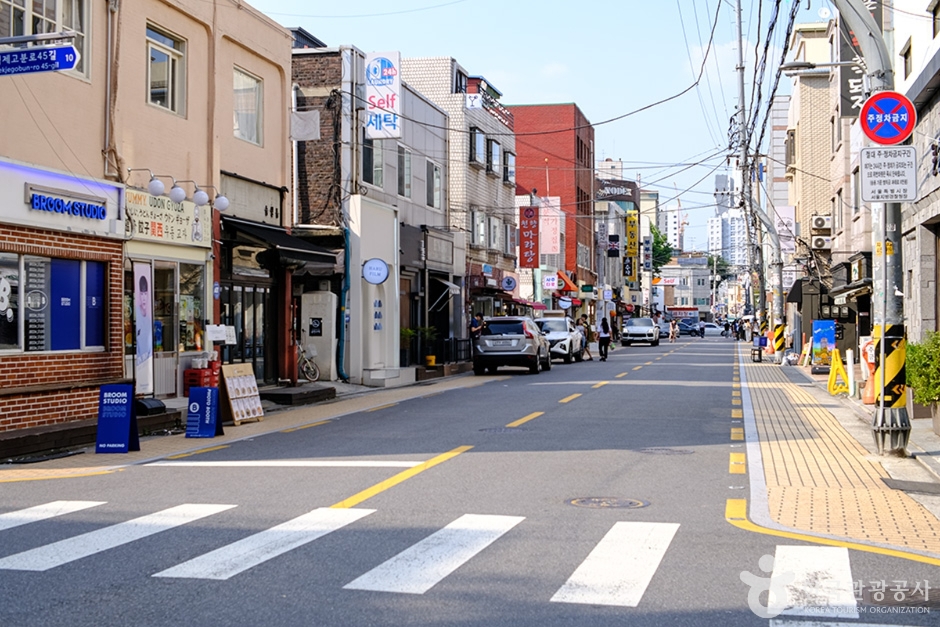
Located south of the eastern side of Seokchon Lake, this street is home to numerous restaurants and cafes. Its name comes from the combination of Songpa-dong and Gyeongnidan-gil Street in Itaewon, Seoul, meaning the “Gyeongnidan-gil Street of Songpa-dong.” This street began as an otherwise unremarkable street that faced the eastern side of Seokchon Lake. Today’s “Songnidan-gil Street” came to be as cafes moved into the neighborhood, followed by restaurants and photography studios. Songnidan-gil Street is a popular hangout for young Seoulites in the southeastern side of Seoul, so on weekends, one can often find them conversing in cafes, going for drinks in bars, or waiting in line for the hottest restaurants in the neighborhood.
![Olive Young - Seokchon Station Branch [Tax Refund Shop] (올리브영 석촌역)](http://tong.visitkorea.or.kr/cms/resource/26/2879326_image2_1.jpg)
Olive Young - Seokchon Station Branch [Tax Refund Shop] (올리브영 석촌역)
857.0M 2024-04-18
387, Baekjegobun-ro, Songpa-gu, Seoul
-
Seoul Seokchon-dong Ancient Tombs (서울 석촌동 고분군)
1.2Km 2021-02-26
21, Garak-ro 7-gil, Songpa-gu, Seoul
+82-2-421-0970
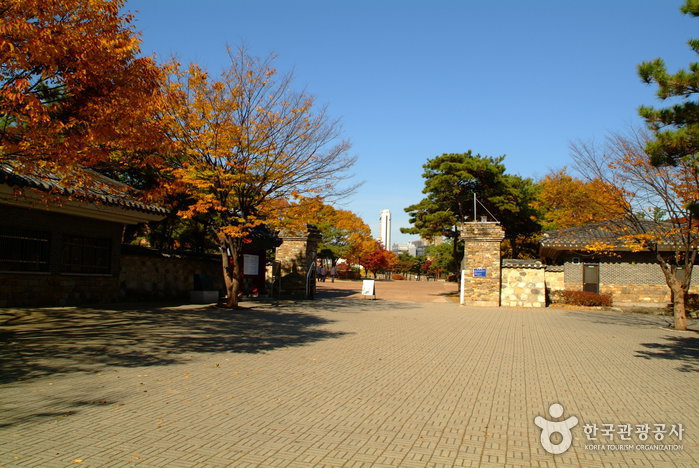
The Ancient Tombs in Seokchon-dong were found and investigated as part of the city development project in Jamsil district. It was impossible to determine the full scale of the ancient tombs in this area due to the severity of destruction. The largest tomb, the third tomb, measures 49.6 meters from east to west, 43.7 meters from south to north, and 4 meters in x_height. The tomb features three layers of stones topped by a smooth mound, which is a tomb style originating from the Goguryeo dynasty (37 BC-AD 668). The tombs are presumed to belong to one of the earliest leaders of the Baekje dynasty (18 BC-AD 660), which was founded by the people of Goguryeo who had come down southwards to establish a new kingdom around the Hangang River basin.
The square-shaped fourth tomb features a structure similar to the third tomb. Many pieces of earthenware from the early Baekje era were found in the fourth tomb. Also excavated around this site was a gold spangle earring. The third and fourth tombs have been registered as Historic Site No. 243. The tomb site offers valuable information concerning the culture and customs of the Baekje dynasty in its golden age around the 4th century, as well as the relations between the three ancient kingdoms (Goguryeo, Baekje, and Silla) around that time.
![Olive Young - Baemyeong Sageori Branch [Tax Refund Shop] (올리브영 배명사거리)](http://tong.visitkorea.or.kr/cms/resource/29/2879329_image2_1.jpg)
Olive Young - Baemyeong Sageori Branch [Tax Refund Shop] (올리브영 배명사거리)
1.3Km 2024-04-18
276, Baekjegobun-ro, Songpa-gu, Seoul
-

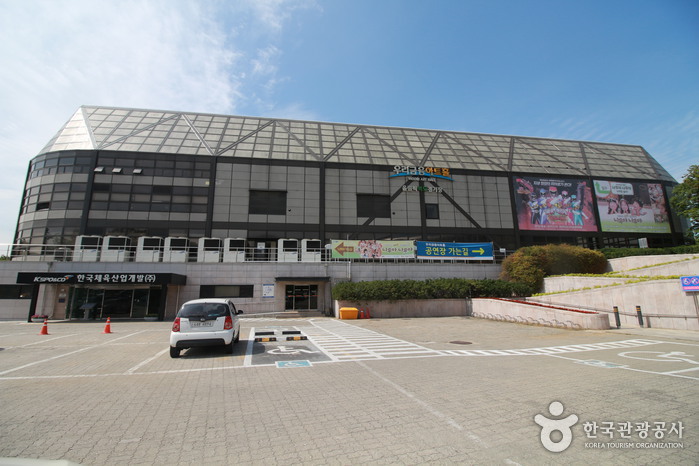
KSPO Dome (Olympic Gymnastics Arena) (올림픽공원체조경기장)
1.4Km 2025-06-30
424 Olympic-ro, Songpa-gu, Seoul
The KSPO Dome was the arena built for gymnastic events during the 1988 Seoul Summer Olympics, but has been remodeled to host concerts, including for many K-pop stars and international pop stars. The dome can also serve as venue to a range of other events, including showcases, exhibitions, and business events. It is accessible via public transit using Olympic Park Station on Seoul Subway Lines 5 and 9.
Woori Art Hall (우리금융아트홀)
1.4Km 2025-04-01
424 Olympic-ro, Songpa-gu, Seoul
Woori Art Hall is a cultural art space located within Olympic Park, opened in November 2009 after a two-year renovation project from the previous Yeokdo Stadium. The 1,184-seat hall is primarily for musicals, but can also host a range of performances including plays, dance, classical, and modern music.
 English
 한국어
한국어 日本語
日本語 中文(简体)
 Deutsch
 Français
 Español
 Русский


