Geumgang Pedestrian Bridge (금강보행교)
17.3Km 2025-08-07
Sejong-ri, Sejong-si
+82-44-868-9127
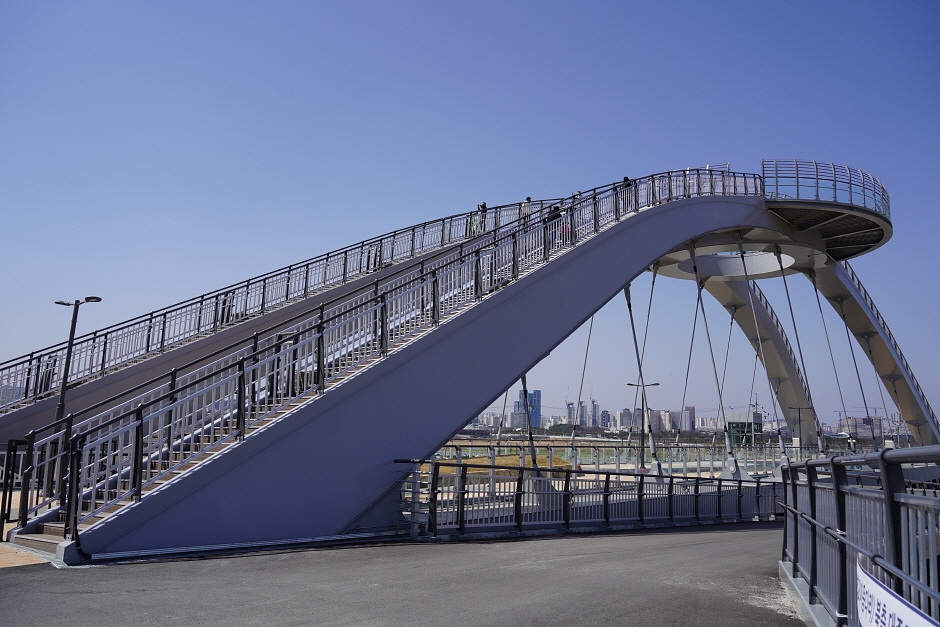
Geumgang Pedestrian Bridge, a landmark of Sejong-si, opened in March 2022. It is the first two-story bridge in Korea, and its futuristic design inspired by the concept of traveling through time contributes to beautifying the city's aesthetics. The upper part of the pedestrian bridge is equipped with a rest area, space for events and activities, and other convenience facilities, whereas the lower part is a bicycle-only road for safety and smoooth riding.

Maninsan Recreational Forest (만인산 자연휴양림)
17.4Km 2023-02-09
106, Sannae-ro, Dong-gu, Daejeon
Maninsan Recreational Forest sits on the border between Daejeon and Geumsan-gun, Chungcheongnam-do, and is located approx. 17 kilometers away from Daejeon Station on National Route 17. It consists of Maninsan, the main peak, as well as Bongsuregol, Keunbaegol, and Jageunbaegol, and, because of its beautiful landscape, it even enshrined the figures of King Taejo and his princes during the Joseon Dynasty. Pure water constantly flows in the valleys and broadleaf trees form a thickly wooded forest. This recreational forest located close to the city has utilized natural ridges and is divided into the family recreation district, youth district, and picnic district to provide a pleasant resting area for citizens. Maninsan Service Area is a convenience facility of the recreational forest built with private capital in 1990 and, at the time of its construction, it utilized the natural valleys as they were without damaging any part of the forest. Decks were installed in the valleys, and the structure itself was built with one semi-underground floor and two ground floors. The main framework was made of reinforced concrete and wood was used as the primary material for construction. Also, a pond was created in front of the rest area to harmonize with the natural landscape. As a result, it is widely praised by experts as the most beautifully constructed rest area in Korea, and it is becoming a place that citizens frequently visit to relax. There are comfortable benches and resting spots situated throughout for visitors to relax while enjoying the views and, in particular, Manillugak is a symbolic recreational facility of Maninsan and a representative pavilion structure. It was built in the architectural style of Segeomjeong Pavilion located on Bugaksan in Seoul while employing reinforced concrete for the main framework. It applies a two-story, wooden tile roof to maintain as much beauty of Korean traditional architecture as possible with the consideration of maintenance.
BOK Art Center (비오케이아트센터)
17.5Km 2025-05-20
12, Gukchaegyeonguwon 3-ro, Sejong-si
+82-1877-4955
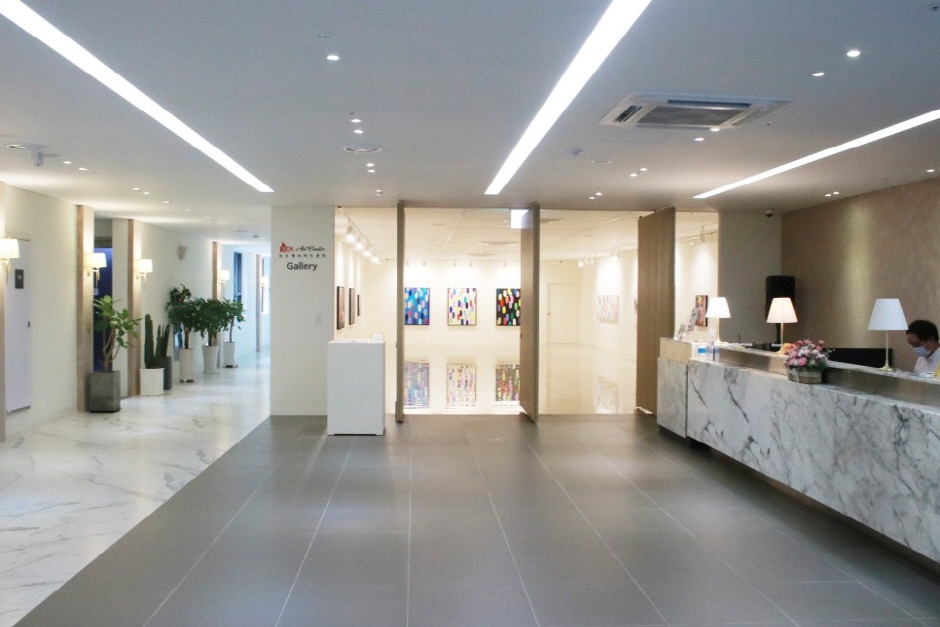
BOK Art Center is located in Bangok-dong, Sejong-si. It was opened in 2019 with the management philosophy of CEO I Gyu-sun, 'Let's create a happier living space.' The center is equipped with a performance hall where various performances are held, a gallery where various exhibitions are held, a hobby factory specialized for kidults, a Ccume Baking Class where you can enjoy baking, a bookstore, and a cafe.
Jeong Jiyong Memorial Hall (정지용 문학관)
17.6Km 2025-08-21
56 Hyangsu-gil, Okcheon-gun, Chungcheongbuk-do
+82-43-730-3408
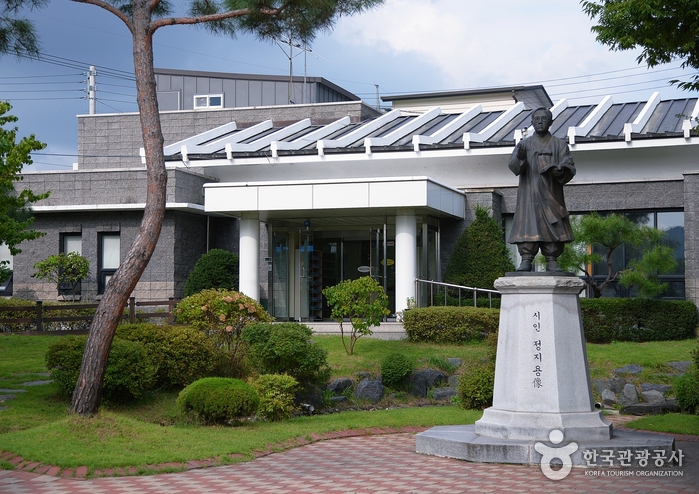
Hagye-ri in Okcheon-gun, Chungcheongbuk-do, is the hometown of Jeong Jiyong, the poet who wrote the poem "Hyangsu" (Nostalgia). The Jeong Jiyong Memorial Hall is located next to Jeong Jiyong's birthplace. The gallery has a Literature Exhibition Hall, which is divided into four parts: Jeong Jiyong's Chronological History, Jiyeong's Life and Literature, Jiyong Literature Map, and Exhibition of his Original Copy of Prose and Poem.
At the Literature Experience Center, visitors can learn more about literature through various multimedia platforms. The Video Room shows a documentary about Jiyong's life and literature, while the Literature Class is the venue for lectures, poem discussions, seminars, and other literature club activities.
Okcheon Traditional Culture Experience Center (옥천전통문화체험관)
17.9Km 2023-03-07
100, Hyangsu-gil, Okcheon-gun, Chungcheongbuk-do
+82-43-730-3420
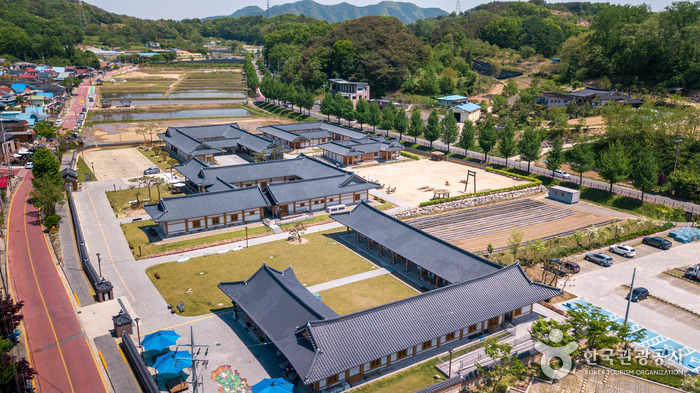
Okcheon Traditional Culture Experience Center opened in 2020 to share the traditional culture of Okcheon in a natural environment abundant in history. Available facilities include exhibition and concert halls, a cafe, a restaurant, and accommodation. There are also various experiences available to participants of all ages.
Gapsa Temple (갑사)
17.9Km 2021-12-17
567-3, Gapsa-ro, Gongju-si, Chungcheongnam-do
+82-41-857-8981
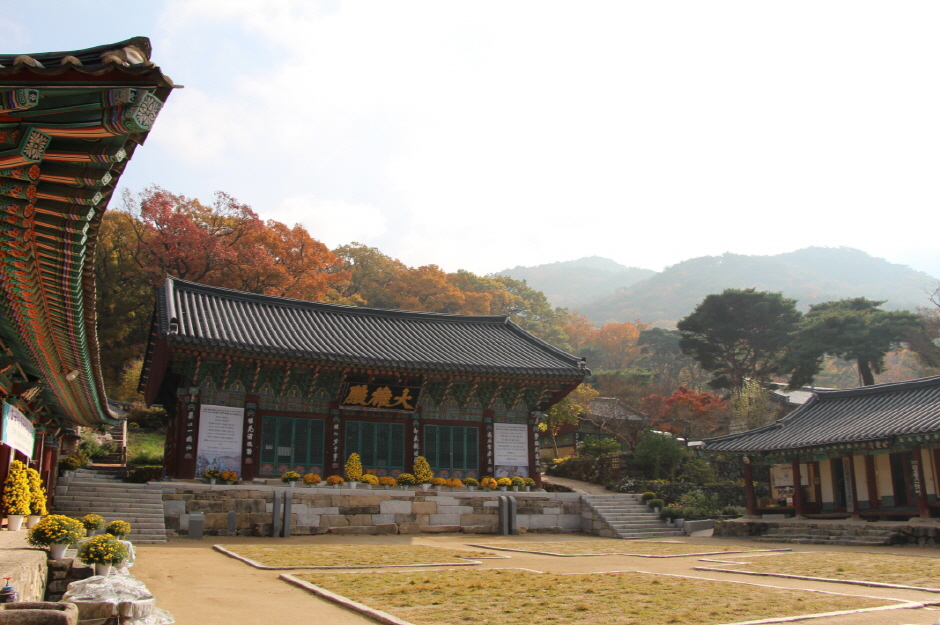
Gapsa Temple is located in the forested foothills of Gyeryongsan Mountain, 19 kilometers from Gongju and a three-hour walk from Donghaksa Temple. The temple is most beautiful during fall when surrounded by crimson foliage. Gapsa Temple was established by monk Adohwasang in 420, during the early Baekje Period. The temple's beauty allowed it to escape destruction many times, but it was ultimately burned down during the Imjin War (1592-1598). The current structures were built in 1604. Nearby attractions include Yongmunpokpo Falls, Sujeongbong Peak, and Cheonjinbotab Pagoda.
![E-Mart - Sejong Branch [Tax Refund Shop] (이마트 세종)](http://tong.visitkorea.or.kr/cms/resource/70/2883170_image2_1.jpg)
E-Mart - Sejong Branch [Tax Refund Shop] (이마트 세종)
18.1Km 2025-05-20
2F, 10, Docheong-ro, Yeongtong-gu, Suwon-si, Gyeonggi-do
-
Gapsagyegok Valley (갑사계곡)
18.4Km 2024-02-21
519 Gapsa-ro, Gyeryong-myeon, Gongju-si, Chungcheongnam-do
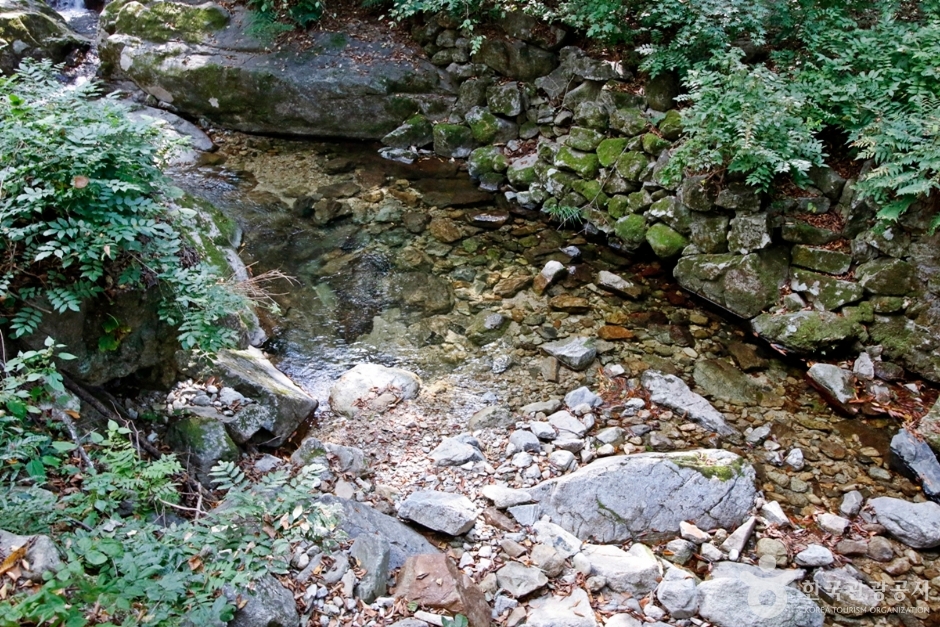
Gapsagyegok Valley is a valley located on the northwest slope of Gyeryongsan Mountain in Gongju-si. With moderate temperatures even in summer, it is suitable as a recreational area, while the autumn foliage adds to its beauty. At the entrance lies Gapsa Temple, a Buddhist temple with various cultural assets, offering insights into Korean Buddhist culture. Within the valley, visitors can enjoy forest walks and view attractions such as the Yongmunpokpo Falls.
Children's Museum (국립어린이박물관)
18.6Km 2025-05-20
130 Eoulluri-ro, Sejong-si
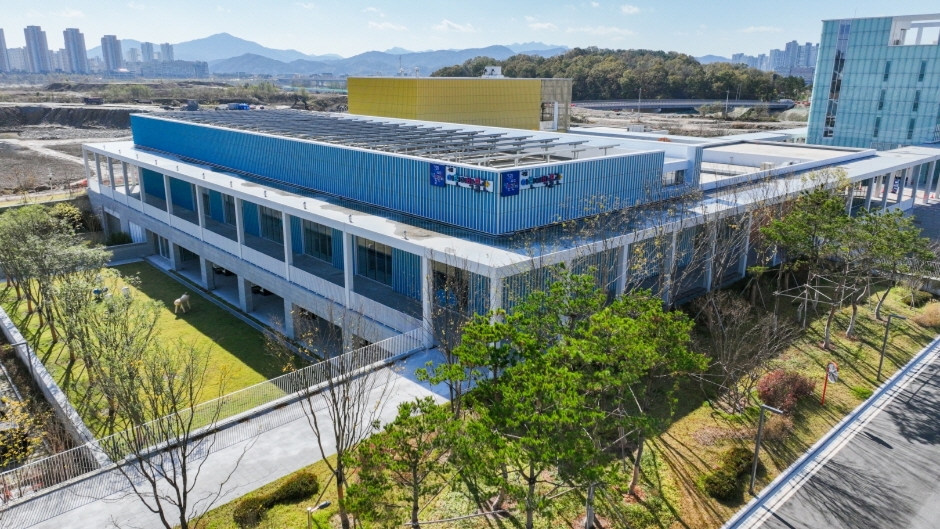
The Children's Museum combines education and fun through interactive exhibition halls and a relaxing lounge area. Visitors can explore tools used by humans, enjoy tactile play in an artificial forest, navigate underground facilities, and design public buildings. They can also participate in activities like traditional Korean painting games using digital devices and space travel through media art. Additional programs include creating plant kits or pressed flower lamps, as well as science and art fusion workshops.
Okcheon Yongamsa Temple (용암사(옥천))
18.6Km 2022-12-27
400, Samcheong 2-gil, Okcheon-gun, Chungcheongbuk-do
+82-43-732-1400
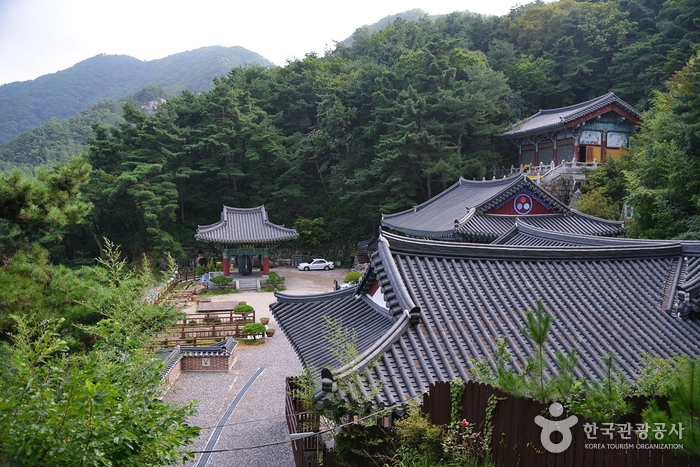
Yongamsa Temple, located in the mid-slope of Jangyongsan Mountain, is a branch of Beopjusa Temple. It was built during the Silla period. Unlike the more common temple arrangements, the stone pagoda in Yongamsa is uniquely situated on a low peak in the north with a view on all sides. The East and West Three-story Stone Pagodas of Yongamsa Temple, a designated Treasure, can be found here, as well as Rock-caved Buddha, and Wooden Seated Amitabha Buddha in Daeseongjeon Hall.
 English
 한국어
한국어 日本語
日本語 中文(简体)
 Deutsch
 Français
 Español
 Русский


