
Yetteo Folk Museum (옛터민속박물관)
15.7Km 2025-02-04
321-35 Sannae-ro, Dong-gu, Daejeon
The Yetteo Folk Museum showcases traditional folk artifacts that reflect the daily life of the Daejeon region. Inside the exhibition hall, visitors can view items such as knives, tray tables, water droppers, cups, and oil lamps. The outdoor exhibition area features stone mortars, troughs, and grinding stones. The museum also includes a traditional jar exhibition hall, a Korean restaurant, and a traditional teahouse. Visitors can engage in hands-on experiences like natural dyeing, hanji paper crafts, and knot-making, or relax and enjoy a campfire.
Geumgang Lohas Daecheong Park (금강로하스대청공원)
15.7Km 2024-02-15
607 Daecheong-ro, Daedeok-gu, Daejeon
Geumgang Lohas Daecheong Park is situated near the Geumgang River and Daechung Dam. It borders Daecheongho Lake and the Geumgang River, featuring a waterfront deck where visitors can observe various bird species such as herons and the Red Leaf Willow habitat. The park also includes the Daecheong Culture Exhibition Hall, a lawn area, a Rock Garden, a Metasequoia Forest Park, and a children's forest playground.
Daecheong Dam (대청댐)
16.1Km 2021-06-01
618-136, Daecheong-ro, Daedeok-gu, Daejeon
+82-43-930-7332
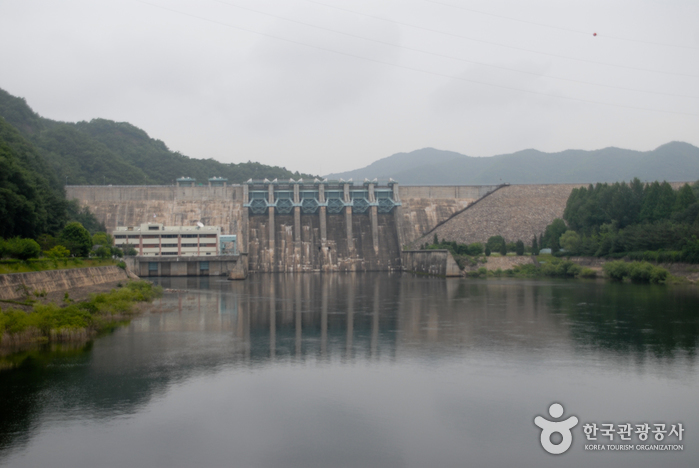
Daecheong Dam is a multi-purpose dam consisting of a 72 meter-tall and 495 meter-long concrete gravity dam and rockfill dam. It is located on the Geumgang River where Daejeon and Chungcheongbuk-do meet. There are three additional support dams in the area of the main dam to help control the river's flow. The dam also serves as a power source for the nearby areas of Daejeon and Cheongju. Construction of the dam took nearly six years, started in March 1975 and completed in 1980.
The observatory, located at Palgakjeong Service Area, offers a great view of Daecheongho Lake. A variety of fascinating items are displayed in the Water Culture Center on the left bank of Daecheong Dam. A nearby grassy meadow promises a relaxing and comfortable rest, while local delicacies such as spicy fish stew using freshwater fish and marinated grilled eel are a delight to taste.
Garden of Sky (하늘물빛정원)
16.4Km 2024-06-03
156 Geomhan 1-gil, Chubu-myeon, Geumsan-gun, Chungcheongnam-do
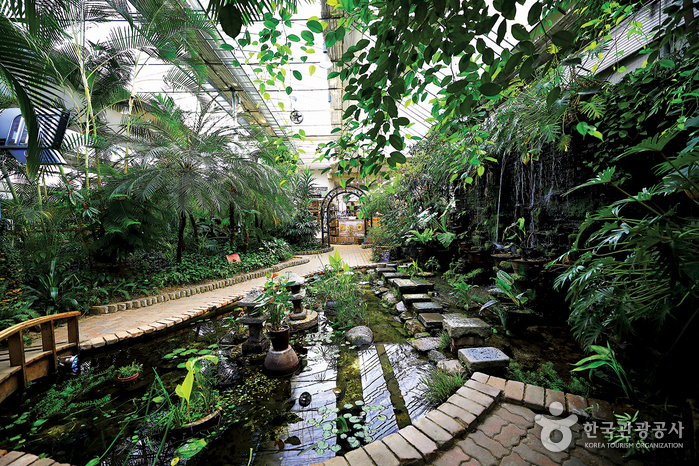
A garden filled with wild flowers, exotic plants, and rare trees, Garden of Sky is nestled by Jangsanhosu Pond located at the foothills of Meodeullyeong Pass. The garden also has a wide variety of facilities that cater to visitors' convenience and needs such as a jjimjilbang (Korean sauna), seminar rooms, restaurants, herbal souvenir shop, cafes local food stores, forests, and photo zones.
Daecheong Dam Observatory (대청댐 전망대)
16.7Km 2023-04-04
206 , Daecheonghoban-ro, Sangdang-gu, Cheongju-si, Chungcheongbuk-do
+82-43-201-0911
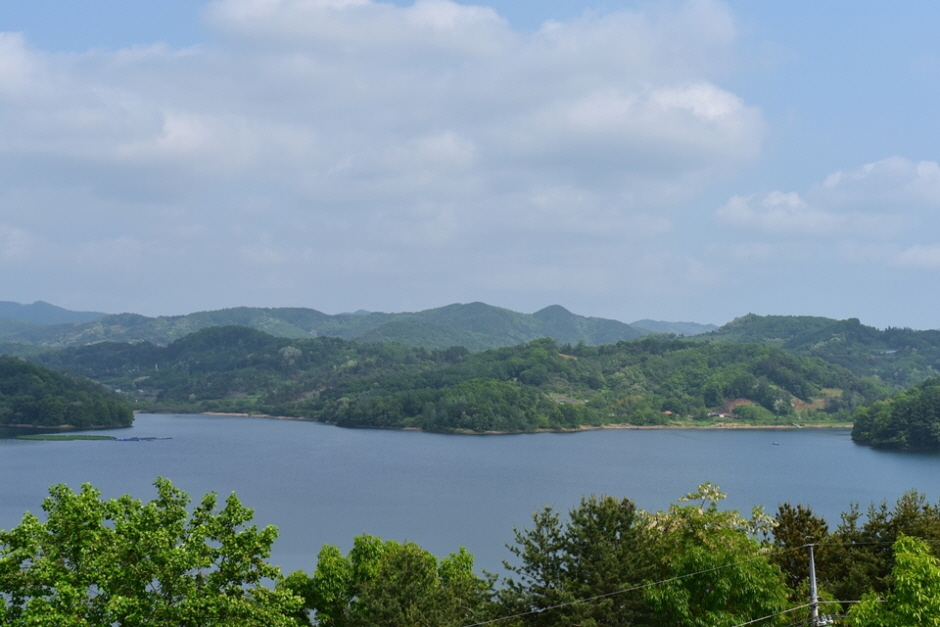
Daecheong Dam Observatory overlooks the clear waters of Daecheongho Lake. At the site is Water Culture Center that offers various things to see relating to the dam as well as informational visual aids related to water. The Dacheonggyo Bridge by the observatory connects to Geumgang Lohas Daecheong Park in Daejeon.
Okcheon Hyangsu Baengni (100-ri) Bike Road - Geumgang Course (옥천 향수 100리 자전거길 - 금강코스)
16.8Km 2025-01-06
Okcheon-eup, Okcheon-gun, Chungcheongbuk-do
+82-43-730-3773
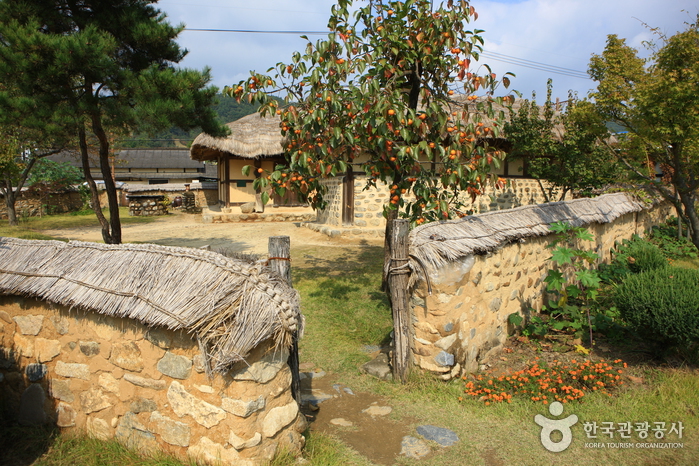
Okcheon Hyangsu Baengni (100-ri) Bike Road is a bicycle path located along the riverside of Geumgang River, where one can enjoy the beauty of Daecheongho Lake and the spirit of poetry in the hometown of Jeong Jiyong, one of Korea's modern poets. Visitors can also stop at Jeong Jiyong Birth House & Literature Library and Janggye Tourist Park by biking along National Highway Route 37, which is famous for cherry blossoms. This bicycle path is relatively easy to travel on and is suitable for beginners. It became even more popular after being featured on the TV show "1 Night 2 Days."
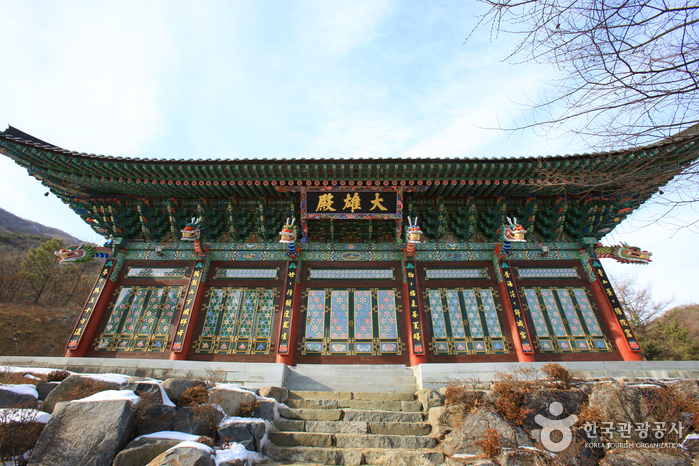
Gyeryong Musangsa Temple (무상사(계룡))
16.9Km 2023-04-13
129, Hyangjeoksan-gil, Gyeryong-si, Chungcheongnam-do
+82-42-841-6084
Musangsa Temple is an international Zen Temple exclusively for foreigners. The temple aims at promoting Korean Zen Buddhism among foreign monks and nuns while encouraging non-Buddhist priests and religious leaders to experience Zen. Twice a year (once in the summer and once in the winter) a 3-month program is held for foreign monks and nuns to come and practice Ganhwaseon, a type of Zen Buddhism. Travelers and other foreigners are also welcome to participate in shortened versions of the program, which are typically one week in length. During meditation/program periods, public visits are limited. The temple’s yearly schedule is divided into three sections with the last section providing various events and programs including weekend events and workshops. The temple also offers temple stay and other programs run in both Korean and English.
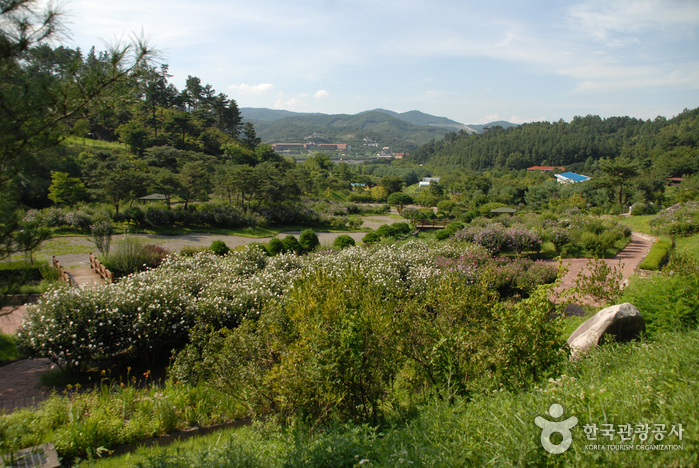
Geumgang Recreational Forest (Arboretum, Forest Museum) (금강자연휴양림(금강수목원,산림박물관))
16.9Km 2025-05-20
110, Sallimbangmulgwan-gil, Sejong-si
+82-41-635-7400
Along the river from Gongju toward Daejeon there is Geumgang River to the right. Following this river, there is a red arch-shaped bridge on the right called Bultigyo Bridge. Geumgang Recreational Forest, a large and well-organized forest, is located on the other side of this bridge. In the past, this remote village can only be reached by boat. In 1994, the Chungnam Forest Environment Research Institute moved to this area and designated the well-preserved dense forest as Geumgang Recreational Forest, and the Forest Museum opened in October 1997. Geumgang Recreational Forest is different from other recreational forests. Rather than a dense forest with a trail, this forest has a variety of attractions such as the Forest Museum, an arboretum, greenhouse, pond, and wildlife park scattered on well-maintained roads, giving the impression of a city park.
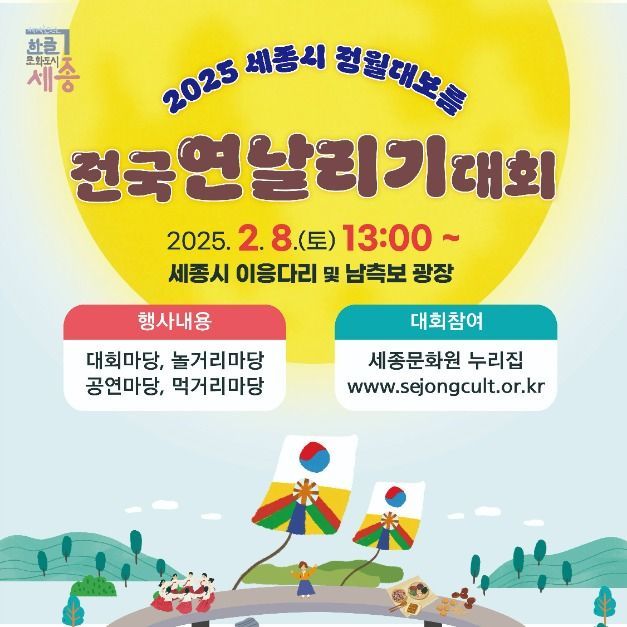
Sejong Jeongwol Daeboreum National Kite-flying Contest (2025 세종시 정월대보름 전국 연날리기 대회)
17.1Km 2025-05-20
Sejong-dong, Sejong-si
+82-44-865-2411
Jeongwol Daeboreum, the Great Full Moon Festival, is celebrated on the 15th day of the first month of the lunar calendar. It is a traditional holiday celebrated with family, wishing for health and happiness. Visitors can create lifelong memories with traditional Korean games and programs. Visitors can also participate in the Jeongwol Daeboreum National Kite-flying Contest.
Daebakjip (대박집)
17.2Km 2024-02-28
1250, Seongwang-ro, Okcheon-eup, Okcheon-gun, Chungcheongbuk-do
Daebakjip serves saengseon guksu (fish noodles), a folk dish of Okcheon. It is a noodle soup made by boiling noodles in a broth made by simmering freshwater fish for 12 hours. It began as a meal for fishermen who used to fish by the river in the old days, who began putting noodles into their maeuntang (spicy fish stew). Other interesting dishes include dori baengbaeng (glazed deep-fried minnows), tteokgalbi (grilled galbi patties), maeuntang (spicy fish stew), and bingeo twigim (deep-fried pond smelt).
 English
 한국어
한국어 日本語
日本語 中文(简体)
 Deutsch
 Français
 Español
 Русский


