Daecheong Dam Observatory (대청댐 전망대)
17.6Km 2023-04-04
206 , Daecheonghoban-ro, Sangdang-gu, Cheongju-si, Chungcheongbuk-do
+82-43-201-0911
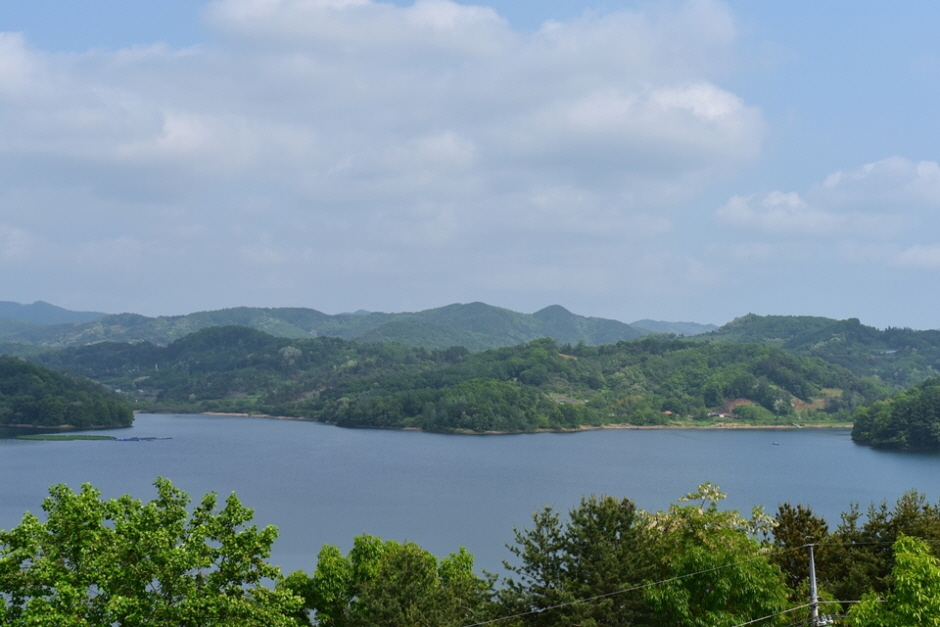
Daecheong Dam Observatory overlooks the clear waters of Daecheongho Lake. At the site is Water Culture Center that offers various things to see relating to the dam as well as informational visual aids related to water. The Dacheonggyo Bridge by the observatory connects to Geumgang Lohas Daecheong Park in Daejeon.
Geumgang Recreational Forest (Arboretum, Forest Museum) (금강자연휴양림(금강수목원,산림박물관))
17.6Km 2025-05-20
110, Sallimbangmulgwan-gil, Sejong-si
+82-41-635-7400
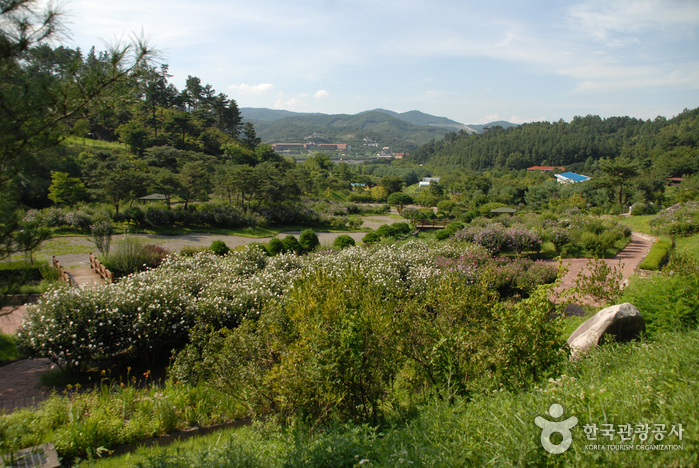
Along the river from Gongju toward Daejeon there is Geumgang River to the right. Following this river, there is a red arch-shaped bridge on the right called Bultigyo Bridge. Geumgang Recreational Forest, a large and well-organized forest, is located on the other side of this bridge. In the past, this remote village can only be reached by boat. In 1994, the Chungnam Forest Environment Research Institute moved to this area and designated the well-preserved dense forest as Geumgang Recreational Forest, and the Forest Museum opened in October 1997. Geumgang Recreational Forest is different from other recreational forests. Rather than a dense forest with a trail, this forest has a variety of attractions such as the Forest Museum, an arboretum, greenhouse, pond, and wildlife park scattered on well-maintained roads, giving the impression of a city park.
Okcheon Traditional Culture Experience Center (옥천전통문화체험관)
17.6Km 2023-03-07
100, Hyangsu-gil, Okcheon-gun, Chungcheongbuk-do
+82-43-730-3420
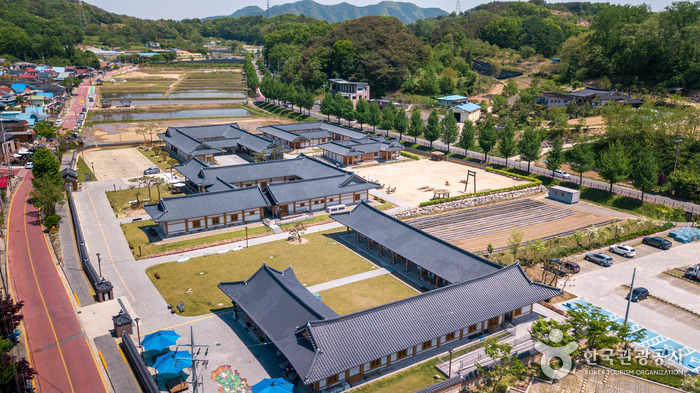
Okcheon Traditional Culture Experience Center opened in 2020 to share the traditional culture of Okcheon in a natural environment abundant in history. Available facilities include exhibition and concert halls, a cafe, a restaurant, and accommodation. There are also various experiences available to participants of all ages.
Jangnyeongsan Recreational Forest (장령산자연휴양림)
18.0Km 2023-03-07
519, Jangnyeongsan-ro, Okcheon-gun, Chungcheongbuk-do
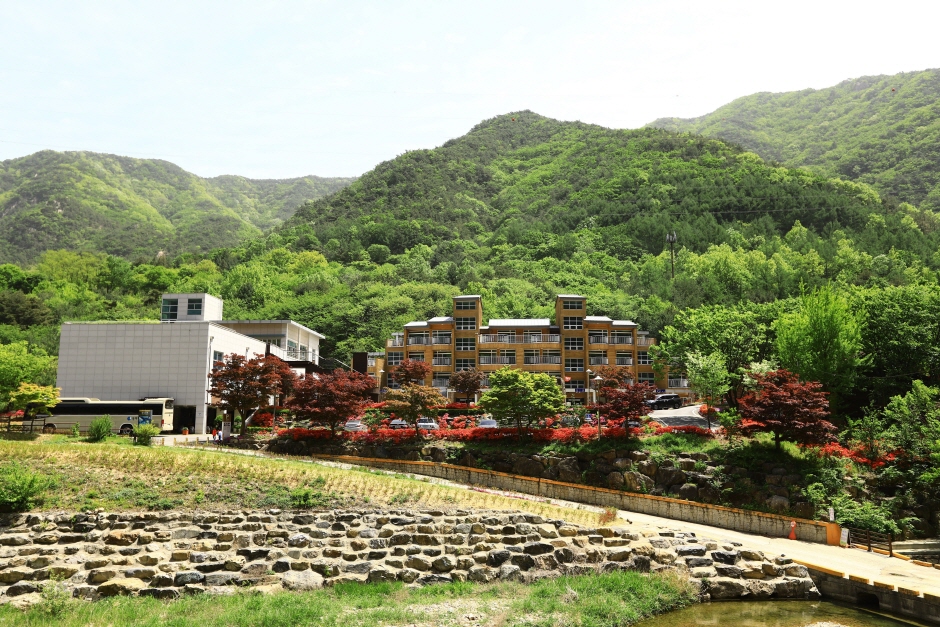
Jangnyeongsan Mountain is a famous mountain in Okcheon, known for its beautiful natural scenery, pine trees, maple trees, and cypress trees that grow wild there. Entering the 3.1-kilometer-long Healing Forest, you can encounter gardens, wooden bridges, and wish rocks. From spring to autumn, there are also various experiences such as a forest commentary program and a forest healing program. Jangnyeongsan Recreational Forest, which surrounds the beautiful mountains of Jangnyeongsan Mountain and the Geumcheon Valley with clear and clean water like a folding screen, is a place with a different charm for each season. It is equipped with various convenience facilities such as an outdoor music hall, seminar room, large restaurant, campsite, convenience store, and healing time house (foot bath, steam bath, etc.). Reservations for lodging and campsites can be made through the website.
Okcheon Yongamsa Temple (용암사(옥천))
18.0Km 2022-12-27
400, Samcheong 2-gil, Okcheon-gun, Chungcheongbuk-do
+82-43-732-1400
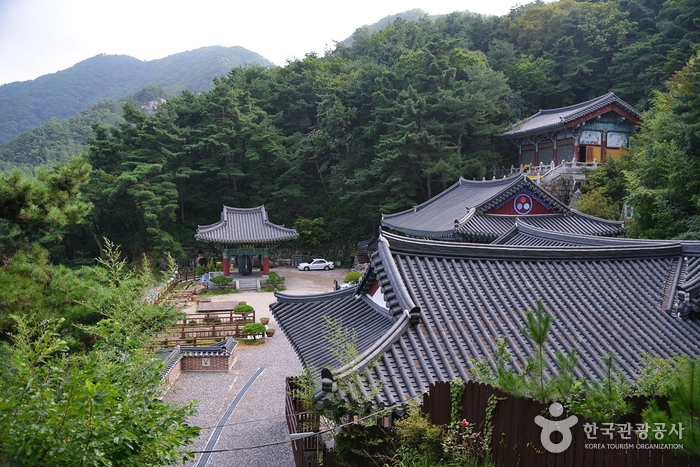
Yongamsa Temple, located in the mid-slope of Jangyongsan Mountain, is a branch of Beopjusa Temple. It was built during the Silla period. Unlike the more common temple arrangements, the stone pagoda in Yongamsa is uniquely situated on a low peak in the north with a view on all sides. The East and West Three-story Stone Pagodas of Yongamsa Temple, a designated Treasure, can be found here, as well as Rock-caved Buddha, and Wooden Seated Amitabha Buddha in Daeseongjeon Hall.

Sejong Jeongwol Daeboreum National Kite-flying Contest (2025 세종시 정월대보름 전국 연날리기 대회)
18.1Km 2025-05-20
Sejong-dong, Sejong-si
+82-44-865-2411
Jeongwol Daeboreum, the Great Full Moon Festival, is celebrated on the 15th day of the first month of the lunar calendar. It is a traditional holiday celebrated with family, wishing for health and happiness. Visitors can create lifelong memories with traditional Korean games and programs. Visitors can also participate in the Jeongwol Daeboreum National Kite-flying Contest.
Gapsa Temple (갑사)
18.2Km 2021-12-17
567-3, Gapsa-ro, Gongju-si, Chungcheongnam-do
+82-41-857-8981
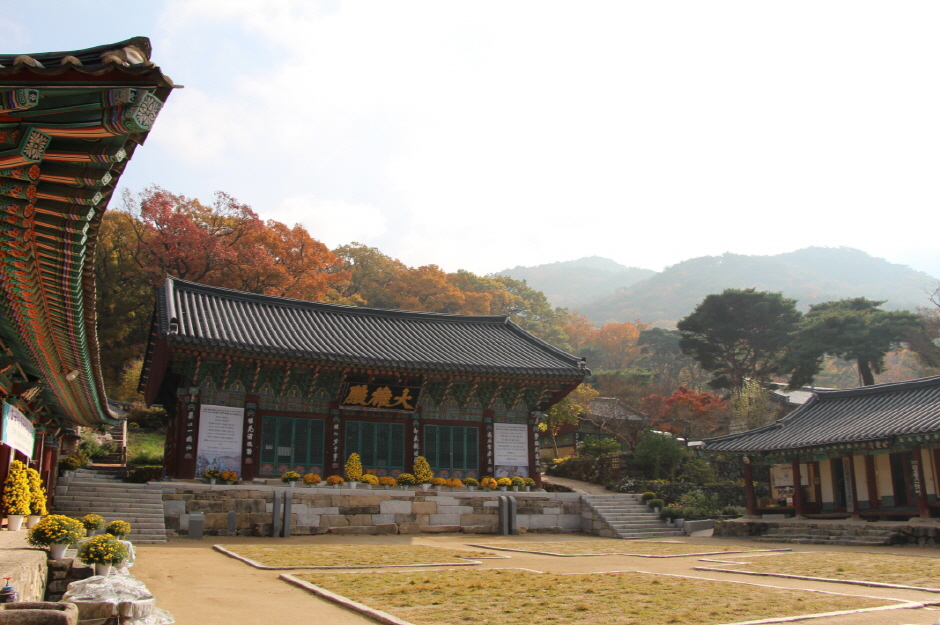
Gapsa Temple is located in the forested foothills of Gyeryongsan Mountain, 19 kilometers from Gongju and a three-hour walk from Donghaksa Temple. The temple is most beautiful during fall when surrounded by crimson foliage. Gapsa Temple was established by monk Adohwasang in 420, during the early Baekje Period. The temple's beauty allowed it to escape destruction many times, but it was ultimately burned down during the Imjin War (1592-1598). The current structures were built in 1604. Nearby attractions include Yongmunpokpo Falls, Sujeongbong Peak, and Cheonjinbotab Pagoda.
Geumgang Pedestrian Bridge (금강보행교)
18.2Km 2025-08-07
Sejong-ri, Sejong-si
+82-44-868-9127
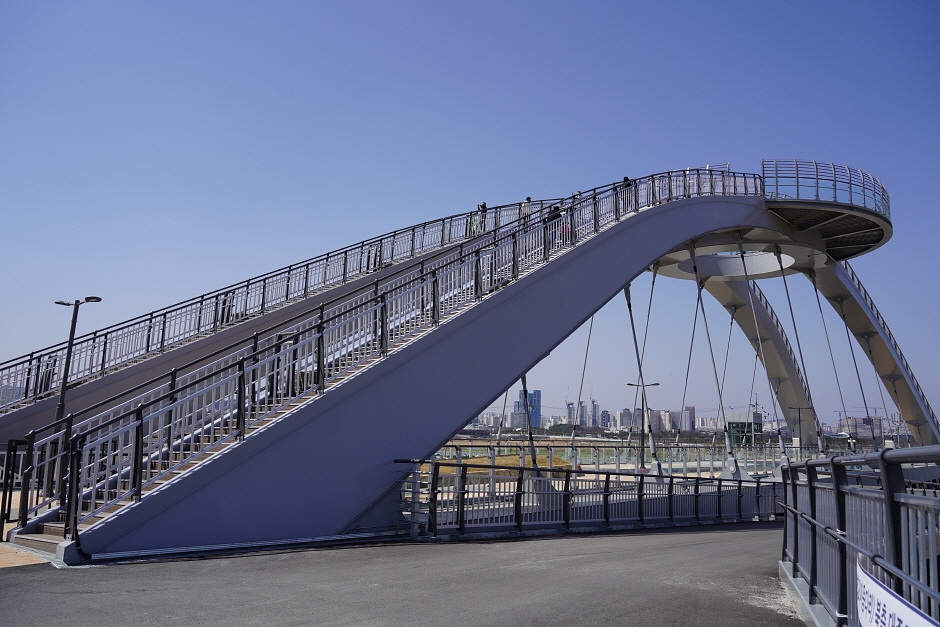
Geumgang Pedestrian Bridge, a landmark of Sejong-si, opened in March 2022. It is the first two-story bridge in Korea, and its futuristic design inspired by the concept of traveling through time contributes to beautifying the city's aesthetics. The upper part of the pedestrian bridge is equipped with a rest area, space for events and activities, and other convenience facilities, whereas the lower part is a bicycle-only road for safety and smoooth riding.
BOK Art Center (비오케이아트센터)
18.5Km 2025-05-20
12, Gukchaegyeonguwon 3-ro, Sejong-si
+82-1877-4955
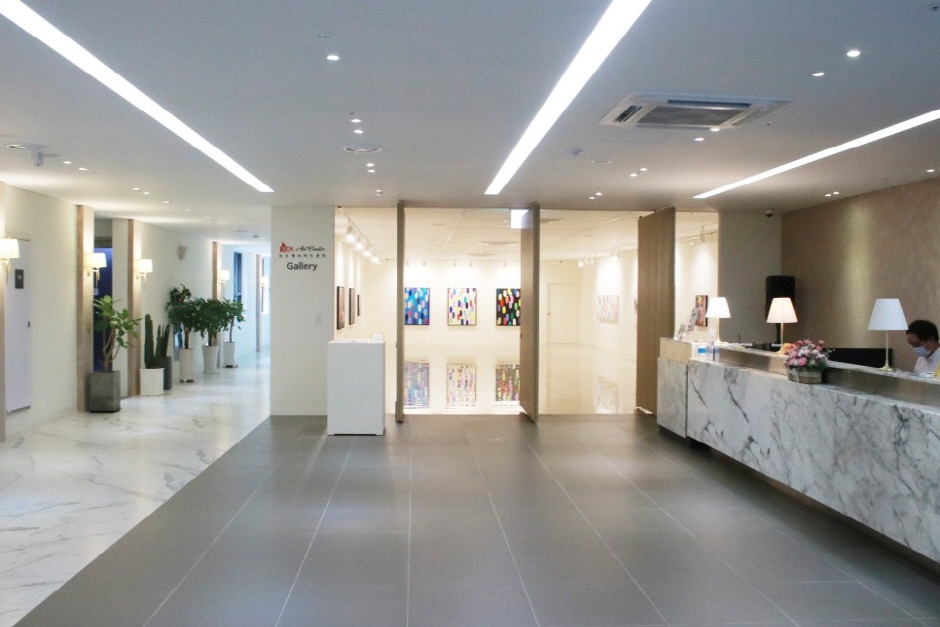
BOK Art Center is located in Bangok-dong, Sejong-si. It was opened in 2019 with the management philosophy of CEO I Gyu-sun, 'Let's create a happier living space.' The center is equipped with a performance hall where various performances are held, a gallery where various exhibitions are held, a hobby factory specialized for kidults, a Ccume Baking Class where you can enjoy baking, a bookstore, and a cafe.
Gapsagyegok Valley (갑사계곡)
18.7Km 2024-02-21
519 Gapsa-ro, Gyeryong-myeon, Gongju-si, Chungcheongnam-do
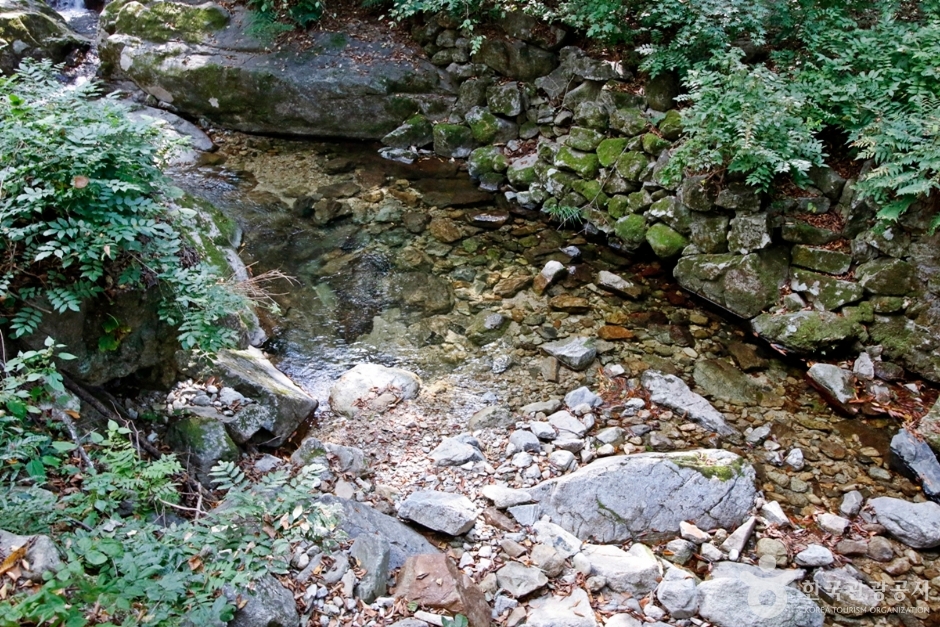
Gapsagyegok Valley is a valley located on the northwest slope of Gyeryongsan Mountain in Gongju-si. With moderate temperatures even in summer, it is suitable as a recreational area, while the autumn foliage adds to its beauty. At the entrance lies Gapsa Temple, a Buddhist temple with various cultural assets, offering insights into Korean Buddhist culture. Within the valley, visitors can enjoy forest walks and view attractions such as the Yongmunpokpo Falls.
 English
 한국어
한국어 日本語
日本語 中文(简体)
 Deutsch
 Français
 Español
 Русский


