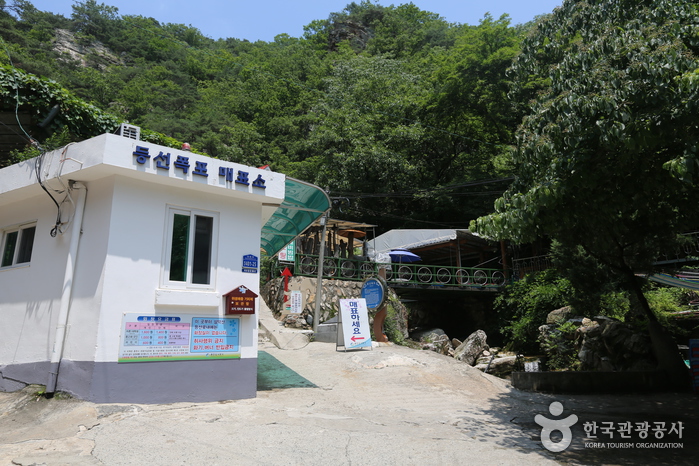
Deungseon Falls (Samaksan Mountain) (등선폭포(삼악산))
14.4Km 2021-04-29
1401-30, Gyeongchun-ro, Seo-myeon, Chuncheon-si, Gangwon-do
+82-33-244-2331
Samaksan Mountain in Chuncheon is known for many waterfalls in different sizes along the gorge, and especially Deungseon Falls is the best known to tourists. By entering the hiking trail of the falls, you will encounter a narrow and deep gorge. Formed through quartzitic jointing, the gorge has a mysterious atmosphere with its strange rocks and bizarre stones, which look sharp and precipitous. As the gorge and falls keep their cool temperature, the area is a popular summer resort. Deungseon Falls is one of the Eight Sights of Deungseon, along with Seunghak Falls, Baengnyeon Falls, and Biryong Falls. The quickest way to get to Deungseon Falls starts from the Deungseon Falls Ticket Booth, which is close to Gangchon.
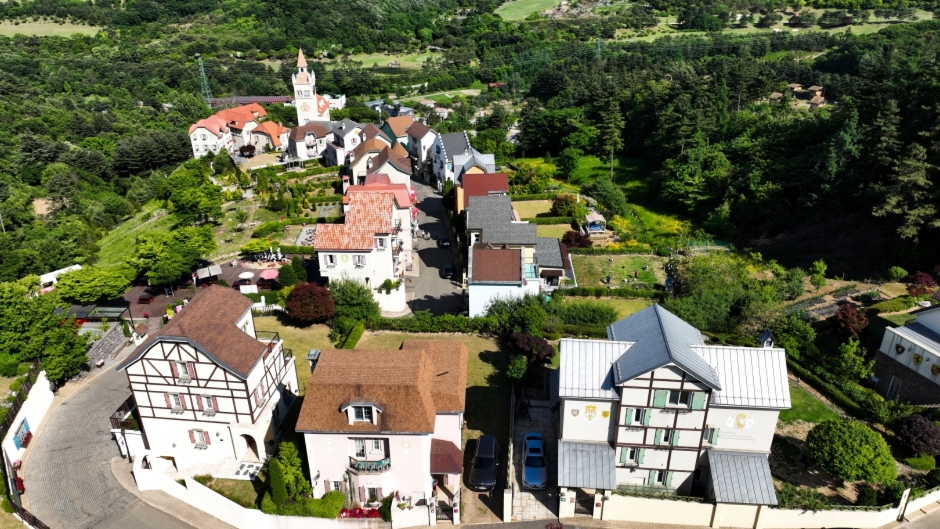
Edelweiss Swiss Theme Park (에델바이스 스위스 테마파크)
14.6Km 2024-10-31
226-57 Darakjae-ro, Seorak-myeon, Gapyeong-gun, Gyeonggi-do
The Edelweiss Swiss Theme Park is designed to resemble a local festival taking place in a small Swiss village. The village features buildings and landscapes one might see in Switzerland. Visitors can expect to enjoy a range of traditional Swiss experiences, from trying on traditional clothing to listening to music and tasting traditional foods.
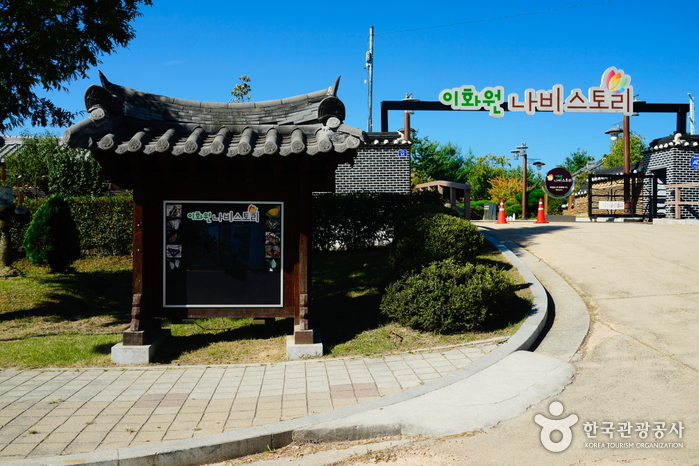
Nine Forest Ewhawon (나인포레스트 이화원)
15.0Km 2021-08-13
64, Jaraseom-ro, Gapyeong-gun, Gyeonggi-do
+82-31-581-0228
Located on Jaraseom Island, Nine Forest Ewhawon was renewed in 2015. The garden spans over an area of 33,000 square meters with a 1,090 square meter butterfly ecology center, making it the largest butterfly park in the world. The park offers live butterflies and butterfly specimens all year long through the use of a greenhouse. Visitors can look at exhibitions and learn about butterflies and plants with detailed explanations from professional guides. Jaraseom Island also offers camping sites and hosts various festivals.
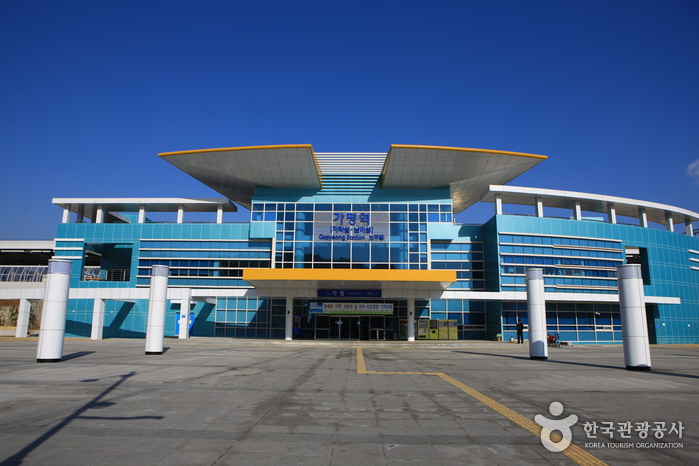
Gapyeong Station (가평역)
15.0Km 2022-05-23
13-42, Munhwa-ro, Gapyeong-eup, Gapyeong-gun, Gyeonggi-do
Gapyeong Station began operations upon the opening of the Gyeongchun Line on July 25, 1939. The station was damaged during the Korean War and restored on June 12, 1957. The double-tracked Gyeongchun Line was opened on December 21, 2010. The ITX-Cheongchun Train, which includes Gapyeong Station as one of its stops, began operations on February 28, 2012 and travels along the Gyeongchun Line.
Gapyeong's name was given by King Gyeongdeok of the Unified Silla Period to describe the region's natural beauty. Gapyeong and its tourist attractions, Nami Island in particular, grew in popularity after being featured in the Korean drama "Winter Sonata (2003)."

Jaraseom Island Auto Campground (자라섬오토캠핑장)
15.1Km 2023-10-04
60, Jaraseom-ro, Gapyeong-gun, Gyeonggi-do
+82-31-8078-8028
Jaraseom Island Auto Campground has been in operation since 2008 with the hosting of the Gapyeong International Camping Caravan Competition. The campground is highly rated as the best campground in the Seoul metropolitan area, offering outstanding natural views of the Bukhangang River, and eco-friendly facilities. Guests can stay in mobile homes, caravans, or at the auto-camping site. Amenities include public cooking areas, restrooms, shower booths, and laundry machines. The campground operates under a reservation basis, accepted over the phone or online. Nearby attractions include Nine Forest Ehwawon, a filming site for the drama "Iris (2009)," and the venue for the Jarasum International Jazz Festival, taking place every October.
JARA ISLAND (자라섬)
15.1Km 2024-10-31
60 Jaraseom-ro, Gapyeong-eup, Gapyeong-gun, Gyeonggi-do
+82-31-8078-8028
JARA ISLAND takes its name from its view of a hill resembling a terrapin, "jara" in Korean. Comprising four smaller isles—Dongdo, Seodo, Jungdo, and Namdo—the island is being developed with leisure and ecological park amenities. Jungdo features a sprawling cultural park, centered around a lush grassy plaza that spans over 100 meters in diameter. Meanwhile, the west end of the Jarasum Campground is home to Ewhawon, a park designed to immerse visitors in natural ecology. Beyond its renown as a prime camping destination, Jara Island has also gained fame for hosting the Jarasum International Jazz Festival annually since 2004.
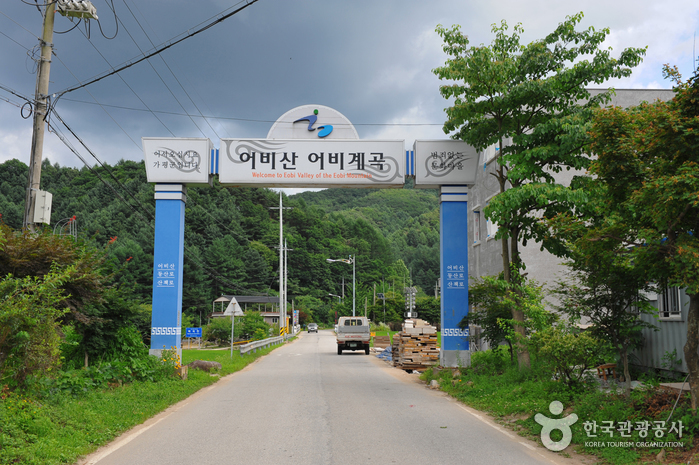
Eobigyegok Valley (어비계곡)
15.1Km 2024-02-29
Gail-ri, Seorak-myeon, Gapyeong-gun Gyeonggi-do
+82-31-580-2114
Eobigyegok Valley, originating from Eobisan Mountain, is aptly named 'Eobi' ('flying fish') as visitors can often witness fish leaping from the valley's crystal-clear waters. The constructed walkway, meandering alongside fountains and through valleys, provides stunning scenic views. In winter, the valley transforms as a 25-meter natural ice wall forms around the palgakjeong pavilion, offering a breathtaking spectacle. Nearby attractions such as Yumyeongsan Mountain, Chorongi Dungjimaeul Village, and the Edelweiss Swiss Theme Park also offer unique experiences and are definitely worth a visit.
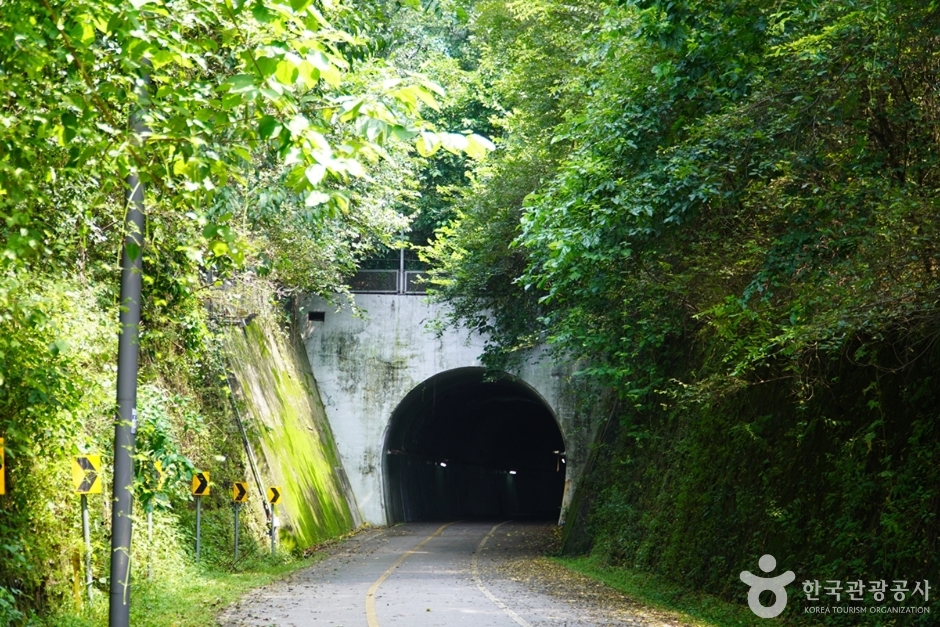
Saekhyeon Tunnel (색현터널)
15.6Km 2024-02-06
Sangcheon-ri 1628-3, Cheongpyeong-myeon, Gapyeong-gun, Gyeonggi-do
Saekhyeon Tunnel, spanning 423 meters in length, was first opened in 1939 and functioned as part of the Gyeongchun Line railway up until 2010. After the railway line was rerouted, the tunnel found a new purpose as a section of the Bukhangang Bike Path. It has also earned the nickname "Moss Tunnel" due to the moss that has grown around its entrances. The tunnel, especially known for its distinctive round entrances, has become a favored location for photography enthusiasts.
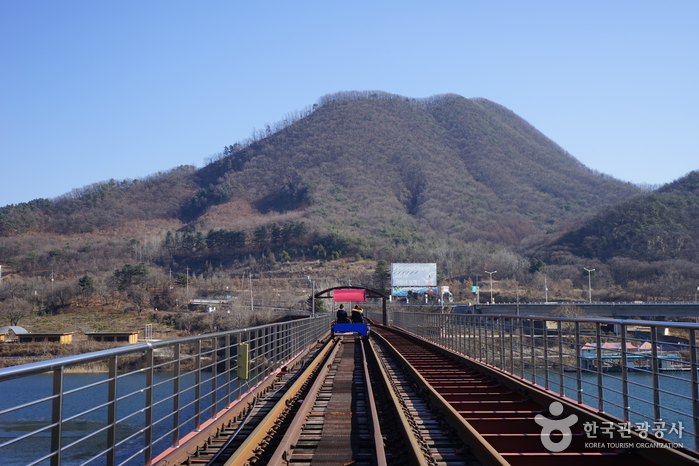
Gapyeong Rail Park (가평레일파크)
16.1Km 2025-10-23
14, Jangteo-gil, Gapyeong-gun, Gyeonggi-do
+82-31-582-7788
The railbike tour departing from Gapyeong Rail Park passes through Gapyeongcheon Stream Iron Bridge, Bukhanggang Iron Bridge and Zelkova Tree Tunnel before turning back to Gapyeong Rail Park. This route is featured in the Korean film "The Letter (1997)," and thus loved by both couples and photographers looking to capture some beautiful scenes along the old railroad track. Visitors can enjoy the beautiful river view while getting some light exercise with loved ones.
The Literary Village of Kim You Jeong (김유정문학촌)
16.2Km 2023-01-19
1430-14, Gimyujeong-ro, Sindong-myeon, Chuncheon-si, Gangwon-do
+82-33-261-4650
The Literary Village of Kim You Jeong was established on the site of the birth home of Kim, in order to commemorate Kim You-jeong who left various great short story novels of Korea’s modern times, such as Spring, Spring (1935), and Camellia Flower (1936). It was opened in 2002, consisting of the Birth Home of Kim You-jeong, Memorial Hall, foot-operated mortar, etc. Then, in 2016, various facilities, such as Kim You-jeong’s Story House, outdoor stage, experience room, and Nangman Nuri were additionally built across the Literary Village of Kim You-jeong. The current birth home with the square-shaped structure, which is the typical hanok (traditional Korean house) style, was restored according to historical research by Kim’s relatives and students. The Memorial Hall provides information and displays artifacts related to Kim You-jeong’s life and works. Kim You-jeong’s Story House shows three-dimensional exhibits and videos related to his works and life. Various sculptures made with the themes of Kim’s short story novels are placed throughout its outside area. It is recommended to walk along the Sille Story Road after visiting the Literary Village. The Sille Story Road is a trail, which is a literature tour, consisting of the places that appeared in Kim’s novels with the background of his hometown.
 English
 한국어
한국어 日本語
日本語 中文(简体)
 Deutsch
 Français
 Español
 Русский


