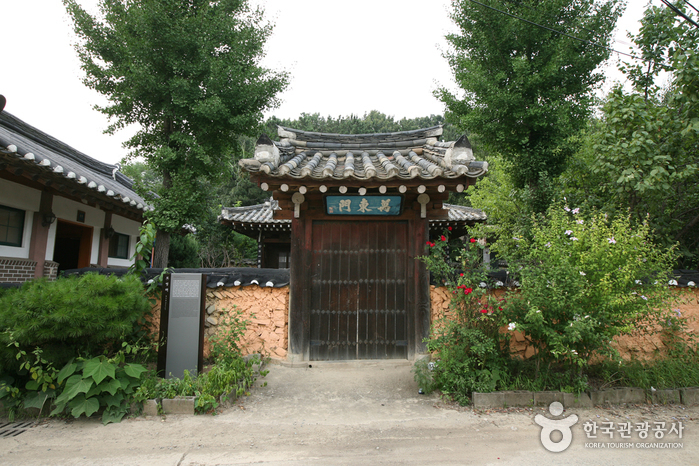
Korean Traditional Culture Center (한국전통문화체험관)
12.9Km 2025-10-23
13-5 Dalgubeol-daero 527-gil, Suseong-gu, Daegu
+82-53-666-4930
Momyeongjae is an ancestral shrine built by the Dureung Doo clan to honor Doo Sa-chung, who had joined the Ming Dynasty's reinforcement troops during the Imjinwaeran (Japanese invasion of Korea, 1592) and later became naturalized in Joseon Dynasty. The name 'Momyeongjae' means 'longing for the Ming Dynasty,' expressing Doo Sa-chung's affection for his home country.
Doo Sa-chung, who was from Duling, China, went to Joseon under the command of General Li Rusong from the Ming Dynasty. Doo Sa-chung took the position titled Suryuk Jihoek Jusa and was responsible for selecting locations to establish a stronghold in consideration of the terrain. As a senior adviser to Li Rusong, he closely discussed strategies and tactics with the Joseon army as well.
When the war was over, Doo Sa-chung returned to China but went to Joseon again during the Jeongyujaeran (Japanese invasion of Korea, 1597). He brought his two sons -- Doo San and Doo Il-geon -- along with his brother-in-law, Admiral Chen Lin. When the war was over, Doo Sa-chung and his two sons naturalized in Joseon. The government of Joseon granted him land, which is the current Gyeongsang Gamyeong Park area.
When the Gyeongsang Gamyeong (Gyeongsang provincial office) was relocated to this area, Doo Sa-chung offered his land to the government and moved to Gyesan-dong.
Longing for his wife and brothers he had left in China, he moved again to a village near Daedeoksan Mountain (then Choejeongsan Mountain) and named the area Daemyeong-dong (meaning the Great Ming). He built a platform and on the first day of every month, he would bow in the direction of the Forbidden City in China, where the Emperor of the Ming Dynasty resided.
Momyeongjae is built on a rectangular plot and faces south. It features a hip-and-gable roof with double-layer eaves and has four rooms in the front and two rooms on the side. The daecheongmaru (wooden floor hall) has two ondol (floor heated) rooms on each of its side, with a half-sized bay at the front. Momyeongjae exemplifies the early 20th-century ancestral shrine style commonly found in the Daegu area.
The building was originally constructed in 1912 when Doo Sa-chung’s descendants moved wooden materials from the dismantled Gyeongsangaeksa (local government building) and used them to build Momyeongjae in front of Doo Sa-chung's tomb. The shrine was later renovated in 1966 as it was in poor condition.
Momyeongjae is one of the first destinations visited by Chinese tourists in Daegu. It was recently renovated as part of a redevelopment project. The Korean Traditional Culture Center opened nearby, where visitors can experience tea ceremonies, hanbok (traditional Korean clothing), archery, and cooking dishes based on Donguibogam, a traditional Korean medical encyclopedia. Joining a program at the center will be a valuable experience.

Yuksinsa Shrine (육신사)
12.9Km 2024-02-15
64 Yuksinsa-gil, Habin-myeon, Dalseong-gun, Daegu
Yuksinsa Shrine is a revered site dedicated to honoring the Sayuksin. Established during the Joseon dynasty, it stands well-preserved to this day. "Sayuksin" translates to "six dead ministers," referencing the six loyal subjects who, in 1453, attempted to restore King Danjong of the Joseon dynasty but were ultimately captured and executed. The shrine's entrance, marked by the Chungjeolmun Gate, is flanked by long rows of crape myrtle trees. These trees create a stunning visual spectacle when their red flowers are in bloom.
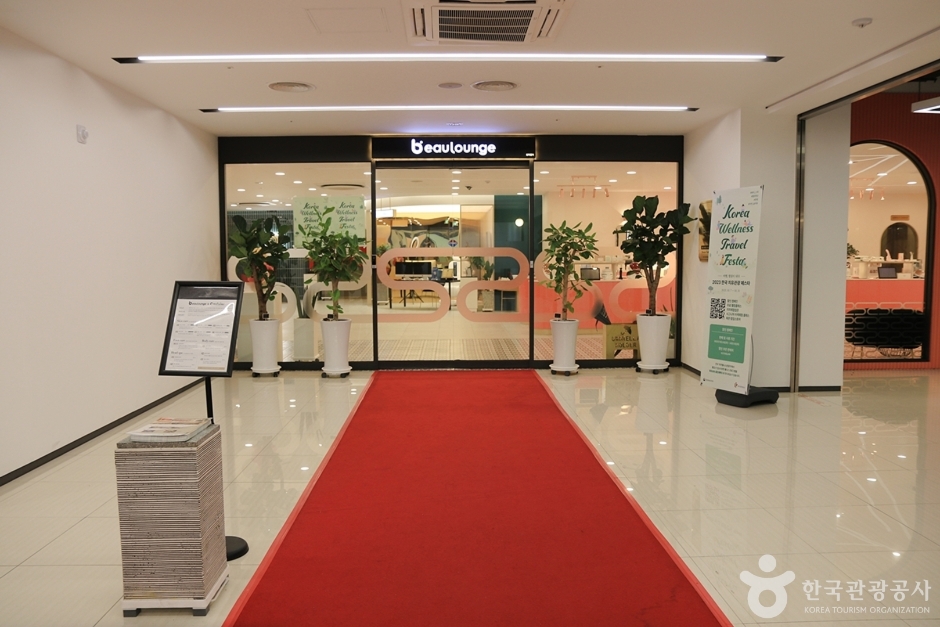
Beaulounge (뷰라운지)
13.0Km 2025-10-23
2F, Kang-san Bldg., Suseong University, 15 Dalgubeol-daero 528-gil, Suseong-gu, Daegu
+82-53-752-5235
Beaulounge, located within Suseong University, provides premium aesthetic and professional skin care services. Customized treatment solutions are offered based on data obtained through smart technology, which diagnoses and analyzes customers' skin and scalp conditions. The skin care program includes multi-care, anti-aging care, brightening care, hormone care, balance care, and moisture care to help customers get healthy and younger-looking skin. Head spa services promote blood circulation in the scalp area and relax the muscles to support lymphatic flow. This helps clear toxins and waste from the scalp, nourishing it and enhancing health and elasticity for both the scalp and skin. The body care service includes relaxing, slimming, and detox therapies.
Beaulounge, a place for professional premium skincare, is a new type of tourist destination that promotes the excellence of K-beauty and has helped the beauty industry develop into a tourism resource. Additionally, the facility collaborates with the Korea Tourism Organization, the Daegu Medical Tourism Development Institute, and the Medi Beauty Leader Center of Suseong University to provide special interest tourism and beauty/wellness tourism to foreigners. Beaulounge also introduces beauty products made by companies in Daegu, targeting general customers as well as overseas tourists. As a result, Beaulounge was designated as an excellent wellness tourist destination by the Korea Tourism Organization in 2022.
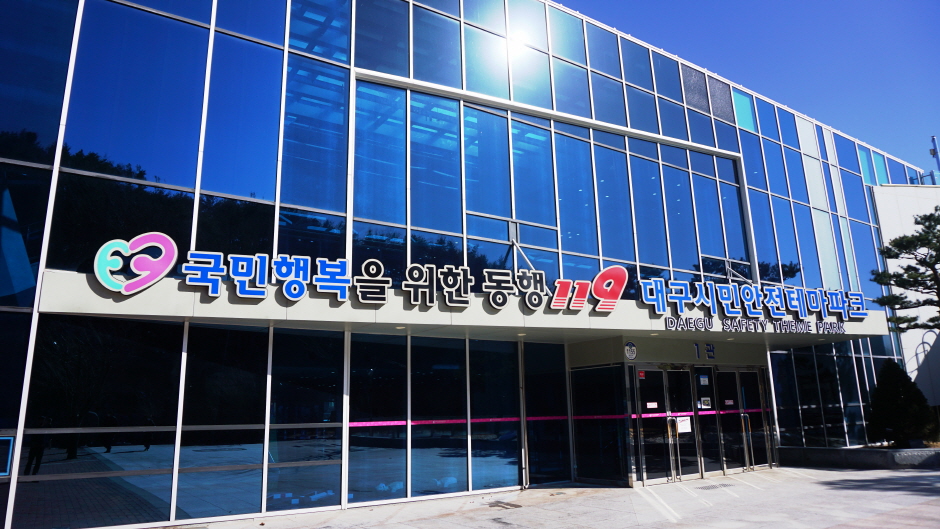
Daegu Safety Theme Park (대구시민안전테마파크)
13.0Km 2021-07-08
1155, Palgongsan-ro, Dong-gu, Daegu
+82-53-980-7770
Daegu Safety Theme Park was established to provide citizens with education on safety measures in an emergency situation. The theme park has experience stations set up to demonstrate accidents one can encounter in their everyday life and provides an opportunity to exercise simulated safety drills. Noteworthy exhibition halls that provide practical and useful safety information include the Subway Safety Exhibition, Mountain Safety Exhibition, and Earthquake Safety Exhibition. All of the facilities throughout the park, including the exhibition halls and the safety education theater, are designed to emphasize the importance of safety.
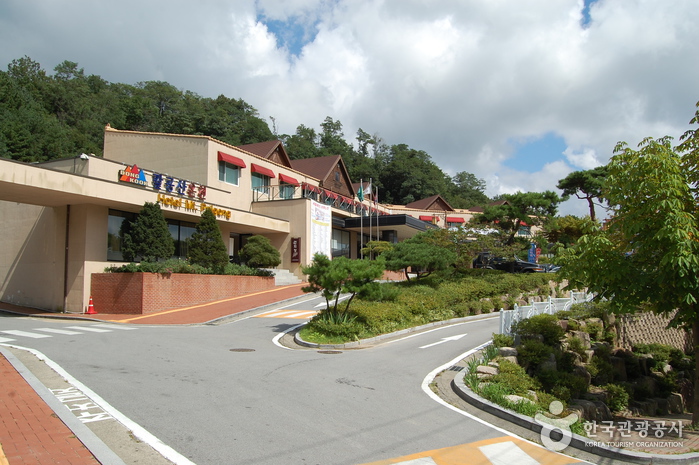
Mt. Palgong Hot Spring Tourist Hotel (팔공산온천관광호텔(온천))
13.1Km 2024-02-28
11 Palgongsan-ro 185-gil, Dong-gu, Daegu
Mt. Palgong Hot Spring Tourist Hotel is nestled near Birobong Peak of Palgongsan Mountain. It features a hot spring bath with sodium chloride alkaline water (pH 8.0), sourced from 687 meters below the granite surface of a nearby valley. The spring water, at a temperature of 28.9 ℃, is renowned for its properties that soothe the skin, enhance blood circulation, and relieve fatigue. The facility includes hot and cold baths, jet benches for water massages, a sauna, and open-air baths. Additionally, the surrounding Palgongsan Mountain area boasts numerous tourist attractions, including Donghwasa Temple, a cable car, and various hiking trails.
Sanchae Restaurant (산채식당)
13.2Km 2024-02-28
72, Palgongsan-ro 185-gil, Dong-gu, Daegu
053-985-4082
Sanchae Restaurant is a wild vegetable Korean restaurant situated at the entrance of Palgongsan Cable Car. Since its opening in 1995, the restaurant has passed onto its second generation, maintaining the authentic flavors that have defined its success. With a commitment to recreating traditional homemade meals, Sanchae Restaurant uses self-cultivated vegetables, perilla seeds, garlic, chili pepper powder, and homemade fermented condiments. Among its signature dishes, the sannamul bibimbap (wild vegetable bibimbap) stands out, showcasing a delightful blend of seven namuls (salad) seasoned with a savory soy sauce.
Daegu Apsan Park (대구앞산공원)
13.2Km 2024-03-15
574-87 Apsansunhwan-ro, Nam-gu, Daegu
+82-53-803-7420
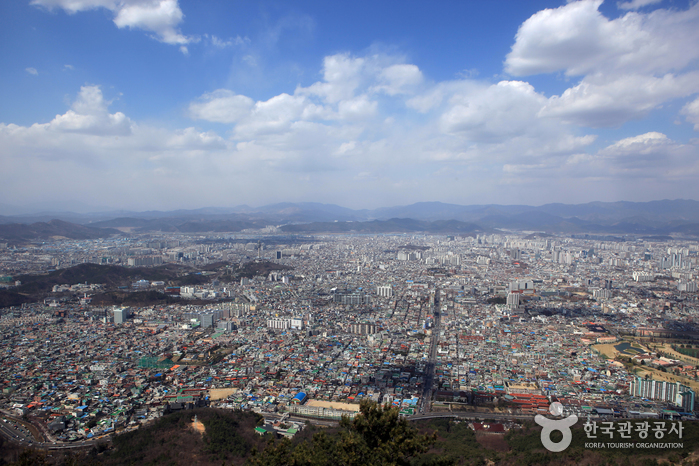
Daegu Apsan Park, as its name suggests, is a mountain park located in front of Daegu. It is a natural park where visitors can take a cable car to the summit observation deck and enjoy a panoramic view of the cityscape below. The park features numerous valleys, springs, as well as landmarks such as the Nakdong River Victory Memorial Hall, Chunghontap tower, youth training center, archery range, riding facilities, children's playground, library, museum, and botanical garden.
Songjeong Recreational Forest (송정 자연휴양림)
13.4Km 2022-09-07
88, Bangye 3-gil, Chilgok-gun, Gyeongsangbuk-do
+82-54-979-6600
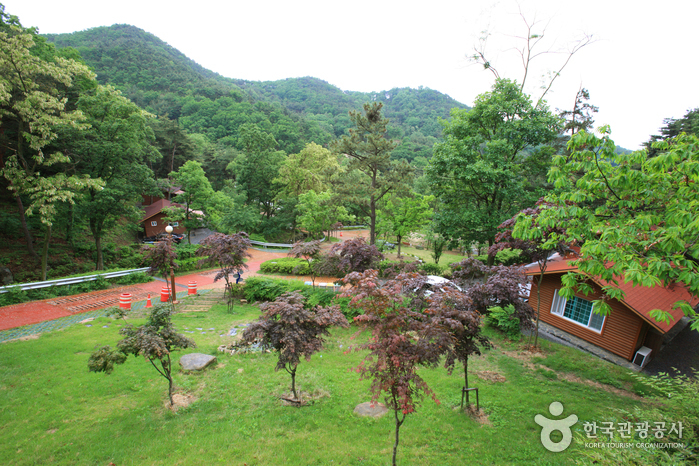
Songjeong Recreational Forest is located at the foot of Gibansan Mountain (464.7 meters). The forest is filled with wild flora and fauna and is a habitat for many wild animals like hare and roe deer. “House in the Forest,” the park's accommodation for visitors, is made of all natural, eco-friendly materials such as red clay and logs. Situated within close vicinity of urban areas, it serves as the perfect weekend getaway for those who want a refreshing break in the woods.
Palgongsan Cable Car (팔공산 케이블카)
13.4Km 2025-08-12
51 Palgongsan-ro 185-gil, Dong-gu, Daegu
Palgongsan Cable Car takes visitors a ride on an ascending slope, offering both thrill and beautiful views. The cable car's landing platform is at the top of Sinnimbong Peak of Palgongsan Mountain. This peak is considered one of the most famous prayer spots, together with the ritual alter on Birobong Peak and the Buddha statue on the eastern Gatbawi Rock.
Nakdong River Victory Memorial Hall (낙동강승전기념관)
13.4Km 2025-01-14
574-110, Apsansunhwan-ro, Nam-gu, Daegu
+82-53-621-9880
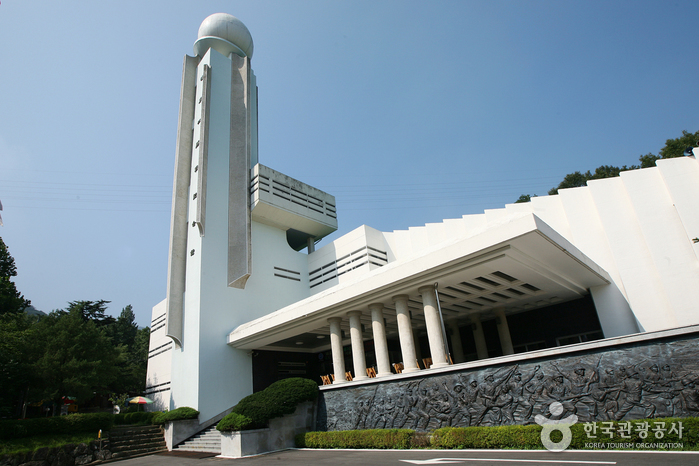
Nakdonggang River is a winding river that is filled with great strength to protect the people, representing the wisdom and deep meaning for the country's reunification. Thanks to its geographical advantage, it provided
a good distance of ceasefire line between Korean soldiers and their enemies during the Korean War, reducing casualties.
Opened on June 25, 1979, Nakdong Victory Memorial Hall was built in memory of the victory at the Nakdonggang defense line which was the last fortification to protect the country during the Korean War. The memorial hall was built with private donations from the residents of Daegu and Gyeongbuk province. In particular, postwar generations, especially the young generation people who did not experience the Korean War, can learn about the history from here.
 English
 한국어
한국어 日本語
日本語 中文(简体)
 Deutsch
 Français
 Español
 Русский


