
Homeplus Express - Gwanghwamun Branch [Tax Refund Shop] (홈플러스익스프레스 광화문)
5.8Km 2024-04-18
91, Saemunan-ro, Jongno-gu, Seoul
-
![Lunette Eyewear - Mapo Branch [Tax Refund Shop] (루네뜨안경 마포)](http://tong.visitkorea.or.kr/cms/resource/84/2878384_image2_1.jpg)
Lunette Eyewear - Mapo Branch [Tax Refund Shop] (루네뜨안경 마포)
5.8Km 2024-04-17
1F, 24, Dohwa-gil, Mapo-gu, Seoul
-
![Homeplus Stores - Gayang Branch [Tax Refund Shop] (홈플러스스토어즈 가양)](http://tong.visitkorea.or.kr/cms/resource/90/2880090_image2_1.jpg)
Homeplus Stores - Gayang Branch [Tax Refund Shop] (홈플러스스토어즈 가양)
5.9Km 2024-04-23
431, Yangcheon-ro, Gangseo-gu, Seoul
-
Korea Medical Tourism Promotion Association ((사)대한의료관광진흥협회)
5.9Km 2025-10-23
(#601) 29-3 Saemunan-ro 9-gil, Jongno-gu, Seoul
The Korea Medical Tourism Promotion Association aims to attract over 100,000 medical tourists within three years by establishing a structured system for attracting medical tourists, training specialized personnel, and supporting both domestic and international medical tourism. With the increasing number of foreign visitors coming to Korea for various purposes beyond tourism, such as international conferences, business, and exhibitions, there is a growing need for specialized services.
Plans is a company that can meet all these diverse customer needs. ceremonial arrangements, tours, and events often proceed irregularly due to changes in weather, group size, and transportation. To address these variables, Plans, the plural form of "Plan," represents a company that is always prepared from start to finish. It is a leading VIP travel agency in Korea, tailored to meet the needs of its clients.
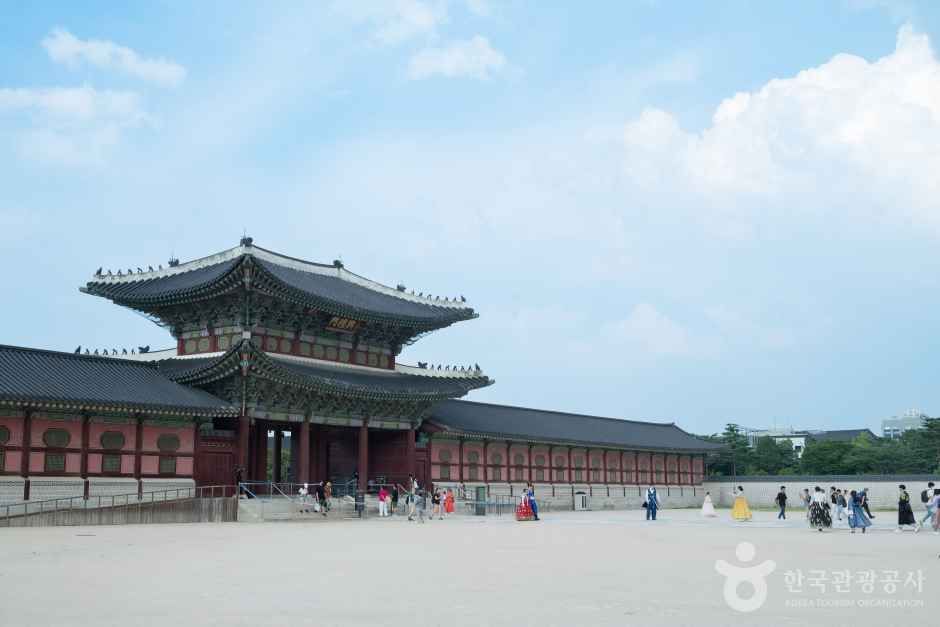
Gyeongbokgung Palace (경복궁)
5.9Km 2025-10-23
161 Sajik-ro, Jongno-gu, Seoul
+82-2-3700-3900
Gyeongbokgung Palace was built in 1395 as the official palace of the Joseon dynasty by Yi Seong-gye, the future King Taejo and founder of the new regime. Gyeongbokgung Palace is commonly referred to as the Northern Palace because of its location to the north, comparied to Changdeokgung Palace in the east and Gyeonghuigung Palace in the west. Gyeongbokgung Palace is arguably the most beautiful and is the largest of all five palaces. Many Joseon kings were crowned here. The premises were once destroyed by fire during the Imjin War (1592-1598). However, all of the palace buildings were later restored under the leadership of Heungseondaewongun during the reign of King Gojong. The assassination of Empress Myeongseong, however, resulted in Gyeongbokgung Palace losing its function as a royal palace, eventually witnessing the downfall of the Joseon dynasty. Gyeongbokgung Palace retains the original Gyeonghoeru Pavilion, a prime example of Joseon architecture, and the Hyangwonjeong Pavilion and pond. The sculptures in the Geunjeongjeon Hall exemplify Joseon-era sculpture techniques. The west side of the area outside Heungnyemun Gate is occupied by the National Palace Museum of Korea, while the eastern side of Hyangwonjeong Pavilion within the Gyeongbokgung Palace is occupied by the National Folk Museum of Korea.
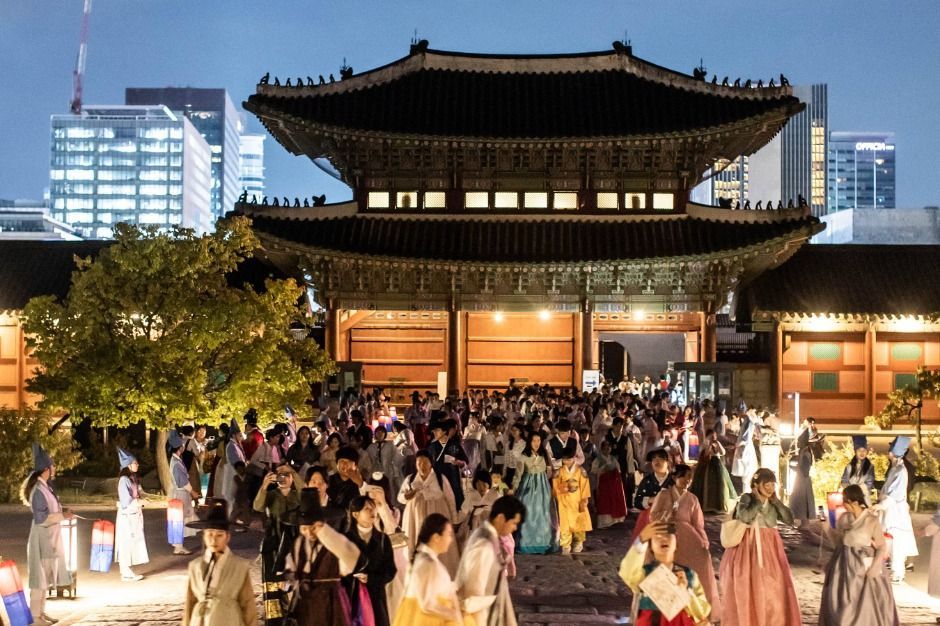
K-Royal Culture Festival (궁중문화축전)
5.9Km 2025-07-29
161 Sajik-ro, Jongno-gu, Seoul
+82-1522-2295
The K-Royal Culture Festival is held at the five Royal Palaces and Jongmyo Shrine. The festival first began in 2014 and provides visitors with first-hand knowledge of these important cultural heritages through unique performances, exhibitions, experiences and programs. The festival expanded in 2021 to be hosted twice a year, in spring and in fall.
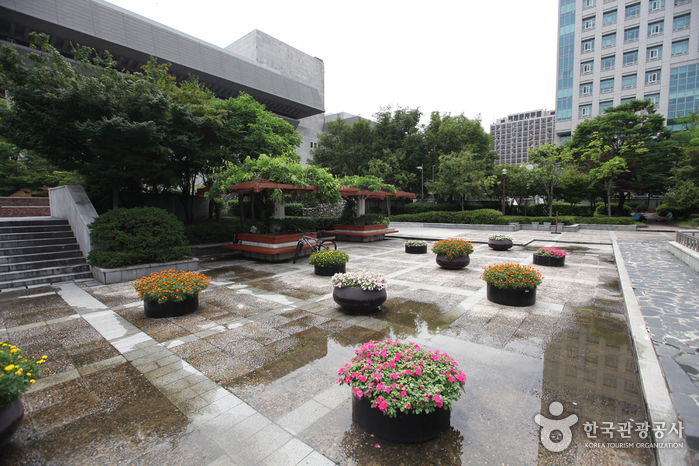
Sejong-ro Park (세종로공원)
5.9Km 2022-08-31
jiha 189, Sejong-daero, Jongno-gu, Seoul
+82-2-722-9598
Sejong-ro Park is located next to Sejong Center for the Performing Arts in central Seoul. Inside the park, there are wooden benches and shaded areas where people can sit and relax. Also available are water fountains, a round outdoor stage, and various sculptures. The lunch crowd from the nearby office buildings often come to the park during weekdays. On the weekends, the park is also used as a venue for outdoor weddings.
Seoul's anthem and the poem "Bulnori" by Ju Yo-han are written on a memorial stone that can be found inside the park.
![LG Best Shop - Gangseo Branch [Tax Refund Shop] (엘지베스트샵 강서점)](http://tong.visitkorea.or.kr/cms/resource/94/2880094_image2_1.jpg)
LG Best Shop - Gangseo Branch [Tax Refund Shop] (엘지베스트샵 강서점)
5.9Km 2024-04-18
431, Gonghang-daero, Gangseo-gu, Seoul
-
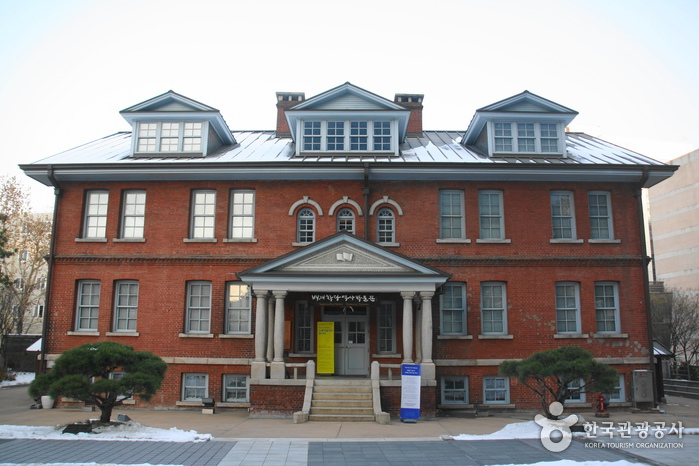
Appenzeller Noble Memorial Museum (배재학당 역사 박물관)
5.9Km 2022-10-14
19, Seosomun-ro 11-gil, Jung-gu, Seoul
+82-2-319-5578
The Appenzeller Noble Memorial Museum is dedicated to Henry Gerhart Appenzeller, the missionary who opened the first Western-style educational institution in Korea in 1885. The school started with English and core subjects, but expanded into the Pai Chai University, Pai Chai High School, and Pai Chai Middle School and has many famous alumni, including Rhee Syng-man. The memorial hall opened in 2008 in the east wing of the original school building, which was built in 1916 and designated as a Seoul Monument. With dynamically arranged permanent exhibitions, annual special exhibitions and special lectures, the museum offers a unique learning experience to visitors and people with an interest in the history of education in Korea.
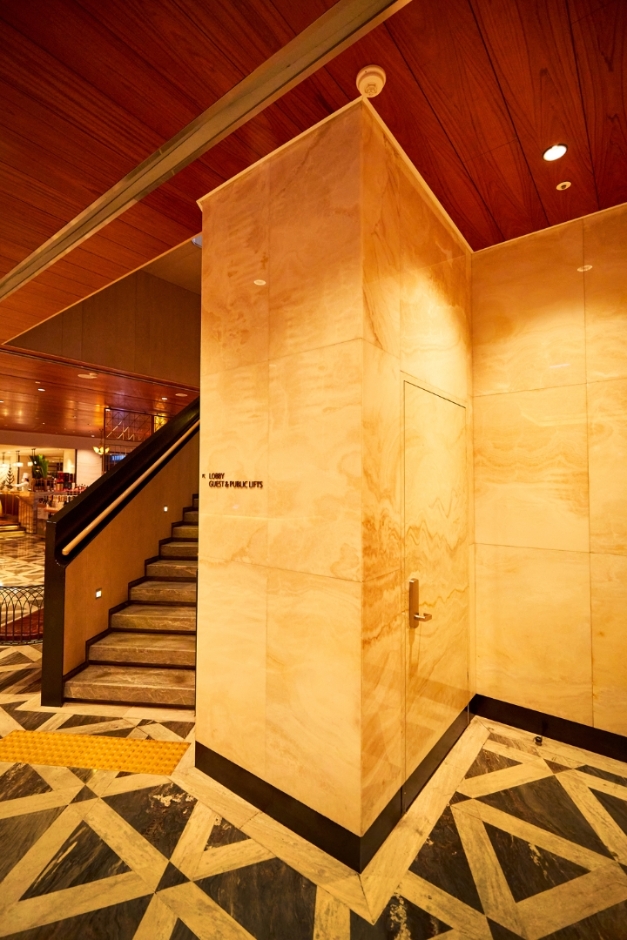
Four Seasons Charles H. (포시즌스호텔서울 찰스.H)
5.9Km 2024-03-15
97 Saemunan-ro, Jongno-gu, Seoul
This bar is named after the legendary American writer Charles H. Baker. It is inspired by speakeasy bars, which were bars hidden from sight during the Prohibition period, so its door blends into the surrounding walls. So, when one steps into the space, it is like stepping into a secret hangout. A cover charge of 10,000 won gives patrons a welcome drink, finger foods, and snacks. The menu is inspired by cocktails that Charles H. Baker had across the world, such as New York City, Mexico, Shanghai, Cuba, and Tahiti. It won 7th place in Asia’s 50 Best Bars list and 42nd place in the World’s 50 Best Bars list. The ambience is relaxed, and attentive services ensure that you can have a comfortable time here.
 English
 한국어
한국어 日本語
日本語 中文(简体)
 Deutsch
 Français
 Español
 Русский


