![Myeong-dong Mart - Myeong-dong Branch [Tax Refund Shop] (명동마트 명동)](http://tong.visitkorea.or.kr/cms/resource/30/2878630_image2_1.jpg)
Myeong-dong Mart - Myeong-dong Branch [Tax Refund Shop] (명동마트 명동)
7.2Km 2024-04-18
B1F, 58, Myeongdong 10-gil, Jung-gu, Seoul
-

Reberry Clinic Myeongdong (리베리의원 명동점)
7.2Km 2025-11-28
#201, 2nd Floor & #301, 3rd Floor, 58 Myeongdong 10-gil, Jung-gu, Seoul
1. A dedicated medical director is personally assigned to each client, ensuring responsible and individualized care.
2. We go beyond consultation — every session is a professional medical treatment.
3. With our LifeBiz AI-powered 3D analysis camera, we provide an objective and precise facial assessment.
4. Our treatments are guided by a scientific skin-type classification system for accurate and tailored results.
5. Through 3D facial analysis, pigmentation diagnosis, and skin-type classification, we design a fully customized treatment pathway.
6. At Libery Clinic Aesthetic, we offer not only advanced medical procedures, but also warm décolleté and therapeutic massage care for a holistic experience.
Lloyd - Daehangno Branch [Tax Refund Shop] (로이드 대학로)
7.3Km 2024-04-17
1F, 31, Daemyeong-gil, Jongno-gu, Seoul
-
![Ai Pharmacy [Tax Refund Shop] (아이약국)](http://tong.visitkorea.or.kr/cms/resource/98/3313898_image2_1.jpg)
Yanghwa Hangang Park (한강시민공원 양화지구(양화한강공원))
7.3Km 2022-12-16
221, Nodeul-ro, Yeongdeungpo-gu, Seoul
+82-2-3780-0581
Situated on the southern part of the Hangang River, Yanghwa Hangang Park stretches between the mouth of Yeouido Saetgang Tributary and the Gayang Bridge in Gangseo-gu, Seoul. This spacious park is lush with vegetation and offers a spectacular view of the river.
The park is located nearby a number of other attractions including Seonyudo Park, an island in the river, which has been transformed into an ecological park; Seonyu Bridge; and the World Cup Fountains, with jets shooting 202 meters in x_height.
There is a wide bike trail that runs through the park that connects this park with the other Hangang River Parks. Every May, the bike trail is flanked by lush green grass and beautiful roses, making it the ideal photo spot.
![Lush Korea - Daehangno Branch [Tax Refund Shop] (㈜러쉬코리아 대학로점)](http://tong.visitkorea.or.kr/cms/resource/83/2878183_image2_1.jpg)
Lush Korea - Daehangno Branch [Tax Refund Shop] (㈜러쉬코리아 대학로점)
7.3Km 2024-04-22
27, Daemyeong-gil, Jongno-gu, Seoul
-
Artbox - Daehangno Branch [Tax Refund Shop] (아트박스 대학로)
7.3Km 2024-04-22
22, Daemyeong-gil, Jongno-gu, Seoul
-
![Lf Hazzys - Myeong-dong [Tax Refund Shop] (LF(명동헤지스종합))](http://tong.visitkorea.or.kr/cms/resource/55/2878655_image2_1.jpg)
Lf Hazzys - Myeong-dong [Tax Refund Shop] (LF(명동헤지스종합))
7.3Km 2024-04-19
28, Myeongdong 8ga-gil, Jung-gu, Seoul
-
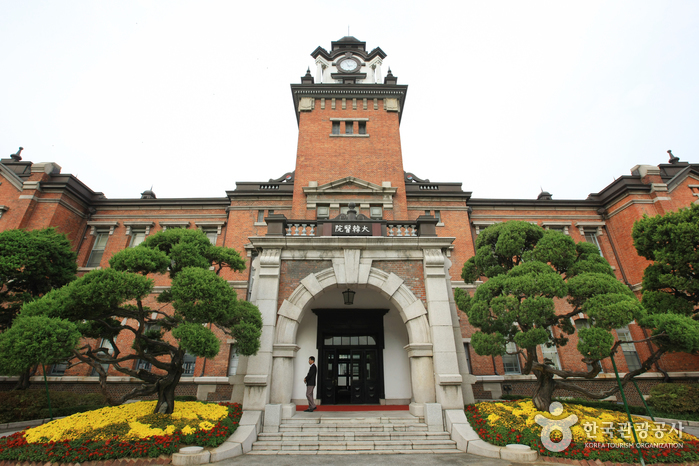
Seoul Daehan Hospital (서울 대한의원)
7.3Km 2021-12-23
101, Daehak-ro, Jongno-gu, Seoul
+82-2-2148-1842
Daehanuiwon (Daehan Medical Center) is an antique two-story brick building within the grounds of Seoul National University Hospital. It was established under the direct administration of the Uijeongbu (State Council), combining the Gwangjewon (under the Home Ministry), Gyeongseong Medical School and the Korean Red Cross Hospital (under the Royal Household).
Built in the Madubong Hill area, this location where Hamchunwon, the outer garden of Changgyeonggung Palace, once stood in 1484 (15th year of King Seongjong), was also once the site of Gyeongmogung Palace, where King Jeongjo enshrined the mortuary tablet of his birth father Crown Prince Sado Seja in 1776 (the year King Jeongjo ascended to the throne).
These places that held importance for the royal family were destroyed as the Japanese built Gyeongseong Empire University in its place. In 1907, with the announcement of the plan to establish Daehan Medical Center, construction began on the main building, seven wards and affiliated buildings. Construction was completed in November 1908.
The Daehan Medical Center opened in Gwangjewon, but upon Japanese colonization in 1910, its name was changed to the Japanese Viceroyalty Hospital. In 1926, it was included as a part of Gyeongseongjeguk University to become a university hospital. Since the liberation of Korea in 1945, it has been a hospital affiliated with Seoul National University.
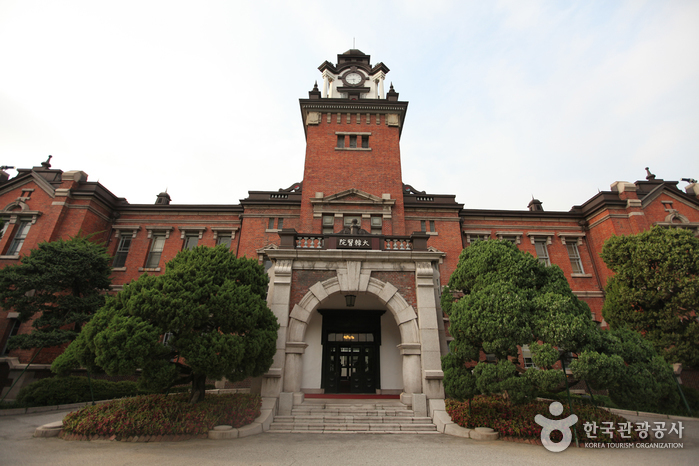
The Museum of Medicine (서울대학교병원의학박물관)
7.3Km 2024-03-18
101 Daehak-ro, Jongno-gu, Seoul
The Museum of Medicine is located in the building of the former Daehan Medical Center, the oldest modern hospital in Korea. It is a medical museum that provides a comprehensive view of the development of modern medicine in Korea, the history of medical devices, and the transformation of Seoul National University Hospital. Through permanent and special exhibitions, the museum showcases medical artifacts and documents related to the history of medicine.
 English
 한국어
한국어 日本語
日本語 中文(简体)
 Deutsch
 Français
 Español
 Русский


