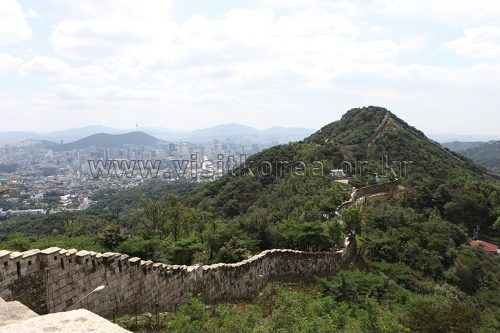
Bugaksan Mountain (북악산)
1.8Km 2024-03-04
Cheongun-dong, Jongno-gu, Seoul
+82-2-765-0297
Bugaksan Mountain is the mountain that one can see behind the Gyeongbokgung Palace and the Cheong Wa Dae to the north. Hanyangdoseong, the city wall that surrounded the historic capital of Hanyang, was built by connecting the ridges of this mountain. These walls can still be found today, having been preserved quite well. Different trails weave through the area along the Hanyangdoseong, the Seoul City Wall, and one can visit these trails at night as well. Bugak Skyway is a road that connects Changuimun Gate to Jeongneung Royal Tomb, and one can get a great view of Seoul’s city center from the Palgakjeong Pavilion on Bugak Skyway.
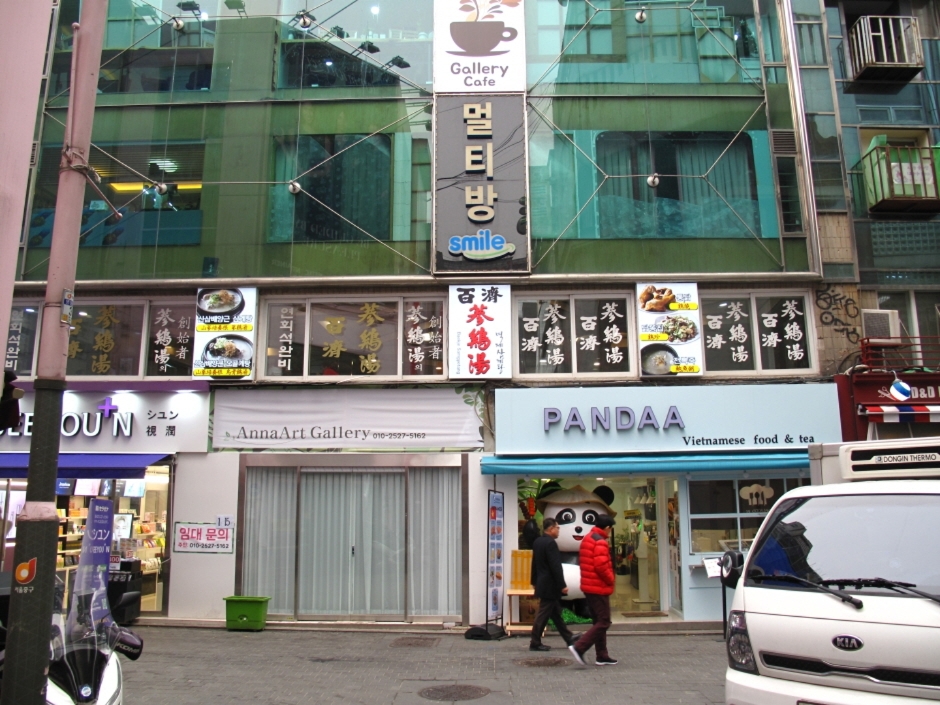
Baekje Samgyetang (백제삼계탕)
1.8Km 2024-03-11
8-10, Myeongdong 8-gil, Jung-gu, Seoul
+82-2-776-3267
Located in Myeongdong Street, Baekje Samgyetang is renowned for samgye tang (ginseng chicken soup). This long-standing establishment has been in business for two generations since 1971 so it has been featured on TV in Korea and other countries. In addition to samgye tang, they also serve chicken dishes such as dakdori tang (spicy braised chicken), roasted chicken, and jeonbok juk (abalone porridge), attracting numerous patrons.
![Zen - Myeong-dong Branch [Tax Refund Shop] (ZEN 명동)](http://tong.visitkorea.or.kr/cms/resource/63/2888763_image2_1.jpg)
Zen - Myeong-dong Branch [Tax Refund Shop] (ZEN 명동)
1.8Km 2024-04-16
5-8F, 62, Myeongdong-gil, Jung-gu, Seoul
-
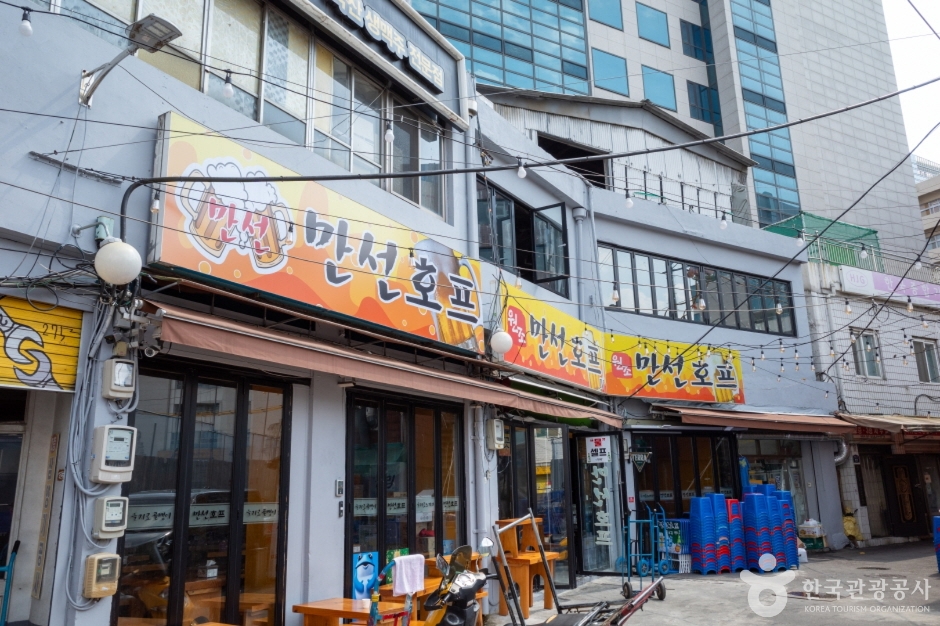
Manseon Hof (만선호프)
1.8Km 2024-03-15
19, Eulji-ro 13-gil, Jung-gu, Seoul
+82-2-2274-1040
Located in Euljiro Nogari Alley, Manseon Hof is a beer bar. The place is bustling late at night with people drinking beer and eating snacks like nogari (dried young pollack) and fried chicken at sidewalk tables. It is a great place to enjoy a cold draft beer and grilled dried young pollack dipped in spicy sauce and mayonnaise. Golbaengi muchim (sea snail salad) and gyeran mari (rolled omelet) are also other popular accompaniments.

Jinju Hoegwan (진주회관)
1.8Km 2024-06-19
26 Sejong-daero 11-gil, Jung-gu, Seoul
+82-2-753-5388
Jinju Hoegwan is a renowned kongguksu (noodles in cold soybean soup) eatery near City Hall Station. Kongguksu is a traditional Korean summer dish made by boiling and grinding soybeans into a creamy broth, served with noodles, offering a refreshing and nutty flavor. Kongguksu is available from March to November. Their staff-recommended menu includes kimchi bokkeumbap (kimchi fried rice), freshly roasted by the staff, along with kimchi jjigae and samgyeopsal (pork belly).
Olive Young - Myeongdong Branch [Tax Refund Shop] (올리브영 명동점)
1.9Km 2024-06-26
14, Myeongdong 8-gil, Jung-gu, Seoul
-
PAIK's NOODLE Myeongdong (홍콩반점0410(명동점))
1.9Km 2024-03-08
13, Myeongdong 10-gil, Jung-gu, Seoul
02-778-0410
Located in Myeongdong Street, PAIK's NOODLE is a Chinese restaurant that serves Korean-style Chinese cuisine. The price is affordable so that both Koreans and foreigners can easily enjoy chinese dishes. The restaurant focus on jjajang myeon (black bean sauce noodles) and jjamppong (Spicy seafood noodle soup). It's a great place to grab a bite to eat when you're hungry while sightseeing in Myeongdong.
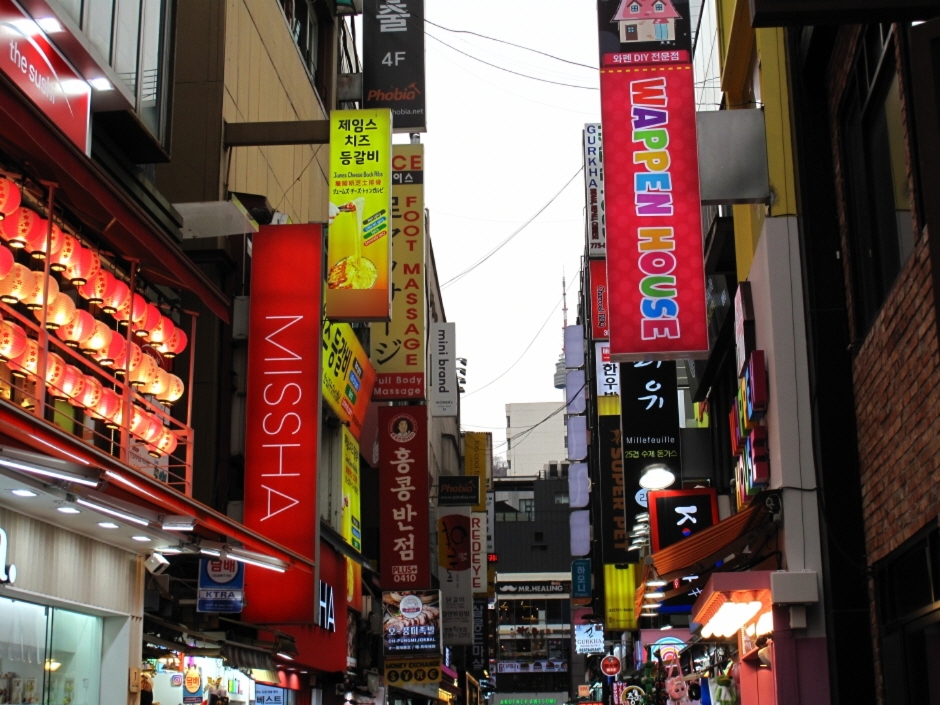
James Cheese Deunggalbi Myeongdong (제임스치즈등갈비 명동)
1.9Km 2024-03-11
13, Myeongdong 10-gil, Jung-gu, Seoul
+82-2-318-0192
Situated on Myeongdong Street, James Cheese Deunggalbi specializes in deunggalbi (grilled pork galbi). The main dish here is grilled back ribs with cheese, which is characterized by the harmonious combination of Korean food and cheese. Served with bokkeum bap (fried rice) and gyeran jjim (steamed eggs) riceballs, the dish has a richer flavor with less spiciness. The best part is that customers can choose the amount of cheese and the spiciness of the dish, so they can personalize it to their liking.
![Converse - Myeong-dong Branch [Tax Refund Shop] (컨버스 명동점)](http://tong.visitkorea.or.kr/cms/resource/46/2878646_image2_1.jpg)
Converse - Myeong-dong Branch [Tax Refund Shop] (컨버스 명동점)
1.9Km 2024-06-27
16-1, Myeongdong 8-gil, Jung-gu, Seoul
-
Bank of Korea Money Museum (화폐박물관)
1.9Km 2024-03-18
39 Namdaemun-ro, Jung-gu, Seoul
This Renaissance-style three-story stone building is the museum of the Bank of Korea. The older Bank of Korea was established as the central bank of the Korean Empire in 1909 and has been designated as a National Historical Site. During the Japanese colonial period, the bank was renamed the Bank of Joseon, and the building was used as the main and head office of the Bank of Korea until 2001. The building has been used as the nation’s Money Museum since June 2001 in celebration of the 50th anniversary of the Bank of Korea. The museum has 13 exhibition rooms on two floors, with one basement floor and two above-ground floors. It holds special exhibitions of various currency and art collections to provide domestic and foreign visitors with the opportunity to enjoy the history and culture of currency. Visitors can learn about the Bank of Korea and the central banking system, as well as how to identify counterfeit notes and how money is produced and circulated. It is also a good place for children to learn about currencies from around the world. Advance reservations are required, and parking is not available. The museum can easily be reached via subway by getting off at Hoehyeon Station (Seoul Subway Line 4) and exiting through Exit 7.
 English
 한국어
한국어 日本語
日本語 中文(简体)
 Deutsch
 Français
 Español
 Русский


