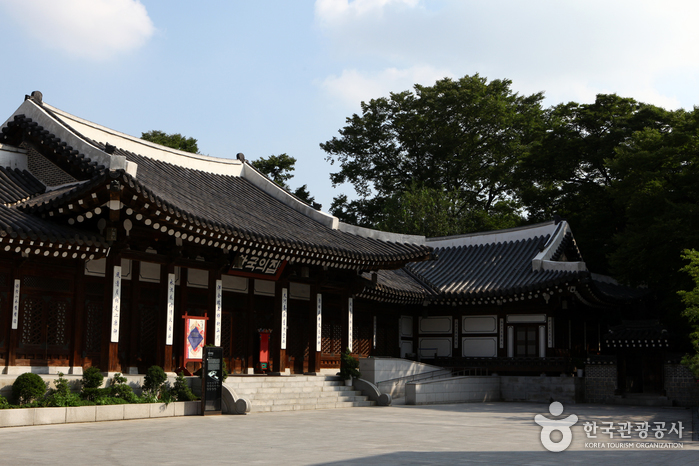
Korea House (한국의집)
7.2Km 2025-10-23
10, Toegye-ro 36-gil, Jung-gu, Seoul
The Korea House was opened in 1981. It is a traditional Korean building that introduces the culture and lifestyle of Koreans, where you can experience traditional architecture and a classical atmosphere. The building was built in the style of the Joseon Dynasty's Jagyeong-jeon building at the Gyeongbok Palace. It is the only building built in the traditional architectural style. You will feel its antiquity as you enter the building.
It is divided into the Haerin-gwan (a space for people to get acquainted with each other), the Traditional Theater, and three annex buildings (Munhyang-ru, Nokeum-jeong and Cheongwu-jeong). At Haerin-gwan, you can enjoy traditional music at Garak-dang and try traditional food at Sohwa-dang. In the square of Garak-dang you can view a traditional wedding (on the weekends) or people playing folk games. Also, at the Traditional Theater, about 156 seats are available, and in the afternoons Human Cultural Assets or members of the National Center for Korean Traditional Performing Arts and the National Corps members present traditional music and dances. Sinayui, Salpuri, Pansori, the Drum Dance and the Bongsan Mask Dance are the most popular programs for foreigners. The programs are all explained in English and Japanese.
In the Cultural Gift Shop you can view various crafts made by traditional craftsmen. It is always open and the crafts are for sale as well. There are pottery, ceramics, golden crafts, knots and embroidery etc; approximately 500 pieces of artwork made by craftsmen from 20 different fields. Next to the House of Korea is the Namsan-gol Hanok Village where visitors can explore traditional houses.
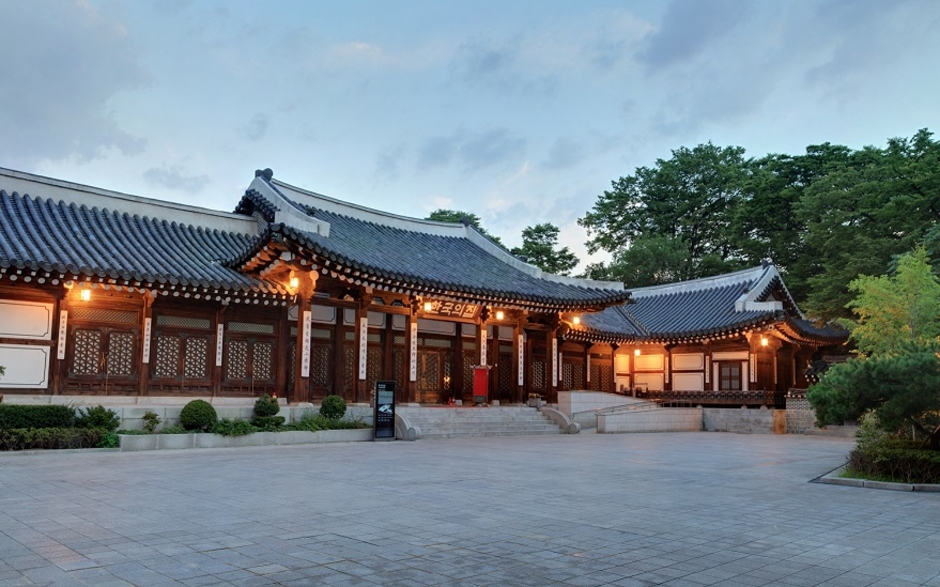
Korea House (한국의집)
7.2Km 2024-03-05
10 Toegye-ro 36-gil, Jung-gu, Seoul
+82-2-2266-9101
Located in the center of Seoul, Korea House is a must-visit tourism spot as a high-end cultural complex offering Hanjeongsik (Korean table d'hote), traditional refreshments, traditional performance arts, and traditional weddings, allowing visitors to feel the beauty of Korean culture and the taste of Korea. Guests can also enjoy the elegant beauty of hanok.

Isae - Insa Branch (No. 2) [Tax Refund Shop] (이새 인사2호)
7.2Km 2024-04-18
30-1, Insadong-gil, Jongno-gu, Seoul
-
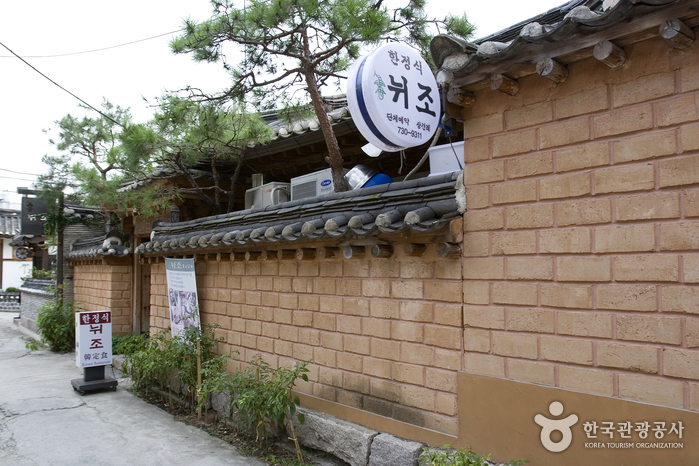
Nwijo (뉘조)
7.2Km 2024-03-06
27 Insadong 14-gil, Jongno-gu, Seoul
+82-2-730-9311
Nwijo is a Korean table d'hote restaurant located in Insa-dong where you can enjoy course meals made from hundreds of wild herbs. Starting with pumpkin porridge and water kimchi, basic dishes such as wild herb salads, pancakes, kimchi with boiled pork slices, and mixed roots are served along with set menu and wild herb enzymes as a standard part of the meal.
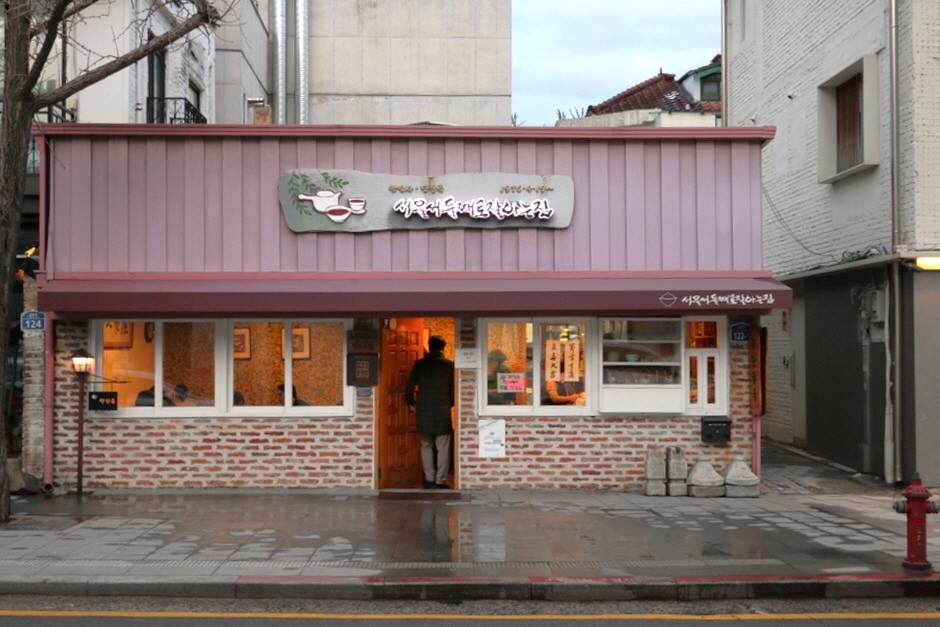
Seoureseo Duljjaero Jalhaneunjip (서울서둘째로잘하는집)
7.2Km 2024-03-15
122-1 Samcheong-ro, Jongno-gu, Seoul
+82-2-734-5302
Seoureseo Duljjaero Jalhaneunjip is a sweet red bean porridge and traditional tea house near Gyeongbokgung Palace. Sweet red bean porridge is a sweet and smooth dish typically containing chewy rice cakes and chestnuts. In Korea, it's a traditional food eaten during dongji (the shortest day and longest night of the year). They also offer traditional teas like ssanghwatang (herbal tonic tea), which contains seven medicinal herbs, sujeonggwa (cinnamon punch) with a blend of cinnamon and ginger flavors, and sikhye (sweet rice punch), a drink known for aiding digestion.
![Seoul Gongyesa [Tax Refund Shop] (서울공예사)](http://tong.visitkorea.or.kr/cms/resource/10/2878210_image2_1.jpg)
Seoul Gongyesa [Tax Refund Shop] (서울공예사)
7.2Km 2024-04-16
1F, 27-1, Insadong-gil, Jongno-gu, Seoul
-
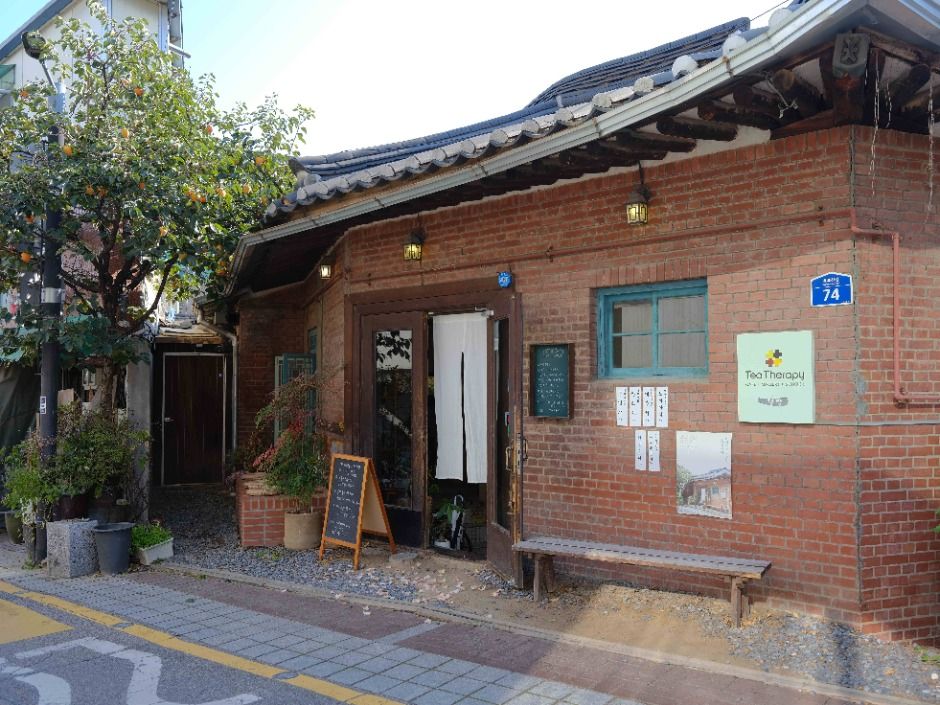
Tea Therapy (티테라피)
7.2Km 2025-10-23
74 Yunboseon-gil, Jongno-gu, Seoul
+82-2-730-7507
Located in Jongno-gu, Seoul, Tea Therapy can be of help to those who chronically feel unwell even though they do not have any serious diseases that need to be treated. It is a place where medicinal herbal teas, which once seemed difficult to enjoy, can be enjoyed without hassle and in a unique way. The teas found at Tea Therapy can be brewed within three minutes, similar to herbal teas found in other countries, and are both delicious and good for your health. Tea Therapy recommends tea through testing so even novices can have fun selecting teas that suit them. Tea products are sold here as well, allowing you to enjoy the same flavors at home.
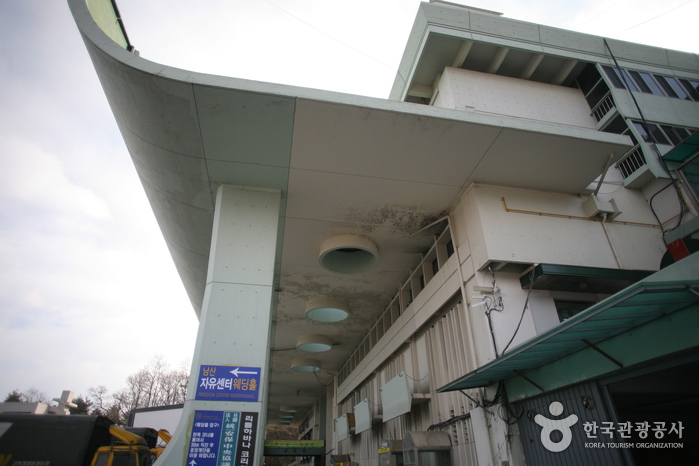
Yejiwon (예지원)
7.2Km 2022-09-19
72, Jangchungdan-ro, Jung-gu, Seoul
+82-2-2253-2211
The Yejiwon is located in Seoul Jung-gu Jangchung-dong and has been offering traditional Korean etiquette education programs since its inception on September 16th, 1974. Furthermore, the Yejiwon also serves to introduce the traditional cultures and living cultures of Korean etiquettes to foreigners.
Most programs offered are short-term classes, and reservations can be made on the homepage up to 15 days in advance. Reservations are only available for groups of 10 or more and classes are instructed in Korean only, so it may be a good idea to be accompanied by a guide.
Vegetarian Restaurant Osegyehyang (채식요리전문점 오세계향)
7.2Km 2024-03-18
14-5 Insadong 12-gil, Jongno-gu, Seoul
+82-2-735-7171
Osegyehyang is a vegetarian restaurant located in Insa-dong. It specializes in vegetarian cuisine, offering a variety of dishes including noodles, traditional Korean dishes, and specialty items. Some of its popular dishes include maesil tangsuchae (vegan deep-fried pork with sweet and sour sauce), pyogobeoseotmari (rolled shiitake mushrooms), vegan yangnyeom chicken (vegan seasoned fried chicken), tteokbokki, jjajangmyeon (black bean sauce noodles), jjamppong (spicy seafood noodle soup), vegan steak, and bulgui ttukbaegi (vegan bulgogi), all prepared without meat but still delicious.
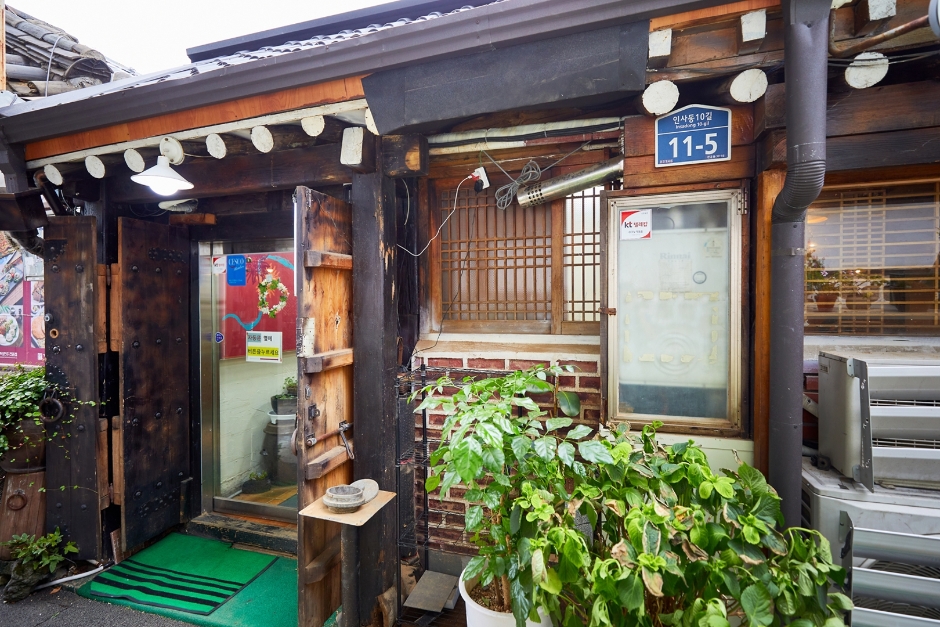
Neulmajung (늘마중)
7.2Km 2024-01-12
11-5 Insadong 10-gil, Jongno-gu, Seoul
Makgeolli is a traditional liquor made from rice or wheat as a main ingredient and with yeast and various other ingredients. Its uniqueness lies in the main ingredient or yeast used, thus a variety of makgeolli made with local specialties can be found throughout Korea. Neulmajung is a pub restaurant that serves 34 types of makgeolli from all over the country, as well as many foods that go well with them. In addition, its soft wooden interior creates a comfortable atmosphere. Its representative dish is haemul pajeon (seafood and green onion pancake), made with plenty of ingredients. They also serve crispy pan-fried gamja jeon (potato pancake) and memil jeonbyeong (buckwheat crepe), rich in both flavor and taste as it is made with buckwheat from Bongpyeong, Gangwon-do, all of which are a perfect paring to makgeolli.
 English
 한국어
한국어 日本語
日本語 中文(简体)
 Deutsch
 Français
 Español
 Русский


