
Sangnim Park (상림공원)
14.6Km 2021-11-24
49, Pilbongsan-gil, Hamyang-gun, Gyeongsangnam-do
+82-55-960-5756
Hamyang is well known for its beautiful mountains and clean waters. Sangnim Park, located in Hamyang-gun, Gyeongsangnam-do, has beautiful sceneries throughout the year as well as various attractions including pavilions, memorial plaques, walking trails and more. The park was formed during the Unified Silla period, providing deep history as well as a place to relax.
Suseonsa Temple (수선사)
15.4Km 2024-02-23
1117 Nae-ri, Sancheong-eup, Sancheong-gun, Gyeongsangnam-do
Suseonsa Temple is a temple situated on Ungseokbong Peak in Jirisan Mountain. Renowned for its picturesque hydrangea and lotus, it has become a favored destination for many visitors. The temple offers a temple stay program, allowing participants to restore both body and mind. Nearby, the café run by Suseonsa Temple provides a pleasant retreat, adding to the enjoyment of visitors' experiences.
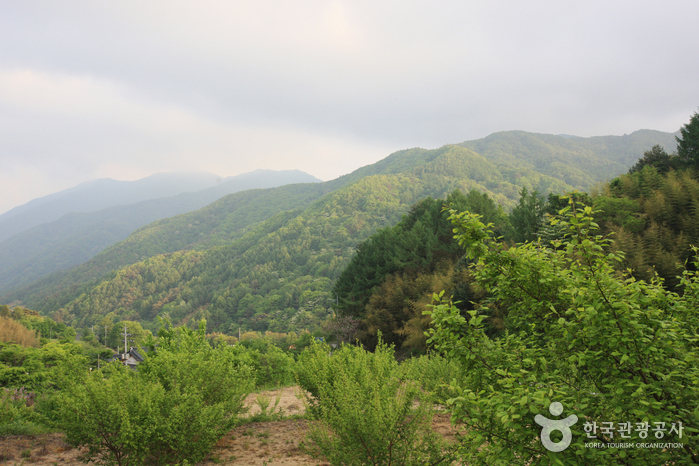
Jirisan National Park (Hadong Section) (지리산국립공원(하동))
15.7Km 2021-06-24
Hwagae-ro, Hadong-gun, Gyeongsangnam-do
+82-55-883-1750
Designated as the first national park in Korea on December 29, 1967, Jirisan National Park stretches out over 483.022 square kilometers, making it the largest national park among all 22 national parks. It covers Korea’s three southernmost provinces; Gyeongsangnam-do, Jeollanam-do, and Jeollabuk-do, one city, four counties, and 15 districts of eup and myeon. The area in Gyeongsangnam-do has many temples including Ssanggyesa Temple and Chilbulsa Temple, as well as valleys, falls, and other tourism resources.
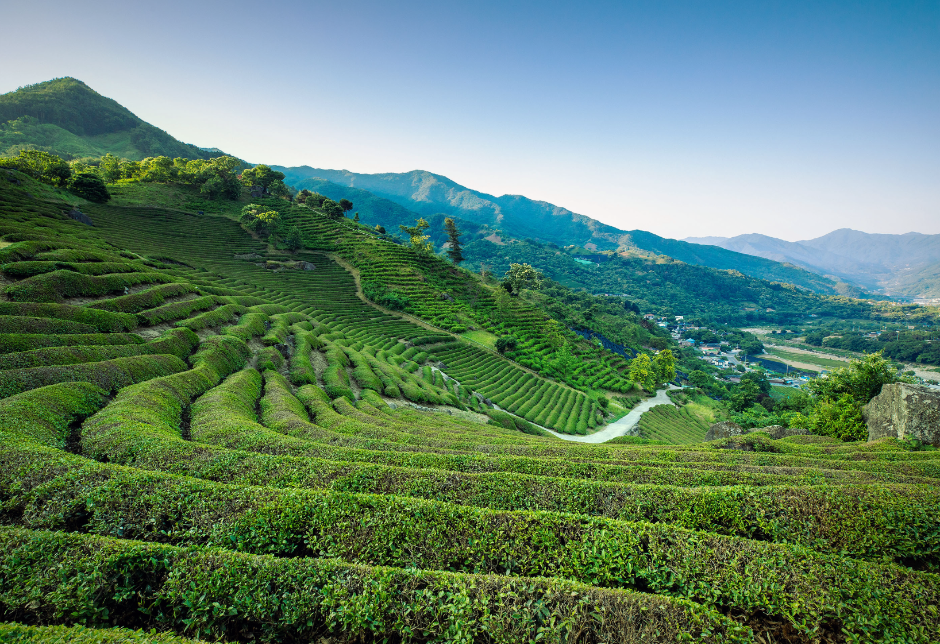
Hadong Wild Tea Cultural Festival (하동 야생차문화축제)
16.4Km 2025-07-11
571-25 Ssanggye-ro, Hadong-gun, Gyeongsangnam-do
+82-55-880-6583
The Hadong Wild Tea Cultural Festival is a fragrant celebration in Hadong, a region renowned for its green tea, historically known as the “king’s tea” due to its royal offerings. The Hadong 1000-Year Dahyang Trail is perfect for leisurely walks, connecting hills and tea fields with decked paths and narrow village roads. Following the successful “World Tea Expo 2023 Hadong, Korea,” the festival solidified Hadong’s reputation as a “tea-refreshing cultural city.” The diverse program includes tea cup busking, moving art galleries, music and art spaces, tea classes, book discussions, meditation and refreshing programs, and trekking on the 1000-Year Dahyang Trail, providing ample opportunity to fully experience Hadong and its tea culture.
◎ 1000-Year Dahyang Trail
Hadong’s proximity to the Seomjingang River results in frequent fog and high humidity, coupled with significant temperature variations, creating an ideal environment for tea cultivation. Historical records indicate that tea has been grown here for a thousand years, marking Hadong as the birthplace of Korean tea cultivation.
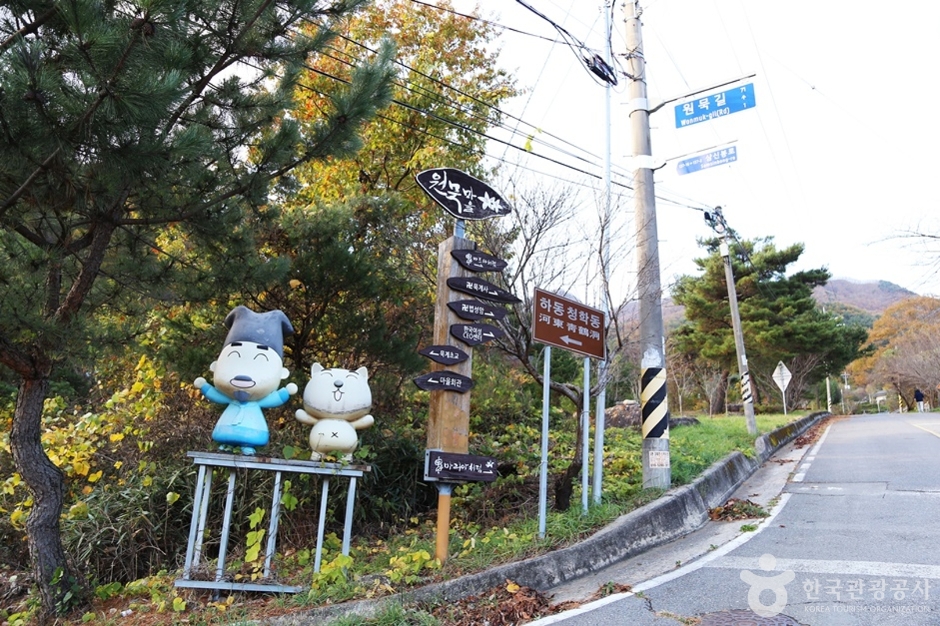
Cheonghak-dong Etiquette School Seonbi Seodang (청학동예절학교 선비서당)
16.6Km 2024-03-04
60-10 Wonmuk-gil, Cheongam-myeon, Hadong-gun, Gyeongsangnam-do
Cheonghak-dong, located at the foot of the ridge facing Hadong on Jirisan Mountain, is a village inhabited by 200 residents from thirty families. It hosts several seodangs (village schools), among which Seonbi Seodang stands out for its educational programs focusing on etiquette, character development, and Chinese characters. Additionally, the village offers a variety of experience programs, including traditional culture, farming activities, and perseverance training.
Samseonggung (삼성궁)
17.0Km 2024-02-21
86-15 Samseonggung-gil, Cheongam-myeon, Hadong-gun, Gyeongsangnam-do
Samseonggung is a Taoist shrine located at 850 meters above sea level on Jirisan Mountain. It serves as a spiritual hub for practicing Sinseondo, embodying traditional Korean culture. In 1983, Kang Min-ju (Taoist Priest Hanpul), along with his disciples, restored the sodo, a sacred altar from the Gojoseon period. This shrine stands as a revered sanctuary, honoring the primal ancestors of the Korean people: Hwanin (Lord of Heaven), Hwanung (Supreme Divine Regent), and Dangun (legendary founder of Gojoseon).
Jirisan National Park (Namwon) (지리산국립공원(남원))
17.1Km 2024-04-07
255 Jeongnyeongchi-ro, Jucheon-myeon, Namwon-si, Jeonbuk-do
+82-63-630-8900
Jirisan National Park is the second-highest mountain in South Korea, standing at an elevation of 1,915 meters, spanning across the provinces of Gyeongsang-do and Jeolla-do. Revered as a sacred mountain alongside North Korea's Baekdusan Mountain, it is home to the Asiatic Black Bear and features numerous peaks, including Cheonwangbong Peak. In spring, various flowers such as Royal Azalea bloom, while lush forests thrive in summer, vibrant foliage adorns the landscape in autumn, and the winter scenery boasts snow-covered peaks and icy landscapes.
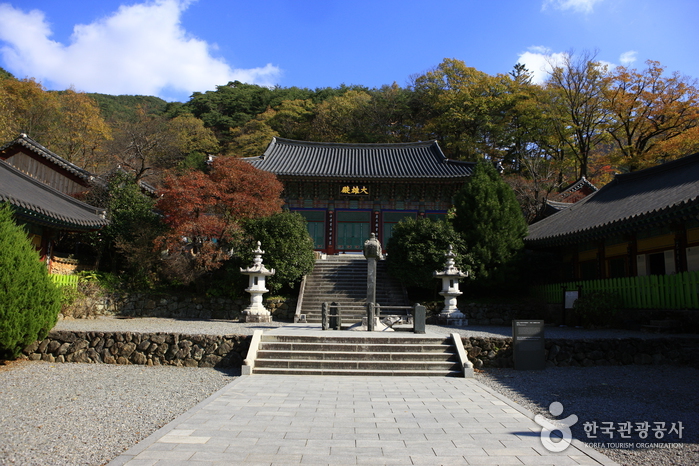
Hadong Ssanggyesa Temple (쌍계사(하동))
17.5Km 2024-03-08
59 Ssanggyesa-gil, Hadong-gun, Gyeongsangnam-do
Ssanggyesa Temple was founded on the southern foothills of Jirisan Mountain in 722 during the reign of Silla King Seongdeok. The temple is famous for the 6-kilometer stretch of cherry blossom trees that bloom each spring. The temple was originally called Okcheonsa Temple, but was changed to the current Ssanggyesa Temple in 887. The current temple buildings were all built in 1632, after having been burned down during the Imjin War (1592-1598). The temple grounds and nearby area feature many historic and beautiful attractions, including Burilpokpo Falls and a large tea plantation.
Burilpokpo Falls (불일폭포)
17.9Km 2024-02-08
103 Mogap-gil, Hwagae-myeon, Hadong-gun, Gyeongsangnam-do
Situated 720 meters above sea level, Burilpokpo Falls stands as the tallest waterfall on Jirisan Mountain, boasting a x_height of 60 meters and a x_width of 3 meters. It features a distinctive two-tier structure, with the enchanting Yongchumot and Hangmot Ponds nestled below, adding to its profound natural allure. Conveniently located just 3 kilometers from Ssanggyesa Temple, it's an ideal spot to visit following a trip to the temple.
![Namgyeseowon Confucian Academy [UNESCO World Heritage] (남계서원 [유네스코 세계문화유산])](http://tong.visitkorea.or.kr/cms/resource/63/2996963_image2_1.jpg)
Namgyeseowon Confucian Academy [UNESCO World Heritage] (남계서원 [유네스코 세계문화유산])
18.9Km 2024-01-08
8-11 Namgyeseowon-gil, Sudong-myeon, Hamyang-gun, Gyeongsangnam-do
Namgyeseowon Confucian Academy was established in 1552 as the second Confucian academy in Korea after the Sosuseowon Confucian Academy located in Yeongju, Gyeongsangbuk-do. Seowon refers to a private educational institution of the Joseon period founded to perform Confucian rituals and nurture talent. “Namgye” is named after the Namgyecheon Stream flowing in its front. It was destroyed by in 1597 during the Imjin War (1592-1598) and rebuilt in 1612. Located on a low hill, it provides an open view of Gaepyeong Hanok Village beyond the field and the stream.
 English
 한국어
한국어 日本語
日本語 中文(简体)
 Deutsch
 Français
 Español
 Русский


