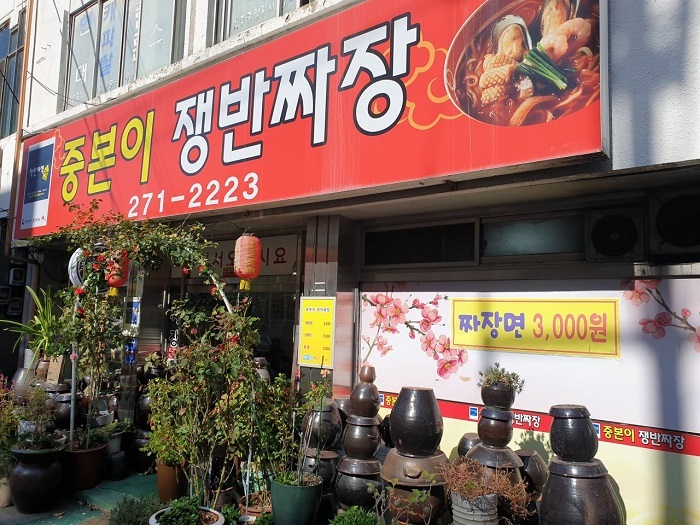
Jungboni Jaengban Jjajang (중본이쟁반짜장)
14.3Km 2024-04-07
71, Gongbuk-ro, Wansan-gu, Jeonju-si, Région Jeonbuk
+82-63-271-2223
A place where you can enjoy various Chinese dishes. This Chinese (cuisine) restaurant is located in Jeonju-si, Jeollabuk-do. The representative menu is noodles in black bean sauce.
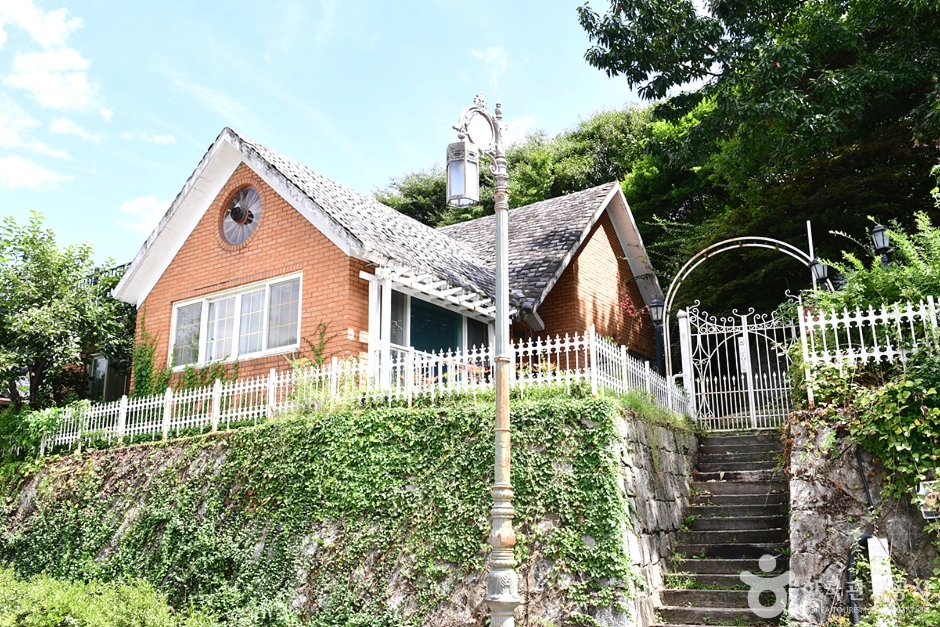
Maison 2521, prononcée « i-o-i-il » (이오이일)
14.3Km 2025-08-12
5-19, rue Omokdae, Wansan-gu, Jeonju, province autonome spéciale de Jeonbuk (Gyodong)
2521 est un hébergement indépendant situé au cœur du village hanok de Jeonju. Il s’agit également de la maison du personnage principal Na Hee-do dans le drama Vingt-cinq, vingt-et-un. Lors de la réservation, le propriétaire peut installer des accessoires identiques à ceux utilisés dans la série.
Les clients peuvent profiter d’un barbecue dans la cour et admirer la vue panoramique du village hanok depuis la terrasse sur le toit. L’hébergement peut accueillir jusqu’à huit personnes.
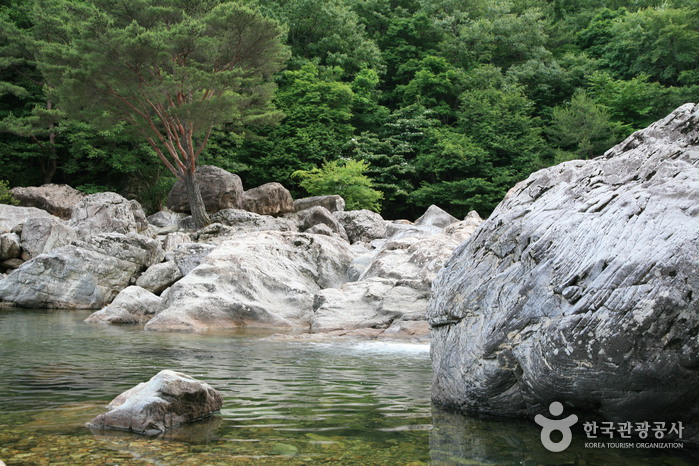
Vallée Uniram Baniram (운일암 반일암 계곡)
14.3Km 2024-12-17
1926, Dongsangjucheon-ro, Jucheon-myeon, Jinan-gun, Région Jeonbuk
+82-63-430-8382
La vallée Uniram Baniram se trouve entre les pics de Myeongdeokbong et de Myeongdobong dans la partie Nord-Est du mont Unjangsan. La vallée s’étend sur environ 5 km. Le nom Uniram provient de l’emplacement de la vallée, située sur une falaise escarpée où l’on ne voit rien d’autre que le ciel, les rochers, les arbres et les nuages. La vallée s’appelle également Baniram, car elle est située trop en profondeur pour recevoir la lumière du soleil seulement une demi-journée. Les deux côtés de la vallée sont à pic et garnis de forêts touffues. On y trouve également des rochers aux formes étranges, comme le rocher Jjokduri, le rocher Cheollyeop et le rocher Daebul, au coeur d’un splendide paysage. Au plus chaud de l’été, de nombreux visiteurs se rendent dans la vallée, mais celle-ci est également populaire à la saison des feuilles d’automne.
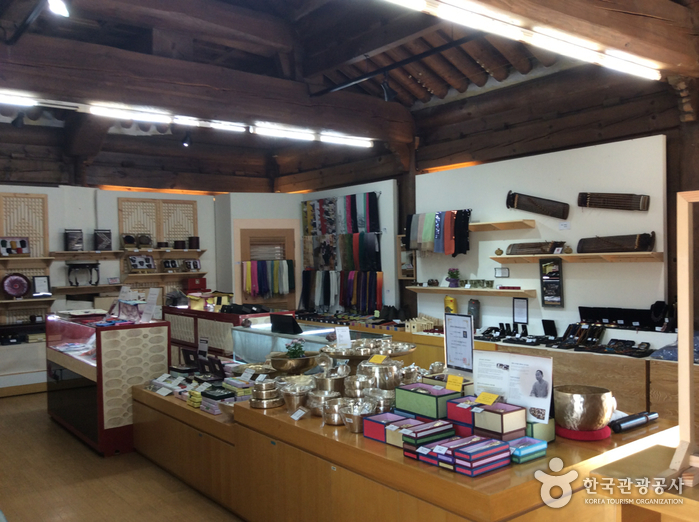
Centre des trésor de Jeonju (전주 공예품전시관, 명품관)
14.3Km 2024-04-07
15, Taejo-ro, Wansan-gu, Jeonju-si, Région Jeonbuk
+82-63-285-4404
Pour les personnes recherchant de l'artisanat de haute qualité dans la région de Jeonju, le Centre des Trésors de Jeonju est l'endroit idéal pour faire des achats. Le Seonjacheong propose des éventails traditionnels, le Hanjigwan met en vente des produits fabriqués en papier coréen traditionnels, et l'Omokdae expose des objets en bois et d'autres produits. Il est très agréable de s'y promener et d'y admirer les produits, même si vous n'avez pas l'intention d'acheter.
Siwon/ 시원
14.3Km 2025-03-05
45-41, Omokdae-gil, Wansan-gu, Jeonju-si, Région Jeonbuk
+82-10-6520-7840
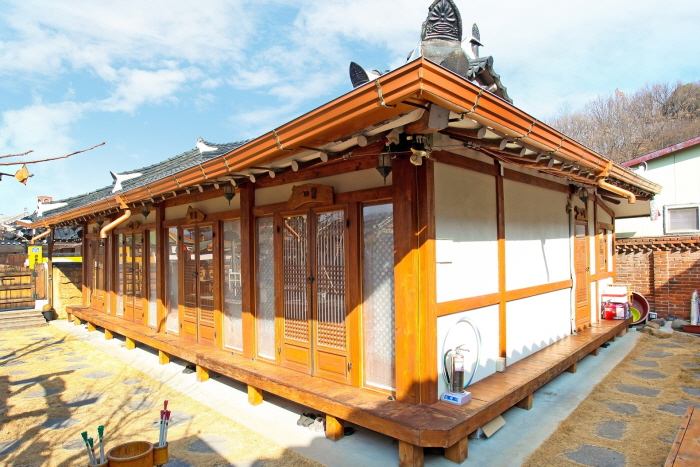
Situated within Jeonju Hanok Village, Siwon is a hanok experience hall designated by the local government. The names of its individual rooms carry such meanings as “a wish for a life full of love, health and joy”. Each room (except the Gadeukbang) has a small attic where guests can have fun climbing up and down a ladder.
The clay structure with a wood shingle roof is the source of many fond memories for the owner, a permanent fixture of the village, who was born and grew up in the house. The house was once called “the house of persimmon trees in Ssangsiam alley”.
Although the framework of the house was completed in 1954, it has only been open to tourists since it was repaired and renovated in 2014. The house has been fully insulated against draughts and sound-proofed, transforming into a comfortable, cozy guest house that retains the unique beauty of a traditional Korean hanok.
The house’s yard contains a small flower garden and a swing, as well as a space where guests can play tuho, a traditional game in which the players try to throw sticks into a canister, jaegichagi, and other traditional games. In addition, guests can try their hand at woodcraft by cutting and carving pieces of wood into artworks of their own making.
A number of attractions are within walking distance of Siwon, including Gyeonggijeon Shrine, which contains the portrait of King Taejo Seong-gye Yi, the founder of the Joseon Dynasty; Jeondong Cathedral, which features a European architectural design; Omokdae, where King Taejo defeated the Japanese army and held a banquet; Jeonjuhyanggyo Local Confucian School; Namcheon Bridge and Cheonyeonru Pavilion; Nambu Market, a foodies’ paradise; and the Youth Mall
Rue du cinéma à Jeonju (전주 영화의 거리)
14.3Km 2024-07-09
Gosa-dong, Wansan-gu, Jeonju-si, Jeongbuk
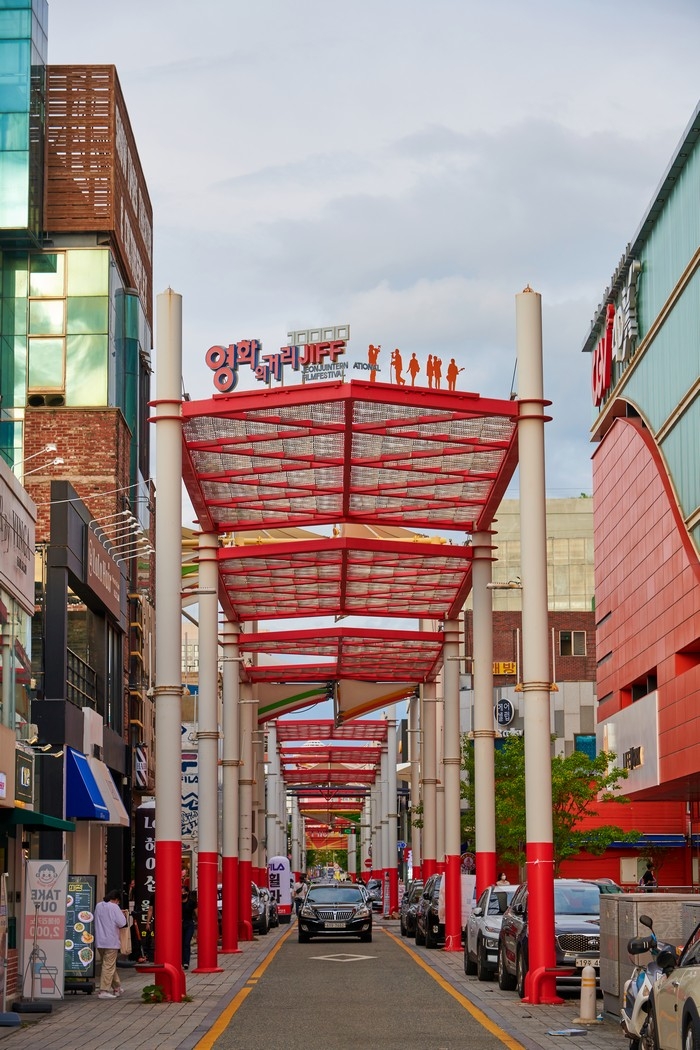
La rue du cinéma de Jeonju est le lieu qui accueille le Festival international du film de Jeonju, une rue reliée à la rue Gaeksa réputée pour le shopping dans l'ancien centre-ville de Jeonju.
![Yangsajae [Korea Quality] / 문화공간 양사재 [한국관광 품질인증]](http://tong.visitkorea.or.kr/cms/resource/75/1879875_image2_1.jpg)
Yangsajae [Korea Quality] / 문화공간 양사재 [한국관광 품질인증]
14.3Km 2025-12-04
40, Omokdae-gil, Wansan-gu, Jeonju-si, Région Jeonbuk
+82-63-282-4959
L'Espace culturel Yangsajae se situe dans le village traditionnel de Hanok, à Gyo-dong Pungnam-dong, Jeonju. Ancien bâtiment annexe du hyanggyo, il servait autrefois de lieu d'étude pour les lettrés de l'époque Joseon. En franchissant le portail, on découvre la tranquillité de la cour avant. Il est possible d'y allumer le feu dans l'âtre du gudeulbang, et le site est apprécié pour la beauté de ses paysages nocturnes.
Musée des portraits royaux (어진박물관)
14.4Km 2024-04-24
Taejo-ro 44, Wansan-gu, Jeonju-si, région Jeonbuk
+82- 63-231-0090
[Temple Gyeonggijeon; le lieu où est conservé le portrait du roi Taejo]
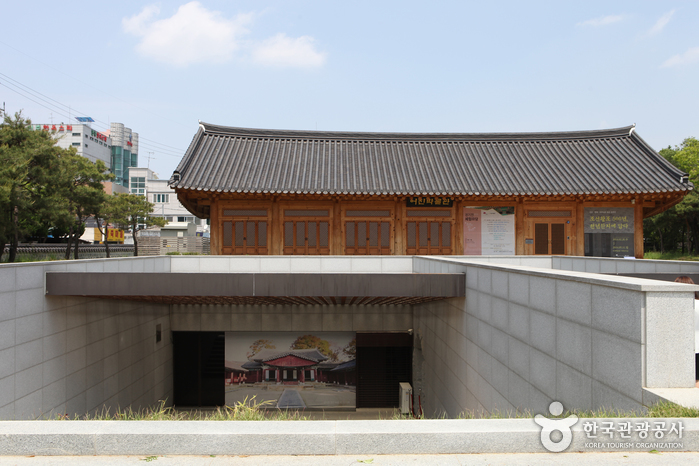
Ouvert le 6 novembre 2010, le musée des portraits royaux est l'une des toutes nouvelles attractions touristiques de la ville de Jeonju, situé dans le palais Gyeonggijeon. Le musée constitue ainsi une ressource documentaire importante à la fois pour la ville de Jeonju tout comme pour le temple Gyeonggijeon qui renferme le portrait du roi Taejo. Le musée qui se compose d'étage en sous-sol et en surface occupe une surface de plus de 1000m2. On peut y apprécier le portait de 6 rois en Corée en plus du portrait du roi de Taejo. Depuis son ouverture, le musée vise à devenir une place centrale pour la vie culturelle de la région. Le musée propose également diverses activités pour se familiariser avec la culture de la royauté en Corée.
Gyodonggaon / 교동가온
14.4Km 2025-08-12
73-1, Eunhaeng-ro, Wansan-gu, Jeonju-si, Région Jeonbuk
+82-10-5106-3355
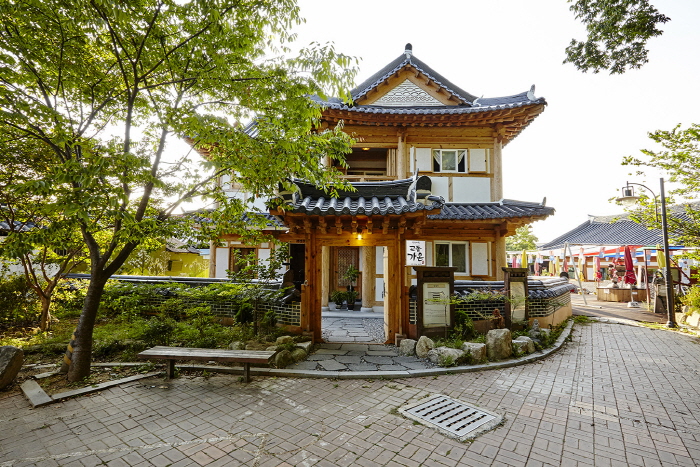
Gyodong Gaon is located right in the middle of the main street of Jeonju Hanok Village. The word "gaon" means "middle" in Korean. It's a two-story traditional Korean house that stands out among the rest of the traditional Korean houses in the alley leading to Omokdae. Just inside the gate is a yard with colorful flower trees, jars of sauces, and furnace. The mural on one of the walls is popular among the guests as a place to take photos.
The "numaru", or "loft" in Korean, overlooks the Hanok Village, and is one of the best places in the village to get a closer look at the 500 year old zelkova tree and the foot of the mountain nearby. Open to all the guests, the "numaru" is very popular during the winter as well as the summer. It's an open space with a wooden floor, so it's very cool during the summer, and it also serves as an observatory to enjoy the view of all the snow-covered trees and roofs in the Hanok Village during the winter while having a hot cup of tea.
The owner of the guesthouse has been living here for 37 years. He rebuilt his house and turned it into a hanok guesthouse in 2014 while making sure the rooms are well insulated and comfortable to stay.
He built a two-story building to make an efficient use of the space, and focused on making all the rooms look different. The house has five rooms, and only the “Meomulda Room” on the first floor is the only rooms with a living room separated from the bedroom. All you have to do is open the door to enjoy the view of the yard, Hanok Village, and Omokdae. The “Nanuda Room” on the second floor is the largest one that can accommodate more than five people, making it the most popular choice among families. The "Damda Room" and "Kkumkkuda Room" both have an attic that can be reached by a ladder. The attic is big enough to sleep two adults, and some guests actually sleep there for a unique experience. One of the walls of the attic is finished with cypress wood which has a pleasant scent. The “Geurida Room” has the best view through the two windows on the either side of the room, in addition to warm sunlight and cool wind that come through the window. Modern, not traditional, doors are installed in all the rooms for better sound proofing and insulation.
Gyodong Gaon offers a number of experience programs, such as traditional games like “gulleongsoe”, “tuho", and “Korean top”, As well as “sabang chigi”, “sampalseon”, and “ttangttameokgi”.
Many Korean adults are familiar with these games, while children and foreigners can find these games interesting. All these traditional Korean games are free to play.
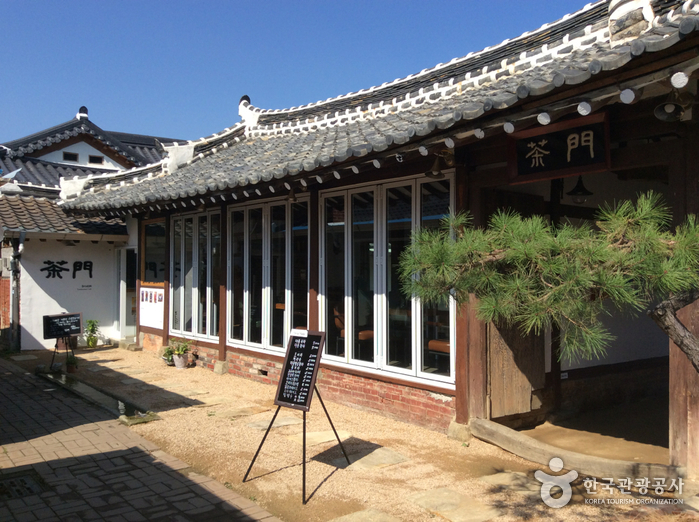
Damun (다문)
14.4Km 2024-04-07
74-8, Eunhaeng-ro, Wansan-gu, Jeonju-si, Région Jeonbuk
+82-63-288-8607
Situated in Jeonju Hanok Village, Gyo-dong, Jeonju-si, Damun serves Korean table d’hote in a restaurant divided into large and small rooms within a hanok building structure.
 Français
 한국어
한국어 English
 日本語
日本語 中文(简体)
 Deutsch
 Español
 Русский


